Home Blog Page 203

The White House wants to build an underground center to provide security screening for visitors

WASHINGTON (AP) — The White House wants to build an underground center to provide security screening for visitors, the latest step in the Trump administration’s plan to overhaul the grounds.

Plans, including renderings of the 33,000-square-foot (3,066 square meter) center, were included on the preliminary agenda released on Friday for the April meeting of a federal commission that approves construction on federal land in Washington.

The screening facility would be built beneath Sherman Park, which is located southeast of the White House and directly south of the Treasury building.

The park had for a long time been the place where White House tourists and guests lined up for security checks before they cleared a series of trailer-type structures and walked to the East Wing entrance. President Donald Trump tore down the East Wing last fall to build a ballroom. Visitors currently line up on 15th Street at the corner of Lafayette Park.

The new screening facility would have seven lanes to ease processing and reduce wait times. Construction could begin as early as August, according to the plans, as the White House said it wants the facility operating by July 2028, six months before Trump’s term ends.

The monument of Union Gen. William Tecumseh Sherman in the center of the park would not be removed, according to plans for the project, which is a collaboration of the Executive Office of the President, the U.S. Secret Service and the National Park Service, which manages the White House grounds.

The National Capital Planning Commission, which oversees federal construction, planned to discuss the proposal at its April 2 meeting, according to the tentative agenda circulated Friday.

Also on that meeting agenda is a debate and a final vote on plans by the Republican president to build a 90,000-square-foot building, including a large ballroom, where the East Wing stood.

Trump seeks to close $1.6 trillion revenue gap with raft of new tariffs

WASHINGTON (AP) — The Trump administration this week stepped up its ambitious effort to replace about $1.6 trillion in lost tariff revenue that was eliminated by the Supreme Court’s decision to strike down a range of the president’s import taxes.

Recovering that lost revenue, which the White House was counting on to help offset the steep, multi-trillion dollar cost of its tax cuts, is possible but will be challenging, experts say. The administration has to use different legal provisions to impose new duties, and those provisions require longer, complex processes that U.S. companies can use to seek exemptions. It could be months or more before it is clear how much revenue the replacement tariffs will yield.

“I wouldn’t bet against this administration being able to get back on paper the same effective tariff rate they had before,” said Elena Patel, co-director of the Urban-Brookings Tax Policy Center. But the new approach will “make it easier for people to contest the tariffs, which is going to put a big asterisk on the revenue until all that is settled.”

On Wednesday, U.S. Trade Representative Jamieson Greer said the administration will investigate 16 economies — including the European Union — over whether their governments are subsidizing excessive factory capacity in a way that disadvantages U.S. manufacturing. The investigation will also cover China, South Korea, and Japan, Greer said.

In addition, he said there would be a second investigation of dozens of countries to see if their failure to ban goods made by forced labor amounts to an unfair trade practice that harms the United States. That investigation will also cover the EU and China, as well as Mexico, Canada, Australia, and Brazil.

Both investigations are being conducted under Section 301 of the 1974 Trade Act, which requires the administration to consult with the targeted countries, as well as hold public hearings and allow affected U.S. industries to comment. A hearing as part of the factory capacity investigation will be held May 5, while a hearing on the forced labor investigation will occur April 28.

It’s a far cry from the emergency law that President Donald Trump relied on in his first year in office, which allowed him to immediately impose tariffs on any country, at nearly any level, simply by issuing an executive order.

Moments after the Supreme Court’s ruling, Trump imposed a 10% tariff on all imports under a separate legal authority, but that duty can only last for 150 days. The president has said he would raise it to 15%, the maximum allowed, but has yet to do so. Some two dozen states have already challenged the new tariffs. The administration is aiming to complete its Section 301 investigations before the 10% duties expire.

The effort underscores the importance that the Trump White House has placed on tariffs as a revenue-raiser at a time when the federal government is facing huge annual budget deficits for decades into the future. Previous administrations, by contrast, used tariffs more sparingly to narrowly protect specific industries.

Erica York, vice president of federal tax policy at the Tax Foundation, noted that the first investigation covers roughly 70% of imports, while the second would cover nearly all of them.

“That breadth suggests the goal isn’t to address the issues at hand, but instead to recreate a sweeping tariff tool,” she said.

Trump sees tariffs as a way to force foreign countries to essentially help pay the cost of U.S. government services, even though all recent economic studies find that American companies and consumers are paying the duties, including ones from the Federal Reserve Bank of New York and economists at Harvard University. In his state of the union address last month, Trump even touted his tariffs as a potential replacement for the income tax, which would return the United States’ tax regime to the late 19th century.

Trump also wants tariffs to help pay for the tax cuts he extended in key legislation last year. The tax cut legislation is expected, according to the most recent estimates by the nonpartisan Congressional Budget Office, to add $4.7 trillion to the national debt over a decade, while all Trump’s duties, including ones not struck down by the court, were projected to offset about $3 trillion — or two-thirds of that cost.

The court’s ruling Feb. 20 that he could no longer impose emergency tariffs eliminated about $1.6 trillion in expected revenue over the next decade, according to the CBO.

Some of Trump’s tariffs remain place, including previous duties on China and Canada that were imposed after earlier 301 investigations. The administration has also slapped tariffs on some specific products, including steel, lumber, and cars. Those, combined with the 10% tariff for part of this year, should yield about $668 billion over the next decade, the Tax Foundation estimates.

“It’s going to take a really big patchwork of these other investigations to make up for the (lost) tariffs,” York said.

The administration’s efforts are also unusual because they reflect an overreliance on tariffs to bring in more government revenue. Trump has also said the duties are intended to return manufacturing to the United States, and he has used them to leverage trade deals.

“What makes this really different,” said Kent Smetters, executive director of the Penn Wharton Budget Model, “it is really the first time tariffs have been mainly used as a revenue raiser.”

Patel, meanwhile, argues that raising revenue can be done more reliably and straightforwardly by Congress. Laws like Section 301 are traditionally intended to be used to address specific trade policy concerns in particular countries.

“It’s not supposed to be there to raise revenue,” she said. “If we want to raise revenue through tariffs, then Congress should impose a broad based tariff.”

Conductor Juanjo Mena, former Cincinnati festival head, to retire because of Alzheimer’s disease

Conductor Juanjo Mena, the former principal conductor of the Cincinnati May Festival, said he will retire this year because of Alzheimer’s disease.

Mena announced the diagnosis in January 2025 and said in a public letter Friday that the disease has progressed.

“My situation is different than it was a year ago and it calls for some important decisions to be made,” the 60-year-old wrote in the letter, released by the agency IMG Artists. “I now feel that the time has come to say goodbye to my work on the podium. Every score has an ending, and the final bars of this one have been written. This year’s concerts will be the last I conduct. This decision was a difficult one to make, as you can imagine, but one I have considered carefully and wanted to share with you today.”

IMG’s statement said Mena will conduct select performances, including the Barcelona Symphony Orchestra on March 21 and 22.

“I would like to take the opportunity and turn my upcoming farewell concerts into an expression of gratitude and above all, a celebration,” Mena wrote. “My conducting career has spanned 40 wonderful years, and I have a lot to be thankful for. First and foremost, to my family, for their continuous support and infinite patience with me. And secondly, to all of you who have supported me: the public, every orchestra, and each and every one of the musicians and people with whom I have had the honor and pleasure of working. These will be some of my favorite memories: making good music together and having a great time doing it.”

Mena was artistic director and principal conductor of the Bilbao Symphony Orchestra from 1999-2008, chief conductor of the BBC Philharmonic from 2011-18 and the Cincinnati May Festival from 2017-23. He has conducted the Berlin Philharmonic, Bavarian Radio Symphony Orchestra, London Philharmonic, Chicago Symphony, Boston Symphony, Cleveland Orchestra, Philadelphia Orchestra, New York Philharmonic and Los Angeles Philharmonic.

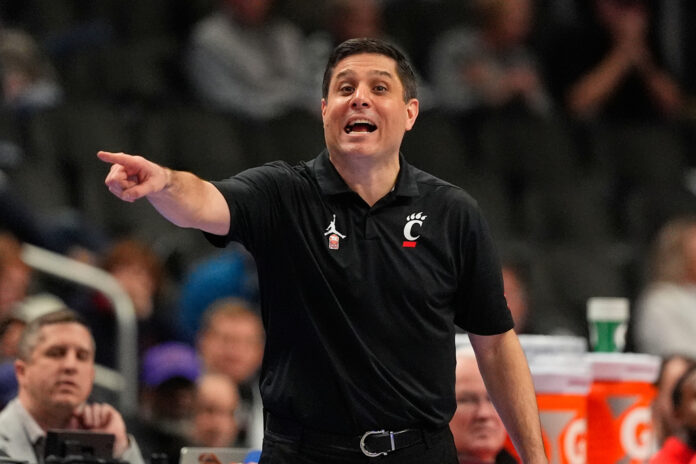
Cincinnati firing men’s basketball coach Wes Miller, AP sources say

Wes Miller will not be back as the University of Cincinnati’s men’s basketball coach, two people familiar with the move told The Associated Press on Friday.

They spoke on condition of anonymity because the university has not announced the move.

Cincinnati is not expected to announce Miller’s firing until the two sides can negotiate an equitable buyout. Miller has three years remaining on his contract, but he’s owed $9.9 million if the firing happens before March 31. It drops to $4.69 million if the termination happens after April 1.

Miller went 100-74 in five seasons, including 18-15 this year. Cincinnati has not reached the NCAA Tournament since 2019, which was Mick Cronin’s final season before he left for UCLA.

The Bearcats were 11-12 at one point this season before winning seven of their final 10 games. Their late bid to get on the right side of the tournament bubble ended Wednesday at the Big 12 Tournament, when UCF rallied for a 66-65 victory after Cincinnati had an eight-point advantage with 2:17 remaining.

Miller’s best season was last year. Cincinnati opened 10-1 and was ranked as high as 14th in the AP Top 25. The Bearcats though faltered once conference play began and went 7-13 in the Big 12.

Miller was hired in 2021 after 10 seasons at UNC-Greensboro, where he led the Spartans to two NCAA Tournament appearances.

___

Get poll alerts and updates on the AP Top 25 throughout the season. Sign up here. AP college basketball: https://apnews.com/hub/ap-top-25-college-basketball-poll and https://apnews.com/hub/college-basketball

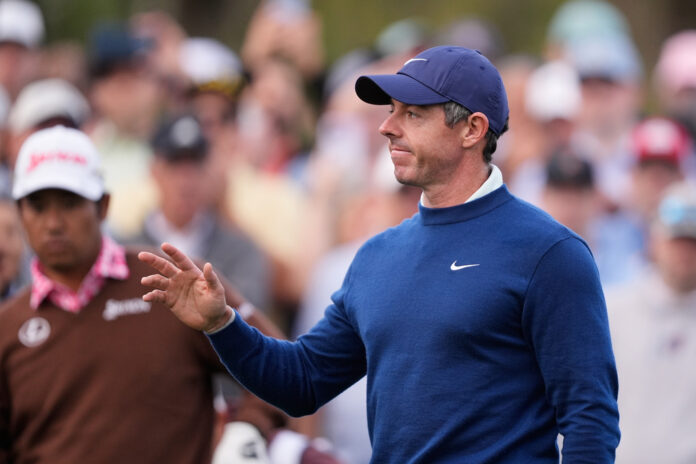
Rory McIlroy’s back is feeling fine. It’s his putter that hurts him at The Players

PONTE VEDRA BEACH, Fla. (AP) — Rory McIlroy wasn’t entirely sure he would be able to play in The Players Championship because of muscle spasms in his lower back that forced him to withdraw last Saturday at Bay Hill. Now he’s thankful to be playing two more days at the TPC Sawgrass.

But it took a lot more work than he wanted Friday. McIlroy, the defending champion and two-time winner of The Players, was over the projected cut line approaching his final hole at the par-5 ninth. He blistered a 310-yard drive, reached the green in two and had a two-putt birdie for a 71.

Satisfaction came only from making the cut.

“I’m happy to be here for the weekend. I’m happy to get two more runs at it,” McIlroy said. “It would have sucked to be going home this afternoon. So to hang around and hopefully play two more days, that’s a win.”

But it was only his third birdie of the round in scorable conditions — and only fourth birdie of the tournament — so this wasn’t simply about making the cut. McIlroy woke up feeling good about his back. He just couldn’t get his putter to wake up.

Still, it was a clutch finish to sit at 1-over 145.

“I wish I was further up the leaderboard. I felt like I played well enough today to be up the leaderboard, I just couldn’t get a putt to drop,” he said.

The back no longer appears to be an issue. McIlroy was hopeful it would be like 2023 at the Tour Championship when he had a balky back. It was fine by the weekend, and this appears to be a similar situation.

“It feels pretty much there,” McIlroy said. “Not all the way there, but I feel like it’s just progressively getting better each and every day.”

McIlroy was not sure what his schedule would be leading to the Masters. He contemplated adding a tournament if he only got in two days at The Players. He said Jim “Bones” Mackay at NBC asked him going down the ninth what his plans were ahead of Augusta National.

“I said, ‘Bones, I’ll tell you after this hole. There’s a lot riding on this golf hole,’” he said with a laugh. “If I had have missed the cut I probably would have added an event going into the Masters, so hopefully I’m here for the weekend and I don’t have to do that.”

___

AP golf: https://apnews.com/hub/golf

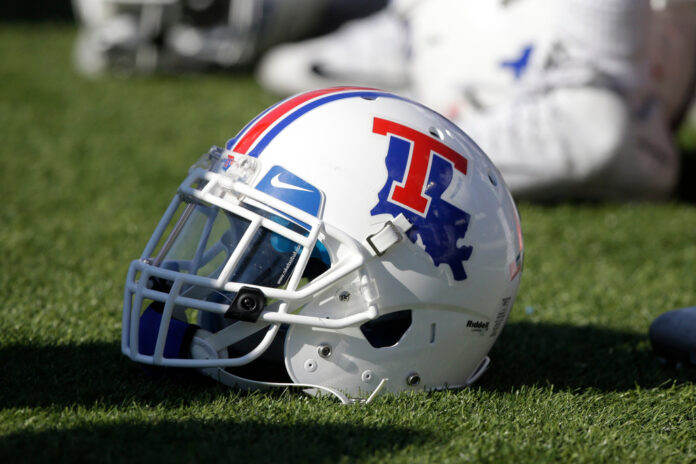
Louisiana Tech football is on 2 league schedules amid its contentious departure from Conference USA

NEW ORLEANS (AP) — Louisiana Tech’s football team is currently listed on both the Sun Belt and Conference USA league schedules as the Bulldogs’ acrimonious departure from Conference USA continues to drag out.

Last July, the Sun Belt extended membership to Louisiana Tech, and the school accepted, citing, among other things, the logic of joining a conference that includes two potential in-state rivals in Louisiana-Lafayette and Louisiana-Monroe, along with other programs in the Gulf South, including Southern Miss and South Alabama.

All of those schools are on the 2026 football schedule that Louisiana Tech released on Friday.

But Conference USA also released a full conference slate this week that includes Louisiana Tech matchups against league members Middle Tennessee, Florida International, Missouri State, Liberty, Kennesaw State and Jacksonville State.

When Louisiana Tech announced its move to the Sun Belt, the school stated that the move would occur no later than July 1, 2027, but left little doubt that it preferred to make the move for 2026-27 academic year.

Since then, Tech and Conference USA have failed to agree on a financial settlement aimed at compensating the league for the Bulldogs’ departure.

Last week, the University of Louisiana System, which includes Louisiana Tech, filed a lawsuit asking a judge to force Conference USA to allow Louisiana Tech to leave the league when the current academic year ends on June 30.

Despite Louisiana Tech’s “good faith efforts to resolve this matter amicably over a period of eight months … CUSA has declined to engage in meaningful resolution and has instead placed Louisiana Tech on its 2026-27 athletic schedule in disregard of Tech’s explicit and repeated written notice that it would not participate in Conference USA competition beginning July 1, 2026,” the lawsuit states.

Louisiana Tech has been a Conference USA member since 2014.

___

Get poll alerts and updates on the AP Top 25 throughout the season. Sign up here. AP college football: https://apnews.com/hub/ap-top-25-college-football-poll and https://apnews.com/hub/college-footballhttps://apnews.com/hub/college-football

US aims for historic clean sweep in Olympic and Paralympic ice hockey

MILAN (AP) — The United States is looking to do something no nation has ever done: Clean sweep the ice hockey tournaments at the Olympics and Paralympics.

Standing in the way? Canada again.

Just like in the men’s and women’s tournaments at the Olympics, Sunday’s gold medal match in Para ice hockey will be between the U.S. and Canada.

“We got to do our part, right? So they got the two done, so now it’s our job and we just got to bring it home for them,” U.S. forward Kevin McKee told The Associated Press.

Naturally, Canada wants bragging rights in the rivalry and to break American Para hearts.

“It is a source of pride for us just to win, like we believe Canada is THE hockey country and we want to prove that,” Canada forward Adam Dixon said.

Both teams dominated the group stage at the Paralympics, each winning all three of their matches. The U.S. then beat the Czech Republic 6-1 in Friday’s semifinals, when Canada struggled at times before overcoming China 4-2.

Canada Para ice hockey captain Tyler McGregor said the two Olympic losses were not playing on his teammates’ minds.

“No. You know what, we’re going to write our own story,” he said. “We watched both our men’s and women’s team compete here a few weeks ago and they played phenomenal.

“Those were two of the best hockey games I’ve ever seen, but this is our story at the Paralympics and we have a chance to bring home a gold medal for Canada. And what an honor that would be.”

Rather than avenge the Olympic defeats, Canada is driven more to avenge losses to the U.S. in the past two gold-medal matches at the Paralympics. It has also lost to the U.S. in four of the past five world championship finals.

“That kind of fuels us,” forward Liam Hickey said. “We’ve learned from those. They’re a great team and we’ve had a great rivalry for as long as this sport’s been around. So for us it’s another kind of chance for redemption and we’re excited for it.”

US domination

If the U.S. achieves the treble, it would be the second straight year it has swept the major tournaments, having won the men’s and women’s world championships and world Para ice hockey championship in 2025.

There is no women’s division at the Paralympics as its classified as an open-gender sport.

U.S. defender Jack Wallace said the group has been talking about the sweep since watching the women’s Olympic final together during a training camp. They were also messaging each other during the men’s final.

Coach David Hoff would prefer his players bury all thoughts of a sweep before Sunday’s final.

“There’s a lot of talk about it,” Hoff admitted. “I think for us it’s really just putting the blinders on and really focusing on what we have to do. Don’t let that outside stuff cloud your preparation or bother you. Sometimes that’s hard to do but I think our guys have really done a good job.”

While the Olympics saw the U.S. men’s team win gold for the first time since the “Miracle on Ice” in 1980, it’s a different story at the Paralympics.

The U.S. has triumphed at five of the past six Paralympics and several players are targeting a fourth straight gold medal. Captain Josh Pauls is incredibly aiming for a fifth.

“You’ve got to enjoy the guys you’re playing with,” Pauls said when asked about the team’s secret to success. “We have such a brotherhood, we just enjoy playing the game, we enjoy competing, we enjoy getting better, but also helping the other guy across from us get better.

“And I mean, I am just so glad to play another team other than our guys, because man, our guys are really tough to play.”

___

AP Winter Paralympics: https://apnews.com/hub/paralympic-games

WADA to weigh barring Trump, US officials from LA Olympics and possibly World Cup over unpaid dues

The World Anti-Doping Agency is considering rewriting its rules to try barring President Donald Trump and all U.S. government officials from attending the LA Olympics in 2028 in a move that could also have implications for the World Cup being hosted by the U.S. this summer.

The proposal, on the agenda for next Tuesday’s meeting of the global drug-fighting watchdog’s executive committee, is the latest maneuver to come out of a yearslong refusal of the U.S. government to pay its annual dues to WADA. The refusal is part of the American government’s unanimous, bipartisan protest of the agency’s handling of a case involving Chinese swimmers and other issues.

The Associated Press learned of the agenda item through correspondence it obtained between WADA and European officials involved in the agency’s decision-making. Two others with knowledge of the agenda confirmed the existence of the rules proposal to AP; they were not authorized to speak publicly about the agenda, which has not been released publicly.

WADA spokesman James Fitzgerald said “there is nothing new here,” noting that discussions related to the issue of what to do about governments withholding funding have been ongoing since 2020 and aren’t directly related to the U.S.

The proposal was, in fact, first brought up in 2024, when U.S. authorities successfully lobbied for its rejection. The U.S. has since lost its seat on the executive committee.

“In spite of WADA’s increasing threats, we continue to stand firm in our demand for accountability and transparency from WADA to ensure fair competition in sport,” said Sara Carter, the director of the U.S. Office of National Drug Control Policy (ONDCP).

The rule, if passed, would figure to be mostly symbolic, given the limits an international sports federation could have on the president of a country attending an event inside his own borders.

“I have never heard of a $50-million-budget Swiss foundation being able to enforce a rule to, for example, prevent the United States president from going anywhere,” said Carter’s predecessor at ONDCP, Rahul Gupta, who was on the WADA executive committee two years ago and led the movement to reject the proposal. “And the next question you have to ask is: How are you going to enforce it? Are they going to post a red notice from Interpol? It’s ludicrous. It’s clear they have not thought this through.”

WADA suggests it could move quickly, but impact on upcoming World Cup hazy

The proposal calls for a three-tiered set of sanctions for countries that don’t pay dues. In the U.S. case, that amounts to around $3.7 million from last year, plus $3.6 million it didn’t pay in 2024. Among the most extreme sanctions include “government representatives being excluded from participation in major events such as World Championships and Olympic & Paralympic Games.”

That would include Trump, Vice President J.D. Vance and members of Congress, who recently approved hundreds of millions in funding for security and other logistics for the World Cup and LA Games.

Fitzgerald said the next meeting of the WADA Foundation Board, which would formally approve any action, isn’t scheduled until November, suggesting the rule would not be in place in time for the World Cup. He did not immediately respond to specific questions about how Trump’s status at the World Cup might be impacted.

But in a response to a question about timing from the European authorities, WADA wrote: “The proposal could be implemented without undue delay. If necessary, the Foundation Board could consider the proposal by circular or within the context of an extraordinary meeting.”

According to a draft of the proposal, the rule would apply to governments that have not paid dues by Jan. 31 of the year after they’re billed. The U.S. hasn’t paid its WADA dues since 2023.

Representatives from the International Olympic Committee, FIFA and the U.S. Olympic and Paralympic Committee did not respond to emails from AP seeking comment on how a ban on Trump and other U.S. officials might be enforced.

US has been asking WADA to undergo independent audits

WADA’s budget was pegged at $57.5 million for 2025. It receives half its funding from the IOC and the other half from governments across the globe. Contributions from the governments are loosely based on the size of their athletic teams, and the U.S. has always paid one of the biggest bills.

This squabble has been festering since the first Trump administration, rooted in America’s distrust of the global anti-doping system, which came under international scrutiny first for its handling of a Russian doping scandal dating to before the Sochi Games in Russia in 2014.

Then, in 2024, news came of 23 Chinese swimmers — some of them on the team that went to the Paris Olympics — who were allowed to compete despite testing positive. WADA accepted the Chinese doping regulator’s theory that the athletes had been contaminated by traces of banned heart medication in a hotel kitchen.

The ONDCP and Congress under both the Trump and Biden administrations have withheld the payments to WADA.

In the most recent flare-up, the government restricted payment until WADA subjected itself to an independent audit. WADA defended its auditing practices and, at the Milan Cortina Games last month, once again called on the U.S. to pay the dues.

Now, the agency looks for more leverage in its attempts to collect.

“This initiative is aimed at better protecting WADA’s funding so that it can deliver on its mission to protect clean sport,” said Fitzgerald, the spokesman for WADA. “If WADA’s funding is cut, it is ultimately athletes who will suffer. Indeed, athletes (including those on WADA’s Executive Committee and Foundation Board) have continuously expressed their support for this initiative.”

___

Associated Press reporter Darlene Superville contributed from Washington.

___

AP Olympics: https://apnews.com/hub/2024-paris-olympic-games

Prosecutor drops vehicular homicide charge against teen charged in death of teacher in prank

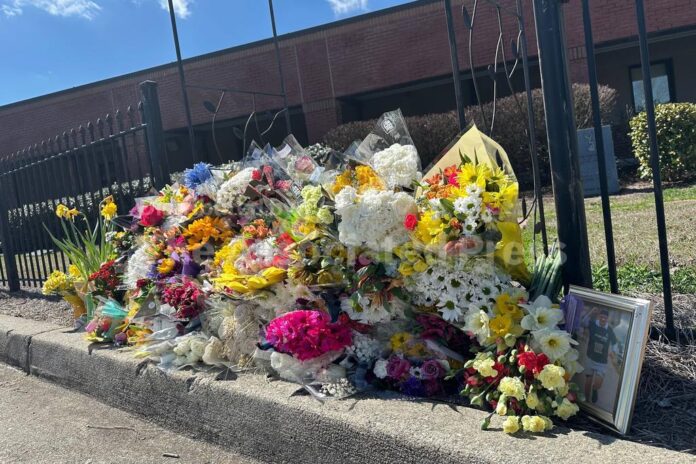
GAINESVILLE, Ga. (AP) — A Georgia prosecutor has dropped the charges against a teenager who police say was driving the truck that struck and killed a beloved high school teacher when a prank turned deadly, the teen’s lawyer said. The victim’s family had asked authorities to drop the charges.

The 40-year-old teacher, Jason Hughes, died after being taken to a hospital late on March 6, the Hall County Sheriff’s Office said. Jayden Ryan Wallace, 18, was arrested on a felony charge of vehicular homicide, and four other teens were charged with misdemeanors.

Graham McKinnon, a lawyer who represents Wallace, said Friday that the charges against his client had been dropped. Hughes’ family said he knew and loved the five students involved and had urged authorities to drop all charges against them.

McKinnon said Wallace and his friends were playing a “competitive game” that has long been a tradition at North Hall High School.

Vehicular homicide charges, he said, didn’t make sense because Jaden didn’t use his car unsafely or improperly.

“Jaden is still grieving deeply, but he’s determined eventually to carry on and live his life in a way that would make Coach Hughes proud.”

Hughes was a “mentor” to Wallace, McKinnon said.

“I pledge to live out the remainder of my life in a manner that honors the memory of Coach Hughes by exemplifying Christ. He will never be forgotten,” Wallace said in a statement released by his family on Wednesday.

US faces elevated terrorism threats against backdrop of Iran war and cuts at FBI, Justice Department

WASHINGTON (AP) — In New York City, two men who federal authorities say were inspired by the Islamic State brought powerful homemade bombs to a protest outside the mayoral mansion.

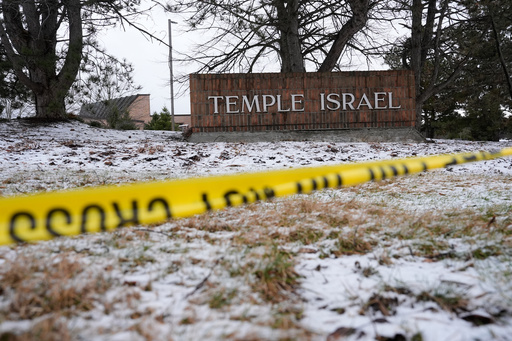
In Michigan, a naturalized citizen from Lebanon rammed his vehicle into a synagogue before being shot by security.

In Virginia, a man previously imprisoned on a terrorism conviction was heard yelling “Allahu akbar” before opening fire at a university in an attack that officials said ended when the shooter was killed by students.

The three acts of ideologically inspired violence in the last week have laid bare the heightened terrorism threat, a concern that comes as the U.S. is at war with Iran and as the counterterrorism system is strained by the departures of experienced national security professionals at the FBI and Justice Department. The firings and resignations, coupled with the diversion of resources and personnel over the last year to meet other Trump administration priorities, have fueled concerns about the capability to head off a potential surge in threats.

“So much experience has been decimated from the ranks,” said Frank Montoya, a retired senior FBI official who led the U.S. government’s Office of the National Counterintelligence Executive. “The folks that were best-positioned to get to the bottom of it before something really bad happened” are in many cases no longer with the government, he said, meaning less experienced personnel assigned to the threat are “starting from way behind.”

The FBI said it would not comment on personnel numbers and decisions, but issued a statement saying “agents and staff are dedicated professionals working around the clock to defend the homeland and crush violent crime. The FBI continuously assesses and realigns our resources to ensure the safety of the American people.”

Iran has a history of plotting attacks, targeted killings inside the US

Iran has vowed revenge for the killing by the U.S. and Israel of Supreme Leader Ali Ayatollah Khamenei, and though the fighting has so far been confined to the Middle East, the Islamic Republic has long professed its determination to carry out violence on American soil.

Iranian operatives responded to the 2020 assassination of Gen. Qassem Soleimani during the first Trump administration with a disrupted murder-for-hire plot against then-national security adviser John Bolton.

A Pakistani business owner who says he was carrying out instructions from a contact in Iran’s paramilitary Revolutionary Guard was convicted in New York last week of trying to hire hit men in 2024 for assassination plots targeting public figures, including President Donald Trump, who was then running for president.

Though much attention has focused on Iran’s use of proxies or hired hands to carry out plots, the country’s capability to organize a large-scale assault on the U.S. remains unclear despite clear angst over the potential. The FBI warned in a recent bulletin to law enforcement about Iran’s aspiration to conduct a drone attack targeting California, but after the warning was publicized, officials emphasized that the intelligence was unverified and no specific plot was known to exist.

The conflict is also playing out in cyberspace, with hackers supporting Iran claiming responsibility for a cyberattack this week against U.S. medical device company Stryker. The Justice Department on Friday announced that it had seized the domains of four websites used by Iran to call for the killings of dissidents.

Lone actors have been a persistent concern for the FBI

The U.S. government, after the Sept. 11, 2001, attacks, overhauled its intelligence and national security apparatus to prevent similarly catastrophic events. But in the years since, lone actors radicalized online have proved harder to stop, carrying out shootings like the 2015 ambush attacks at a pair of military sites in Chattanooga, Tennessee and a rampage at an Orlando nightclub the following year by a gunman who killed 49 people and raged against the “filthy ways of the west.”

Those plots have proved notoriously difficult to prevent and have occurred even when the FBI has not been roiled by firings and internal upheaval, like during the first year of the Trump administration.

“They’re self-directed,” said retired FBI official Edward Herbst. “That’s what makes them really lethal. You never know when they’re going to rise up. You never know when and where they’re going to attack.”

Those concerns typically rise during times of international conflict when military action overseas is accompanied by increased vigilance, including outreach from agents to their sources, more active sharing of tips between federal and local law enforcement and closer coordination among FBI joint terrorism task forces, said Claire Moravec, a former FBI national security official who served as deputy homeland security adviser in Illinois.

Officials have said there is no indication that either the men arrested in connection with the explosives in New York, or the man responsible for Thursday’s Old Dominion University shooting, were motivated explicitly by the Iran war. The man who crashed into Temple Israel synagogue near Detroit on Thursday lost four family members in an Israeli airstrike in his native Lebanon last week, an official in Lebanon said.

Regardless, wars like the one in Iran can function as “accelerants,” raising the volume and intensity of grievances for the disaffected, Moravec said.

“Ultimately, the goal during these periods is not ‘surveillance’ but maintaining a broad awareness of how international events could translate into domestic security risks, so that threats can be identified and disrupted early,” she said in an email.

Resignations, firings at the FBI and Justice Department

The Justice Department’s National Security Division was established in 2006 to address terrorism threats and related concerns. But in the last year, lawyers in the division found themselves assigned to review the Jeffrey Epstein files to prepare them for release, and elite sections dedicated to prosecuting terrorists and catching spies have endured turnover.

About half of the division’s counterterrorism prosecutors have left since the beginning of the Trump administration, along with about a third of its senior leadership, according to estimates from Justice Connection, a network of department alumni.

A Justice Department spokesperson said the division’s singular focus remains “keeping the American people safe from threats foreign and domestic” and that there are no known or credible threats to the homeland.

FBI Director Kash Patel has fired dozens of agents, most recently about a dozen employees who worked on the counterintelligence investigation into Trump’s retention of classified documents at his Mar-a-Lago estate in Florida, including some who worked on Iran cases.

“This is not an exaggeration to say that they are not as capable as they were a year and a half ago,” Matthew Olsen, who led the National Security Division during the Biden administration, said this week on the Lawfare podcast, adding that “they’ve lost, forced out, fired, the most capable, the most experienced FBI agents, FBI officials and DOJ prosecutors, that were working on the Iran threat.”

In the national security realm, where experience and source development are vital, the loss of institutional knowledge and community relationships can be a crushing blow, said Montoya, the former FBI official.

“There was no transition,” Montoya said of the agents who have been abruptly fired. “These guys were just walked out of the building. The new guys can call them and say, ‘Hey, can you tell me what you were doing?’ but even so, “you’re still introducing a brand new face into the equation.”