Home Blog Page 3

Trump criticizes European allies for not helping fix the damage his war against Iran has caused

WASHINGTON (AP) — President Donald Trump entered his war of choice against Iran without consulting global allies, but as he weighs an exit from the conflict, he is making it clear that he is expecting the world to help him fix the unintended damage that it has caused.

Trump is taking an increasingly annoyed tone toward Europe’s lack of support for the U.S.-Israeli war effort. He also is giving short shrift to the fact that his decision contributed to disrupting the flow of oil to global markets through the crucial Strait of Hormuz, which Iran has managed to largely choke off even as Trump insists that Iran has been “decimated.”

The president started his Tuesday by fuming on social media at two of America’s closest allies — France and Britain — while calling on the world to “Go get your own oil!” and “start learning how to fight for yourself.”

“All of those countries that can’t get jet fuel because of the Strait of Hormuz, like the United Kingdom, which refused to get involved in the decapitation of Iran, I have a suggestion for you: Number 1, buy from the U.S., we have plenty, and Number 2, build up some delayed courage, go to the Strait, and just TAKE IT,” Trump posted.

Minutes later, he went after France, claiming the country was “very unhelpful” as it “wouldn’t let planes headed to Israel, loaded up with military supplies, fly over French territory.”

Trump’s top advisers also are stepping up anti-NATO rhetoric

As Trump has ratcheted up his criticism, particularly against NATO allies, for not joining the U.S. and Israel in the war and being slow to respond to its consequences, top members of his administration have followed suit. The dynamic is creating uncertainty and concern over the future of the alliance, whose value Trump has already called into question.

While Trump’s often scattershot insults and complaints toward partners and allies have become expected and to a certain extent tolerated, the piling on by top aides like Secretary of State Marco Rubio, Treasury Secretary Scott Bessent and Defense Secretary Pete Hegseth in recent days has suggested that the administration’s anti-NATO posture is gaining steam — even as the president is showing signs that he could be edging toward finding an exit to the war sooner than later.

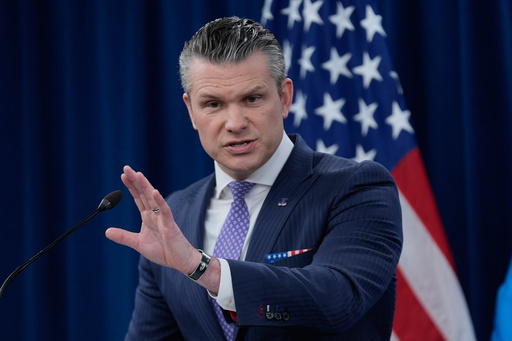
Hegseth argued Tuesday that the U.S. did “the heavy lifting on behalf of the free world” to deal with the threat from Iran and that other countries that depend on oil normally flowing through the strait should be aware that getting shipping moving is “not just our problem set going forward.”

“There are countries around the world who ought be prepared to step up on this critical waterway as well,” Hegseth said at a Pentagon news conference. “It’s not just the United States Navy. Last time I checked, there was supposed to be a big, bad Royal Navy that could be prepared to do things like that as well.”

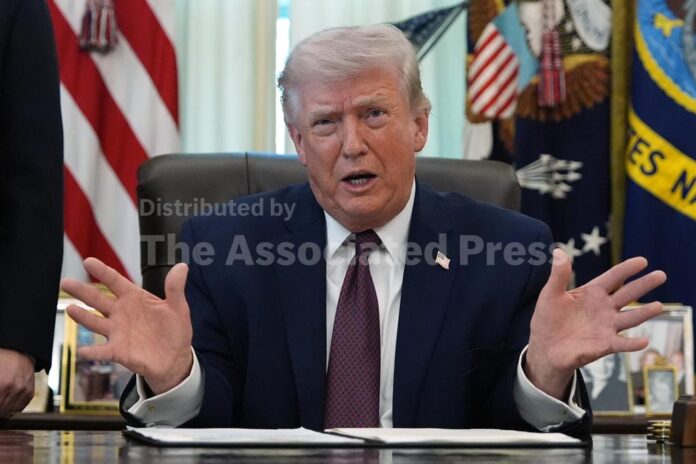
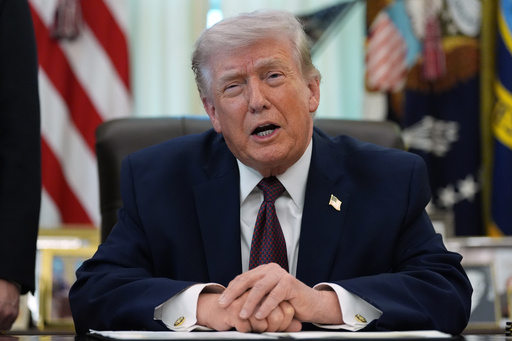
Trump, in an Oval Office exchange with reporters later Tuesday, said protecting the strait will be up to other countries and estimated that the U.S. would be done launching attacks against Iran in two to three weeks.

“That’s not for us,” Trump said. “That’ll be for France. That’ll be for whoever’s using the strait.”

U.S. investors took Trump’s sharp rhetoric in stride, including from an interview with CBS News in which Trump said he’s not quite ready to pull back U.S. troops that have massed near the strait but soon will. The S&P 500 surged 2.9% to its biggest gain since last spring, while the Dow industrials advanced more than 2.5% as doubt about a possible end to the war swung back to hope on Wall Street.

Nevertheless, the president’s criticism, particularly weeks of lashing NATO, has left Europe uneasy about what it might mean for the military alliance, which was already shaken by Trump reducing U.S. military support for Ukraine and threatening to seize Greenland from ally Denmark.

NATO allies Spain and France have either forbidden or restricted use of their airspace or joint military facilities for the U.S. for the war. They, along with other nations, have agreed to at least assist in an international coalition that would keep the Strait of Hormuz open once the conflict ends, but the specifics of their involvement and the health of the coalition itself remain unclear.

France and the U.K. on Tuesday sought to downplay Trump’s rhetorical salvos, with Macron’s office expressing surprise: “France has not changed its position since day one.”

British Defense Secretary John Healey said the U.S. is a key ally despite criticism from his American counterpart and noted that the U.K. is doing its part to help Gulf nations defend against Iranian attacks.

Healey, during a visit to Qatar, announced that the U.K. is sending more missile and air defense systems to Bahrain, Kuwait and Saudi Arabia as well as extending the use of its Typhoon fighter jets in Qatar.

“The U.S. is a uniquely close ally to the U.K.,” Healey said. “We do things as two nations that no other militaries or intelligence services do.”

He said his job during the conflict was to ensure Britain is defending its people and its partners, adding that “we are.”

While the Europeans have made plain that the conflict isn’t theirs, they have plenty of reason beyond securing the strait to ensure that Iran doesn’t escalate further, analysts say.

Why Europe needs to remain engaged

More than a decade of civil war in Syria led more than 5 million people to flee and a significant number to seek asylum in Europe, with social and political ripples for the continent.

And with the Houthis, the Iran-aligned militant group in Yemen, launching its first missiles of the war at Israel over the weekend and threatening to bog down the Red Sea, a critically important trade route for Europe, there’s no shortage of reasons for European officials to use what leverage they might have to encourage Trump to wind down the war.

“I think this is a true opportunity for Europe to show the Gulf that it can be a partner,” said Yasmine Farouk, Gulf and Arabian Peninsula Project director at the International Crisis Group. “And I think they have already been showing that in the defense (weapons they’ve provided to Gulf nations), they need now to make it more into the diplomatic side in terms of offering offramps and working on a deal.”

Europe, in its effort to persuade Trump, could do well by keeping its focus on the economic consequences of the war, pressing diplomacy and a maritime stabilization mission tied to a ceasefire, and building “an off-ramp that flatters Trump’s vanity,” Jeremy Shapiro, U.S. programs director of the European Council on Foreign Relations, wrote in an analysis published Tuesday.

“Trump will claim victory no matter how this war ends,” Shapiro wrote. “Europeans should want that to happen sooner rather than later.”

___

Associated Press writers Ben Finley, Darlene Superville and Konstantin Toropin in Washington and Brian Melley in London contributed to this report.
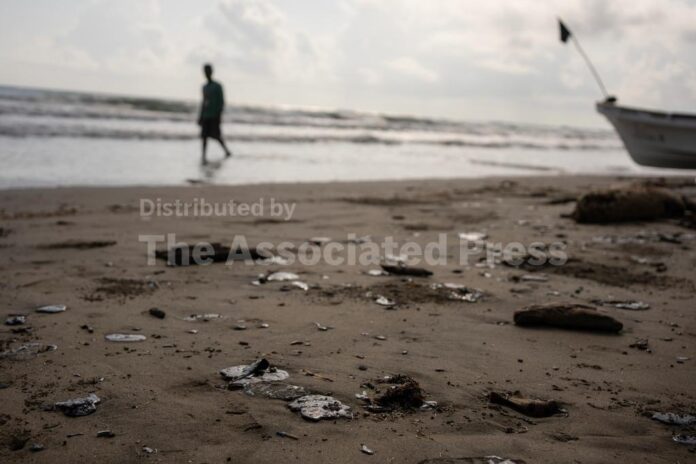

Environmental groups accuse Mexico of lying about origins of oil spill in the Gulf

MEXICO CITY (AP) — Environmentalist groups accused Mexico’s government of lying about the origins of a massive oil spill in the Gulf of Mexico, something authorities promptly denied.

The spill of off the coast of the southern Veracruz state has spread more than 373 miles and into seven nature reserves. It has dealt an environmental blow to the region as turtles and other marine life have been found on sea shores coated in oil, and to fishermen who have been unable to work in the oceans they have fished for decades.

Mexico’s government reported that 800 tons of hydrocarbon-laden waste have spilled into the ocean. The government said the spill started in March and the sources were a ship anchored off the coastal state of Veracruz and two sites from which oil naturally flows.

On Monday, a group of 17 organizations — including Greenpeace Mexico, the Mexican Alliance Against Fracking and the Mexican Center for Environmental Rights, or CEMDA — contradicted that claim and said that satellite images they captured show that the root of the spill was actually a pipeline from Mexico’s state-run oil company, Pemex, and that a large oil slick appeared in early February.

“All this lack of information is causing massive economic and environmental damage. So far no one has been held accountable,” Margarita Campuzano, spokesperson for CEMDA, said Tuesday.

Images from February circulated by the activists match images obtained by The Associated Press on Tuesday through Copernicus, the European climate agency. The photos show a boat floating over a sea clouded with what the groups say is oil, which appears to be streaming out of a platform.

The groups said that the boat in the images is Árbol Grande, which specializes in pipeline repair — implying that the government knew about the spill before it had reported and “hid it.”

Pemex called the information and images circulated by the groups “inaccurate” and said the Árbol Grande boat permanently traverses the Gulf of Mexico, “carrying out preventive inspections of platforms and specialized spill response operations.”

Campuzano called for greater transparency and more aggressive investigations by authorities.

“They’re trying to dilute their responsibility when technology makes it very easy to know where this occurred and who is responsible,” she said.

Mexican President Claudia Sheinbaum on Tuesday denied the accusations during her morning press briefing and said that up until now, “no leak has been reported” in state oil infrastructure and that such natural seeps in the Gulf have happened in the past.

She said the government was investigating with scientists if the spill was “due to these natural seeps in the area, which have been reported on many occasions and are well-documented in scientific literature, or a leak from one of the facilities.”

Sheinbaum said that it was more probable that the spill came from the natural seeps, and added that teams were hard at work cleaning up the spill and mitigating the effects.

While government officials recognized the impacts on turtles, birds and fish, and the spread to protected ecosystems, they also insisted that it had not caused “severe environmental damage.”

The accusations come as environmental groups in the United States have also raised alarm after the Trump administration exempted oil and gas drilling in the Gulf of Mexico from the Endangered Species Act, saying environmentalists’ lawsuits threatened to hobble domestic energy supplies during the U.S.-Israeli war with Iran.

Critics said the move could harm marine life and also doom a rare whale species.

___

Associated Press writer Teresa de Miguel in Mexico City contributed to this report.

___

The Associated Press’ climate and environmental coverage receives financial support from multiple private foundations. AP is solely responsible for all content. Find AP’s standards for working with philanthropies, a list of supporters and funded coverage areas at AP.org.”

Judge rules that HUD effort to change criteria for homeless funding is unlawful

A federal judge in Rhode Island ruled on Tuesday that the Trump administration’s effort to dramatically change the criteria to get tens of millions of dollars in funding to aid homeless people was unlawful.

Several nonprofits filed a lawsuit last year accusing the U.S. Department of Housing and Urban Development of changing the rules for receiving $75 million to build housing for homeless families and individuals. The plaintiffs accused the Trump administration of issuing a new Notice of Funding Opportunity, or NOFO, for the Continuum of Care Builds program to better align with its social policies.

U.S District Judge Mary McElroy, nominated by President Donald Trump, said the department’s “slapdash imposition of political whims” was unlawful and she ordered it to scrap the new policy.

“Once again, this Court is faced with a case in which an executive agency has made a last-minute decision to make major, disruptive changes to grants within its purview, all for the express purpose of accomplishing the current administration’s policy objectives,” McElroy said in her ruling that the NOFO violated the Administrative Procedure Act, a law governing how federal agencies develop and issue regulations.

A spokesperson for HUD did not immediately respond to a request for comment.

Advocates for plaintiffs welcomed the ruling.

“For more than three decades, the federal government has supported housing providers and communities through HUD’s programs to help people experiencing homelessness move into stable housing,” Skye Perryman, president and CEO of Democracy Forward, co-counsel for the plaintiffs, said in a statement. “We are pleased that the court has stopped the Trump-Vance administration from holding life-saving funding hostage to a political agenda.”

Ann Oliva, CEO of the National Alliance to End Homelessness, said the ruling was “a victory for people across this nation who have overcome homelessness and stabilized in HUD’s permanent housing programs.”

“Today’s news reinforces a fundamental truth: that the work to end homelessness is not partisan, and never should be interfered with for political means,” Oliva said in a statement.

Plaintiffs argued the Trump administration was aiming to upend polices in place for decades to satisfy its political considerations, including whether jurisdictions “support sanctuary protections, harm reduction practices, or inclusive policies for transgender people.”

The Alliance and the Women’s Development Corporation argued that HUD lacked the authority to make the changes, adding that the new award process was “shockingly unlawful” and would “irreparably injure qualified applicants for these funds and the communities they serve.”

In its court filings, HUD argued the new criteria was an effort “to ensure the availability of funding to protect our Nation’s most vulnerable individuals and families from the trauma of homelessness while simultaneously promoting self-sufficiency.”

“Defendants acted reasonably and prudently because the NOFO conditions, focusing on public safety, cooperation with law enforcement and prohibitions on illegal drug use, are sufficiently related to the funding goals of self-sufficiency and reduction of trauma,” HUD wrote.

Thousands more US troops are heading to the Middle East

WASHINGTON (AP) — Thousands of additional U.S. troops are heading to the Middle East as the Trump administration has insisted that progress has been made in talks with Iran and has threatened to escalate the war if a deal is not reached soon.

The aircraft carrier USS George H.W. Bush deployed Tuesday and is slated to go to the Middle East along with three destroyers, two U.S. officials said. The carrier strike group consists of more than 6,000 sailors.

It comes as thousands of soldiers from the 82nd Airborne Division also have begun arriving in the Middle East, according to two other U.S. officials, who, like the others, spoke on condition of anonymity to discuss sensitive military plans.

While the majority of those troops are part of a rotation of forces planned before the war, some are among roughly 1,500 paratroopers the Trump administration decided to surge into the region last week.

The Trump administration has not said what those troops will be doing, but the 82nd Airborne is trained to parachute into hostile or contested territory to secure key territory and airfields. A U.S. Navy ship carrying about 2,500 Marines recently arrived in the Middle East, and another 2,500 Marines also are being deployed from California.

The extra forces, on top of tens of thousands of service members already in the region, come as Defense Secretary Pete Hegseth and other administration officials have avoided questions about whether or not the U.S. military will deploy ground troops against Iran.

“You can’t fight and win a war if you tell your adversary what you are willing to do or what you are not willing to do to include boots on the ground,” Hegseth told reporters Tuesday.

He added, “Our adversary right now thinks there are 15 different ways we could come at them with boots on the ground. And guess what? There are.”

But he also said the goal is to reach a deal with Iran through talks because “we don’t want to have to do more militarily than we have to.”

Additional resources are heading in as the war has strained the troops and assets already in the region.

The world’s largest aircraft carrier, the USS Gerald R. Ford, had a fire in a laundry room on March 12, which forced it to return from the Red Sea to the Mediterranean Sea to undergo repairs at a naval base in Crete.

According to a Navy press release, the fire damaged seven berthing compartments aboard the ship, likely forcing hundreds of sailors to find new sleeping arrangements, and damaged personal effects.

While Ford is now in Croatia for time off, Navy leaders said the aircraft carrier will likely set records for the length of its deployment. The USS Abraham Lincoln aircraft carrier also arrived in the region in January.

“You’re going to see a recordbreaking deployment by Ford,” Adm. Daryl Caudle, the Navy’s top officer, said during a Center for Strategic and International Studies discussion Tuesday.

Caudle said the aircraft carrier would probably go into the 11th month of deployed operations — a length of time that would put the ship returning to Norfolk, Virginia, around the end of May. The Ford was in the Mediterranean before being sent to the Caribbean to take part in the military operation in January that ousted Venezuela’s leader, Nicolás Maduro, and then was deployed to support the Iran war.

“For those that are not in the Navy, that’s an extraordinary thing to even think about something of that kind of deployment length,” Caudle said.

Judge throws out US Justice Department lawsuit challenging sanctuary laws in Colorado, Denver

DENVER (AP) — A federal judge on Tuesday threw out a U.S. Department of Justice lawsuit accusing Colorado and Denver of interfering with the enforcement of immigration laws.

The lawsuit claimed the state and its most populous city passed “sanctuary laws” violating the Supremacy Clause of the U.S. Constitution. At issue were four state laws and two Denver laws that limit the use of resources for immigration enforcement and protect the rights and personal information of immigrants.

U.S. District Judge Gordon P. Gallagher said the U.S. Supreme Court ruled in a 1997 case that the federal government can’t “dragoon” state officers into carrying out federal law. He granted requests from Colorado and Denver officials to dismiss the lawsuit, concluding that “Colorado and Denver have the right to refuse to expend their resources to implement a federal regulatory program.”

The Department of Justice didn’t immediately return an after-hours request for comment.

Denver Mayor Mike Johnston welcomed the ruling.

“Today’s ruling makes clear that we cannot be required to use local resources to enforce federal policies,” he said in a statement.

The Department of Justice filed similar lawsuits targeting state or city policies seen as interfering with immigration enforcement, including those in Los Angeles, New York City and Minnesota and cities there. A federal judge dismissed a case challenging Chicago’s laws last year.

There is no strict definition for sanctuary policies or sanctuary cities, but the terms generally describe limited local cooperation with Immigration and Customs Enforcement. ICE enforces U.S. immigration laws nationwide but seeks state and local help, particularly for large-scale deportations, and requests that police and sheriffs alert it about people it wants to deport and hold them until federal officers take custody.

FAA reduces SFO arrivals, setting up delays amid runway work and safety concerns

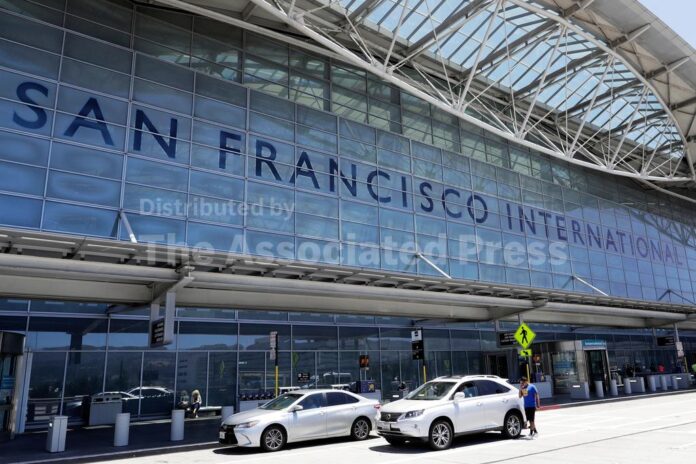
Travelers can expect roughly one quarter of the flights to be delayed by at least half an hour at San Francisco International Airport over the next six months after the Federal Aviation Administration this week cut a third of its arrivals because of safety concerns and runway construction.

A temporary runway project and permanent FAA rule change announced Tuesday means San Francisco’s airport will go from 54 plane arrivals an hour to 36 arrivals. It is not yet clear if any flights will be cut.

A deadly runway crash between Air Canada jet and a fire truck at New York’s LaGuardia Airport in March is the latest air-traffic safety calamity, but the aviation administration said the rule change was unique to SFO and it was not triggered by broader safety concerns. The San Francisco safety concerns are unique to that airport because of how close the parallel runways are and how complicated the airspace is with several surrounding airports.

FAA spokesman Ian Gregor said officials decided that SFO’s longstanding practice of landing two planes at the same time on closely spaced parallel runways that are just 750 feet apart — along with congested airspace — was too dangerous. He could not say why the practice had been allowed.

SFO operates on two sets of parallel runways. The north-south runways are out of commission for six months for a repaving project that is responsible for nine of the 18 flight per hour reductions. The rule change will affect the remaining nine flights.

It is unclear how the airport will handle the delays. United Airlines said it is reviewing the rule change to see if any changes need to be made to its flight schedule, a spokesperson said by email.

The San Francisco Bay Area is served by three major airports, including San José Mineta International Airport and Oakland San Francisco Bay Airport, and smaller ones.

___

Associated Press writer Janie Har contributed reporting from San Francisco

Lawsuit says Taylor Swift’s ‘Showgirl’ pose comes too close to the work of a real one

LOS ANGELES (AP) — A lawsuit says Taylor Swift’s “The Life of a Showgirl” stole the spotlight from the life of a real one.

Maren Wade says in the trademark infringement lawsuit filed Monday in federal court in California that the glittery branding of Swift’s 2025 album comes too close to the aesthetic of her own “Confessions of a Showgirl.” That was the name of a column she wrote on backstage Sin City life in the Las Vegas Weekly starting in 2014, which she turned into a live show that she took on a national tour.

“Both share the same structure, the same dominant phrase, and the same overall commercial impression,” the lawsuit says. “Both are used in overlapping markets and are directed at the same consumers.”

Wade is described as a “singer, songwriter, comedian, and writer” in the lawsuit filed under her legal name, Maren Flagg, and her “Showgirl” brand encompasses performances, writing and digital media.

“The Life of a Showgirl,” the stadium-packing superstar’s 12th studio album, released in October, sold 4 million copies in its first week. Its cover features her in Las Vegas cabaret garb, submerged in water with her current favorite color scheme of orange and mint green. On Tuesday, the morning after the lawsuit was filed, Swift dropped the newest video for the album for the album’s track “Elizabeth Taylor,” featuring archival footage of the Hollywood luminary who died in 2011.

Wade appeared to embrace Swift’s use of the showgirl image initially, sharing Instagram posts that used Swift’s music, hashtags related to the album, and the mint green color scheme. But Wade’s social media presence has gone silent in recent months.

Also named as defendants in the lawsuit are the company that manages Swift’s trademarks, her record label and its merchandising arm.

The lawsuit says the album, its promotion and the products surrounding it caused “textbook reverse confusion: a junior user’s overwhelming commercial presence drowns out the senior user’s mark, until consumers begin to assume that the original is the imitation. What Plaintiff had built over twelve years, Defendants threatened to swallow in weeks.”

A representative for Swift declined comment on the lawsuit.

Wade and her attorney say that the existence and trademark of “Confessions of a Showgirl” would not have escaped the notice of Swift’s team.

The lawsuit says the U.S. Patent and Trademark Office declined to grant a trademark registration to “Life of a Showgirl” over potential confusion with the existing trademark.

“Defendants were therefore placed on actual notice that their chosen designation was likely to be confused with a mark that already belonged to someone,” the lawsuit says. “They continued using it anyway.”

A letter issued by the office in early March says the application was suspended due to potential confusion with another pending trademark filed earlier, for “Showgirl,” by a third party and pertaining to perfume. It also cited a “Likelihood of Confusion Refusal” based on the existing “Confessions” trademark.

The lawsuit seeks an injunction permanently barring Swift and her companies from using the “Life of a Showgirl” name and imagery, and monetary damages to be determined at trial, including profits attributable to the use of the brand.

Trump signs order directing creation of a national voter list, a move sure to face legal challenges

WASHINGTON (AP) — President Donald Trump on Tuesday signed an executive order creating a nationwide list of verified eligible voters, a move that is sure to draw legal challenges as the president continues to demand further restrictions on voting ahead of this year’s midterm elections.

The order calls on the Department of Homeland Security, working in conjunction with the Social Security Administration, to make the list of eligible voters in each state. It also seeks to bar the U.S. Postal Service from sending absentee ballots to those not on each state’s approved list, although the president likely lacks the power to mandate what the Postal Service does.

Trump is also calling for ballots to have secure envelopes with unique barcodes for tracking, according to the executive order, which was first reported by the Daily Caller.

“I think it’s going to be really great,” Trump said.

Yet Tuesday’s order is expected to prompt legal challenges, as the president continues to try to interfere with state-run elections.

Trump’s first election executive order in March sought sweeping changes to how elections are run across the country, including adding a documentary proof-of-citizenship requirement to the federal voter registration form and requiring mailed ballots to be received at election offices by Election Day. Much of it has been blocked through legal challenges brought by voting rights groups and Democratic state attorneys general who allege it’s an unconstitutional power grab that would disenfranchise large groups of voters.

He also said in a February interview with a conservative podcaster that he wants to “take over” elections from Democratic-run areas, citing fraud allegations that numerous audits, investigations and courts have debunked.

Tuesday’s voting order shows he hasn’t learned from his previous, blocked efforts to assert control over elections, said David Becker, a former Justice Department lawyer who leads the Center for Election Innovation and Research.

“The Constitution is very clear — the president has no power over elections in the states,” Becker said. “This will be blocked as soon as lawyers can get to the courthouse.”

Elections in the U.S. are unique because they are not centralized. Rather than being run by the federal government, they’re conducted by election officials and volunteers in thousands of jurisdictions across the country, from tiny townships to sprawling urban counties with more voters than some states have people. The Constitution’s so-called “Elections Clause” also gives Congress the power to “make or alter” election regulations, at least for federal office, but it doesn’t mention any presidential authority over election administration.

The president is a vocal critic of mail-in voting, alleging that the practice is rife with fraud as he pushes lawmakers to pass a far-reaching elections bill that would clamp down on it. Trump’s accusations of widespread fraud are unfounded; a 2025 report by the Brookings Institution found that mail voting fraud occurred in only 0.000043% of total mail ballots cast, or about four cases per 10 million mail ballots.

Trump himself has also used mail ballots, most recently last week in local Florida elections. The White House has said that Trump is opposed to universal mail-in voting, rather than individual voters who may need the alternative voting method for reasons such as travel or military deployment.

___

Swenson reported from New York. Associated Press writer Julie Carr Smyth contributed to this report from Columbus, Ohio.

US appeals court denies bid from families of Boeing 737 Max crash victims to reopen criminal case

A federal appeals court has denied a request from dozens of families who lost relatives in two fatal Boeing 737 Max crashes to reopen a criminal case against the aircraft manufacturer.

Lawyers for the families had argued that the Department of Justice failed to properly consult them before reaching a deal last year with Boeing that led a lower court to dismiss a criminal conspiracy charge against the company. The charge stemmed from allegations that Boeing misled federal regulators about a flight-control system linked to the crashes, which killed 346 people.

In a unanimous decision released Tuesday, a three-judge panel of the 5th U.S. Circuit Court of Appeals said it disagreed with the families’ claims that federal prosecutors had violated their rights under the Crime Victims’ Rights Act and therefore could not revive the case.

Paul Cassell, a lawyer for the families, called the ruling “badly flawed.”

“Today’s ruling means that Boeing escapes criminal justice accountability for killing 346 people,” Cassell said Tuesday in a statement. “The victims’ families were never given a meaningful opportunity to shape the negotiations between the Justice Department and Boeing, dating back to 2020.”

Emailed messages were sent to Boeing seeking comment. At a hearing last month in New Orleans before the appellate court, Boeing attorney Paul Clement said more than 60 other families “affirmatively supported” the deal and dozens more did not oppose it.

“Boeing deeply regrets” the tragic crashes, Clement had said, and “has taken extraordinary steps to improve its internal processes and has paid substantial compensation” to the victims’ families.

The deal allowed Boeing to avoid prosecution in exchange for paying or investing an additional $1.1 billion in fines, compensation to victims’ families, and internal safety and quality measures.

At the same hearing, federal prosecutors told the judges that the government has, for years, “solicited and weighed the views of the crash victims’ families as it’s decided whether and how to prosecute the Boeing Company.”

All passengers and crew died when the 737 Max jets crashed less than five months apart in 2018 and 2019 — a Lion Air flight that plunged into the sea off the coast of Indonesia and an Ethiopian Airlines flight that crashed into a field shortly after takeoff.

The criminal case had taken many twists and turns. The Justice Department first charged Boeing in 2021 with defrauding the government but agreed not to prosecute if the company paid a settlement and took steps to comply with anti-fraud laws.

Federal prosecutors later determined in 2024 that Boeing had violated that agreement, and the company agreed to plead guilty to the charge. But U.S. District Judge Reed O’Connor in Texas, who oversaw the case for years, rejected the plea deal and directed the two sides to resume negotiations.

The Justice Department returned last May with the new deal and a request to withdraw the criminal charge altogether, which O’Connor approved in November. The Justice Department argued that going to trial carried the risk that a jury might acquit Boeing entirely, leaving the company without further punishment.

In dismissing the case, O’Connor said federal prosecutors hadn’t acted in bad faith and had explained their decision and met their obligations under the Crime Victims’ Rights Act.

O’Connor also said that case law prevented him from blocking the dismissal simply because he disagreed with the government’s view that the new deal with Boeing served the public interest.

The case centered around a software system that Boeing developed for the 737 Max, which airlines began flying in 2017. Boeing billed it as an update to its 737 family that wouldn’t require much additional pilot training.

But the Max did include significant changes, some of which Boeing downplayed — most notably, the addition of an automated flight-control system designed to help account for the plane’s larger engines. Boeing didn’t mention the system in airplane manuals, and most pilots didn’t know about it.

In both of the deadly crashes, that software pitched the nose of the plane down repeatedly based on faulty readings from a single sensor, and pilots flying for Lion Air and Ethiopian Airlines were unable to regain control. After the Ethiopia crash, the planes were grounded worldwide for 20 months.

Investigators found that Boeing did not inform key Federal Aviation Administration personnel about changes it had made to the software before regulators set pilot training requirements for the Max and certified the airliner for flight.

“One can only hope that another Boeing crash won’t be the outcome of this badly flawed ruling,” Cassell, the lawyer for the families, said Tuesday.

South Africa hit by record diesel price hikes despite fuel levy cut

JOHANNESBURG (AP) — South African motorists were on Tuesday headed to gas stations in large numbers in anticipation of record fuel hikes that will come into effect at midnight as the world continues to feel impacts of the Iran war that has affected global oil and fuel prices.

This is despite the country’s Finance Minister Enoch Godongwana on Tuesday announcing a 3 rand ($0.18) decrease per liter of fuel in an attempt to cushion against the price shock.

The 7.51 rand ($0.44) price increase for diesel, the highest on record, and the 3.06 rand ($0.18) for gasoline has already sent shock waves across the southern African nation.

By Tuesday evening, some gas stations in the east of Johannesburg were turning motorists away as they had run of both diesel and gasoline.

At some stations, only gasoline was available and those seeking diesel were turned away. Some lines were visibly building up at some of the stations that still had fuel.

Godongwana said on Tuesday that the ongoing conflict in the Middle East had increased risks to global energy markets and placed pressure on domestic fuel prices.

The decreased fuel levy for the month of April, before South Africa announced adjusted fuel prices again in March, would cost the government 6 billion rand (more than $351 million) in lost tax revenue.

The country has also been affected by operations and logistical delays in its fuel distribution as dozens of fuel stations ran dry and some fuel stations started rationing fuel purchases to customers, with some putting up restrictions of between 30 to 50 liters (8 to 13 gallons per car).

“Even after fuel levies were reduced, these are the largest increases in recent history and would be devastating for consumers,” said Theuns Du Buisson, an economic researcher at the Solidarity Research Institute.

He said that the fuel increases, especially the record increase for diesel, would have a devastating result on the cost of logistics and transportation, with knock-on effects on inflation in coming months.

With a majority of South Africans using public transport, mainly minibus taxis and buses, the impact is likely to be felt mostly by low-income households, Du Buisson said.

On Tuesday, the bus service in the capital, Pretoria, was disrupted, because of fuel shortages at the city’s bus depots, the municipality said.

___

Michelle Gumedecontributed to this report.