Home Blog Page 34

CAF reacts to chaotic Africa Cup final with host of changes. General secretary Mosengo-Omba departs

Still dealing with the fallout from a contentious Africa Cup of Nations final, African soccer’s governing body has announced a raft of “changes and improvements” to its statutes and regulations.

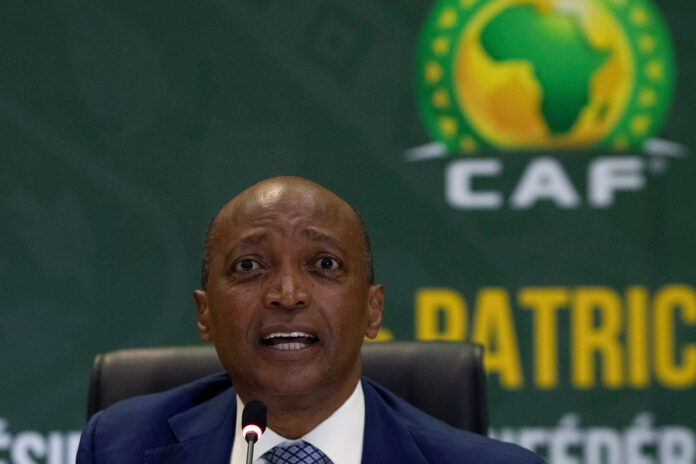
The structural, legal and administrative reforms will help the Confederation of African Football regain trust in its impartiality and ensure that the scenes from the final in January are never repeated, CAF president Patrice Motsepe said after a meeting of its executive committee in Cairo on Sunday.

“I can stand here and say we’ve got the best referees, they are independent, they’re impartial. But if the ordinary football spectators on the continent and elsewhere think they are not so impartial, it’s not good for African football,” Motsepe said.

The outcome of the final is still in dispute after CAF stripped Senegal of the title two months after the match and awarded it to host nation Morocco. Senegal has appealed to the Swiss-based Court of Arbitration for Sport and both countries claim to be African champion pending the outcome. The Senegal team paraded the trophy in Paris on Saturday.

“We have to move away also from the perception that somehow our problems in Africa and our weaknesses in Africa are greater, bigger, more embarrassing, more extreme than the problems that happen in other parts of the world,” Motsepe said.

The South African businessman said CAF was working with FIFA to provide training for referees and VAR operators, and that it was imperative to pay them well to ensure integrity.

General secretary steps down

Earlier, Véron Mosengo-Omba announced he was stepping down after five years as CAF general secretary “to devote myself to more personal projects.”

The Swiss-Congolese official is a university friend of FIFA president Gianni Infantino, who followed him from UEFA to FIFA in 2016. Mosengo-Omba left FIFA to take over as CAF general secretary in 2021.

CAF announced in January 2025 that the Swiss Public Prosecutor’s Office had decided to stop investigations against Mosengo-Omba “as they found no facts or legal basis to initiate legal proceedings” after he faced allegations of financial wrongdoing.

“Now that I have been able to dispel the suspicions that some people have gone to great lengths to cast on me, I can retire with peace of mind and without constraint, leaving the CAF more prosperous than ever,” Mosengo-Omba said Sunday.

Samson Adamu from the Nigerian Football Federation was taking over as acting general secretary and sat to Motsepe’s left during their press conference.

“The vice presidents will lead the process and will report to me on the identification of a permanent general secretary,” Motsepe said. “And I’ve told Samson, whether he likes it or not, I’m going to put pressure on him also to apply for the position to be permanent.”

Morocco hosting WAFCON

Motsepe confirmed that the Women’s Africa Cup of Nations will go ahead in Morocco as initially planned. The tournament had been scheduled to take place in the kingdom from March 17 to April 3 but was pushed back at short notice to July 25-Aug. 16.

“There were circumstances that we had not foreseen,” Motsepe said after being pressed for the reasons for the postponement.

Preparations for 2027 Africa Cup, 28 teams

Motsepe said he will visit Kenya in May to how preparations are going for the men’s 2027 Africa Cup, which Kenya is due to co-host with Tanzania and Uganda. He dismissed suggestions the tournament could be moved to another country.

Motsepe also announced the expansion of the Africa Cup to include 28 teams, up from 24 at the 2025 edition.

Motsepe already announced in December that the Africa Cup will be held every four years from 2028.

___

AP soccer: https://apnews.com/hub/soccer

Some familiar names to the Supreme Court in a death row case over racial bias in jury makeup

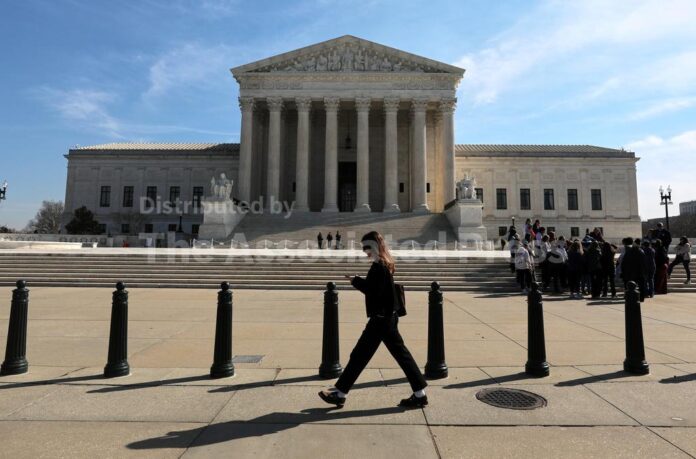
WASHINGTON (AP) — Certain names will be familiar to the Supreme Court in the latest case involving a Black death row inmate from Mississippi, with arguments set for Tuesday.

Doug Evans, a now-retired prosecutor with a history of dismissing Black jurors for discriminatory reasons, knocked all but one Black person off the jury that tried and convicted Terry Pitchford.

Judge Joseph Loper allowed it to happen. The state Supreme Court upheld the conviction.

Just seven years ago, in a case involving the same district attorney, trial judge and state high court, the Supreme Court overturned the death sentence and conviction of Curtis Flowers because of what Justice Brett Kavanaugh described as a “relentless, determined effort to rid the jury of Black individuals.”

Seven of the current nine justices were on the court then.

The Supreme Court has in recent years taken a dim view of defendants’ claims in capital cases, especially in the last-minute efforts to stave off execution. Last week, the court turned away the appeal of Texas death row inmate Rodney Reed over the dissent of three liberal justices, who believe he should be allowed to test evidence that he has argued would exonerate him.

Claim of racial discrimination

But the court in December agreed to hear Pitchford’s appeal relating to a claim of racial discrimination that, in other cases, has gained traction even among some conservative justices.

Pitchford was sentenced to death for his role in the 2004 killing of Reuben Britt, the owner of the Crossroads Grocery, just outside Grenada in northern Mississippi. Pitchford, 40, was 18 when he and a friend went to the store to rob it. The friend shot Britt three times, fatally wounding him, but was ineligible for the death penalty because he was younger than 18. Pitchford was tried for capital murder and sentenced to death.

The case has been making its way through the court system for 20 years. In 2023, U.S District Judge Michael P. Mills overturned Pitchford’s conviction, holding that the trial judge did not give Pitchford’s lawyers enough of a chance to argue that the prosecution was improperly dismissing Black jurors.

Mills wrote that his ruling was partially motivated by Evans’ actions in prior cases. A unanimous panel of the 5th U.S. Circuit Court of Appeals reversed the ruling.

In the course of selecting a jury, lawyers can excuse a juror merely because of a suspicion that a particular person would vote against their client.

The Supreme Court tried to stamp out discrimination in the composition of juries in Batson v. Kentucky in 1986. The court ruled then that jurors could not be excused from service because of their race and set up a system by which trial judges could evaluate claims of discrimination and the race-neutral explanations by prosecutors.

In Pitchford’s case, the prosecution excused four of the five remaining Black people in the jury pool and defense lawyers objected. Loper, the judge, accepted all four explanations and moved on without analyzing whether race was the reason, Mills wrote.

Issues in Pitchford’s case

The Supreme Court case focuses on whether Pitchford’s lawyers did enough to object to Loper’s rulings and whether the state Supreme Court acted reasonably in ruling they had not.

Joseph Perkovich, who will argue Pitchford’s case Tuesday, said the record in the case clearly favors his client. Loper “did not grasp he had to a constitutional duty to determine whether the reasons the district attorney gave for striking the Black citizens were credible and truthful,” Perkovich wrote in an email. “The judge simply failed even to try to discharge that critical duty, despite the defense’s efforts.”

In the state’s written filing, Mississippi Attorney General Lynn Fitch defended the state Supreme Court decision and said Evans did not inappropriately strike Black people from the jury.

Pitchford should be released or retried if he wins at the Supreme Court, his lawyers argued in written filings. Mississippi said the case should return to the state Supreme Court to review his arguments that the jury strikes were discriminatory.

Flowers was tried six times in the shooting deaths of four people. He was released from prison in 2019 and the state dropped the charges against him the following year, after Evans turned the case over to state officials. Evans stepped down from his job in 2023.

On its own, Mills wrote, the Flowers case does not prove anything. But he said that the Mississippi Supreme Court should have examined that history in considering Pitchford’s appeal.

“The court merely believes that it should have been included in a ‘totality of the circumstances’ analysis of the issue,” Mills wrote.

Olympic champion Caster Semenya disappointed with Kirsty Coventry after IOC’s transgender decision

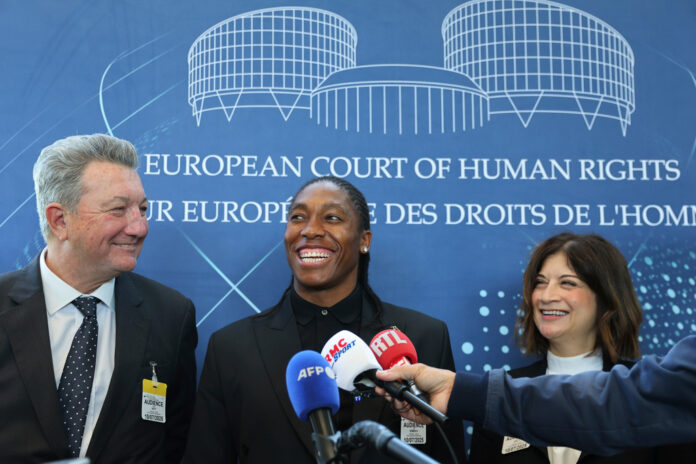
CAPE TOWN (AP) — Two-time Olympic champion runner Caster Semenya on Sunday expressed her disappointment with IOC President Kirsty Coventry over the decision to ban transgender women athletes from competing in women’s events at the Olympics.

Semenya, who is South African, said she expected more from a woman leader like Coventry, who is from Zimbabwe and a fellow African.

“Personally, for her as a leader, she’s an African, I’m sure she understands how, you know, we as Africans, we are coming from, as a global South, you know, you cannot control genetics,” Semenya said at a press conference after a women’s race promoted to celebrate female strength, unity and community support in Cape Town. “For me personally, for her being a woman coming from Africa, knowing how, you know, African women or women in the global South are affected by that.”

Semenya spoke three days after the International Olympic Committee excluded transgender women athletes from competing in women’s events at the Olympics or any IOC event. The decision published in a 10-page policy document Thursday also restricts female athletes such as Semenya with medical conditions known as differences in sex development, or DSD.

“Obviously if you say the science, because we talk about science here, if the science is clear, show us who decided and don’t dress that as a lie because it’s a lie and we know because we’ve seen it so if we were to answer or confront Kirsty that’s how we gonna respond and we’ll respond strong as we are because it affects women,” Semenya said.

Semenya, who was assigned female at birth in South Africa and has testosterone levels higher than the typical female range, is a two-time Olympic gold medalist in the 800 meters who has been banned from running in her favorite race at major international meets like the Olympics and world championships since 2019 because she refused to follow the rules and take medication to artificially reduce her hormone levels.

“For me personally, I’ll say the voice is not heard because you taking it as a tick box, you ticking a box so you can go clarify or say yes we’ve consulted,” she said. “For me, it’s you ticking the box.”

Semenya and other track athletes, such as Dutee Chand of India, challenged previous versions of their sport’s eligibility rules in court.

Before the 2024 Paris Olympics, three top-tier sports — track and field, swimming and cycling — excluded transgender women who had been through male puberty. Semenya won a European Court of Human Rights judgment in her years-long legal challenge to track and field’s rules that did not overturn them.

Last year, though, she claimed to have ended her seven-year legal challenge against sex eligibility rules despite that legal victory.

The eligibility policy that will apply from the Los Angeles Olympics in July 2028 “protects fairness, safety and integrity in the female category,” the IOC said Thursday.

It is unclear how many, if any, transgender women are competing at an Olympic level. No woman who transitioned from being born male competed at the 2024 Paris Summer Games, though weightlifter Laurel Hubbard did at the Tokyo Olympics in 2021 without winning a medal.

The IOC said last week’s decision was not retroactive and did not apply to any grassroots or recreational sports programs. The IOC’s Olympic Charter states that access to play sport is a human right.

___

AP Winter Olympics at https://apnews.com/hub/milan-cortina-2026-winter-olympics

California leads push to add key vitamin to corn tortillas, aimed at reducing Latino birth defects

Fifteen years after she lost her first baby to a rare and devastating birth defect, Andrea Lopez takes comfort in knowing that other Latina mothers might finally avoid the same pain.

In January, California became the first state to require food makers to add folic acid, a crucial vitamin, to corn masa flour used to make tortillas and other traditional foods widely used in her community.

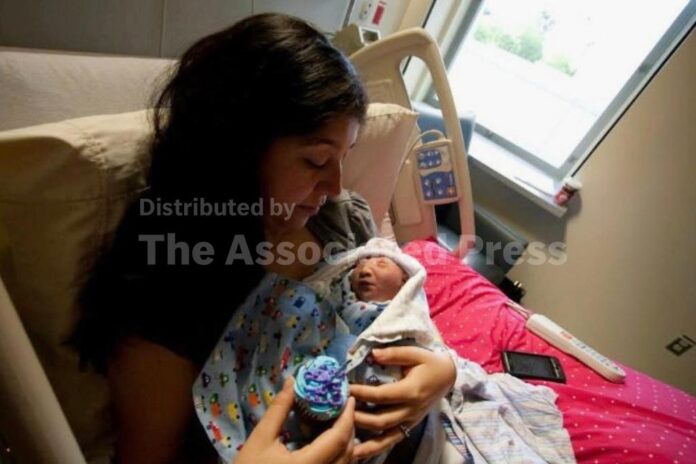
It’s a long-delayed move aimed at reducing Hispanic infants’ disproportionately high rates of serious conditions called neural tube defects, which claimed Lopez’s son, Gabriel Cude, when he was 10 days old.

“It’s such a small effort for such a tremendous impact,” said Lopez, 44, who lives in Bakersfield and is now a lawyer with two young daughters. “There is very little that I wouldn’t do to spare anybody this heartache.”

A similar law takes effect in Alabama in June, and legislation is pending or being considered in Florida, Georgia, Oklahoma and Oregon. Four more states — Texas, Delaware, New Jersey and Pennsylvania — have expressed “active interest” in the issue, according to the Food Fortification Initiative, an advocacy group that focuses on addressing micronutrient deficiencies.

“All women and children in the United States should have access to folic acid and have healthy babies,” said Scott Montgomery, the group’s director.

Corn masa was excluded from a national mandate

For nearly 30 years, folic acid, a key B vitamin, has been required to be added to enriched wheat and white breads, cereals and pastas in the U.S.

Decades of research show the 1998 requirement cut rates of serious defects such as spina bifida and anencephaly by about 30%, preventing about 1,300 cases a year. It is regarded as one of the top public health triumphs of the 20th century.

But corn masa flour, a staple used in Latino diets, was left out of the original fortification requirement — and rates of conditions such as spina bifida and anencephaly in that community have remained stubbornly high.

In 2016, federal regulators allowed, but did not require, folic acid to be added to corn masa products. By 2023, only about 1 in 7 corn masa flour products and no corn tortillas contained folic acid, a review found.

Higher rates of birth defects among Hispanic moms

Nationwide, Hispanic women have the highest rates of having those defects during pregnancy. In California, the rate among Hispanic mothers is twice as high as for white or Black women, state data show.

California’s new law — and the state’s huge buying power — could help expand its adoption nationwide, said state Assemblymember Joaquin Arambula, who sponsored the legislation passed in 2024.

“You have to be the first oftentimes to get the ball rolling,” he said. “So, I’m glad other states have taken up that mantle.”

California’s action and pressure from advocates have already spurred changes.

Gruma Corp., the parent company of Mission Foods and Azteca Milling, has been involved in the fortification issue for nearly two decades. Azteca began selling some — but not all — varieties of Maseca, its largest brand of corn masa flour, with folic acid in 2016.

As of this year, 97% of the company’s retail sales in the U.S. include folic acid. The rest are expected to be fortified before July, Gruma said in a statement.

Mission Foods began fortification in 2024. It now adds folic acid to all of its branded and private label corn tortillas in the U.S.

Such actions by large producers have helped pave the way for smaller manufacturers to follow suit, according to a recent report by the Center for Science in the Public Interest, a consumer advocacy group that has pushed for fortification.

Initially, the industry was concerned folic acid could affect flavor and the cost of changing labels, said Jim Kabbani, head of the Tortilla Industry Association. But he now expects tortilla makers will start selling fortified products on a broader scale.

“I think overall the train has left the station and it will be more and more states,” he said.

Public health experts cheer the growing momentum.

“The science is clear: Folic acid fortification works,” said Vijaya Kancherla, an Emory University epidemiology professor and director of the Center for Spina Bifida Prevention. “It’s safe. It’s proven. And it’s cost-effective.”

RFK Jr. calls corn masa fortification ‘insanity’

That view contrasts sharply with critics — including some at the highest level of government — who regard fortification of the food supply as a form of government overreach.

Late last year, Health Secretary Robert F. Kennedy Jr. criticized California’s new law in a post on X: “This is insanity. California is waging war against her children — targeting the poor and communities of color,” he wrote.

A spokesman for Kennedy declined to explain the comments.

Social media feeds are rife with people claiming that folic acid fortification is “toxic” or that people with a certain gene variation known as MTHFR can’t properly process the vitamin.

None of those claims is accurate, according to advocates and medical experts.

“What’s truly insane is that our nation’s top health official is spreading false claims and frightening people into avoiding a nutrient that’s proven to prevent birth defects and save babies’ lives,” said Eva Greenthal, CSPI’s senior policy scientist.

At fortification doses, folic acid “has never been shown to harm individuals or populations,” said Dr. Jeffery Blount, a pediatric neurosurgeon at the University of Alabama at Birmingham who works to prevent neural tube defects in the U.S. and globally.

The U.S. Centers for Disease Control and Prevention emphasizes that “people with the MTHFR gene variant can process all types of folate, including folic acid.”

Even Kennedy’s new federal dietary guidelines support fortification. Documents backing the guidelines advise pregnant women to eat folate-rich foods, such as leafy green vegetables, beans and lentils. But they also acknowledge that folic acid from fortified foods or supplements is “critical” before conception and during early pregnancy to prevent neural tube defects.

“Folic acid fortification of corn masa flour could help prevent” neural tube defects, the CDC website adds.

Without fortification, ‘It’s just too late’

Neural tube defects, which affect about 2,000 babies each year in the U.S., occur in the first weeks after conception, when the tube that forms the spine and brain fails to develop properly.

That’s often before many women realize they’re pregnant. More than 40% of U.S. pregnancies are unintended. In those cases, many women won’t have been preparing for pregnancy, noted Dr. Kimberly BeDell, medical director of a rehabilitation clinic that helps children with spina bifida at Miller Children’s Hospital in Long Beach, California.

“Even women’s best efforts in going to an OB right away and starting prenatal vitamins, it’s just too late,” BeDell said.

Adding folic acid to corn masa, the way it is added to other grains, is a way to ensure the nutrient reaches the wider population that needs it, she added.

At age 28, pregnant with her first child, Andrea Lopez didn’t know about the importance of folic acid or that the vitamin might be missing from her diet.

Then, an ultrasound mid-way through pregnancy showed that her baby had anencephaly, a fatal condition in which the skull fails to develop properly.

Lopez carried the pregnancy to term and Gabriel lived for 10 days. The pain of his loss never goes away, she said, adding that Gabriel would have been a high school freshman this year. She supports California’s law requiring folic acid fortification of corn masa and finds it “mind-boggling” that the action took so long to enforce.

“Trust me, you don’t want to go through this,” she said. “He’s the love of my life. I have two little girls that survived, but he’s my first born. He is my only son.”

___

The Associated Press Health and Science Department receives support from the Howard Hughes Medical Institute’s Department of Science Education and the Robert Wood Johnson Foundation. The AP is solely responsible for all content.

In wrangling dark matter, some scientists find inspiration in the Torah, Krishna and Christ

When an invisible entity making up 85% of the universe’s mass stumps the greatest scientific minds of our time, awe is an understandable response.

Physicists call it “ dark matter, ” a substance they describe as the cosmic glue, the scaffolding, a web that uses gravity to corral, shape and hold together stars, planets and galaxies. Yet nobody knows exactly what it is.

Dark matter’s existence is only inferred from its gravitational effects on visible matter. Together with dark energy — a mysterious force causing the universe to expand at an accelerated rate — they are the biggest scientific mysteries of our time.

So it’s no surprise that dark matter and dark energy, which may hold answers to the origins and fate of the universe, have sparked profound religious and philosophical conversations — inspirational to some scientists, cringeworthy to others.

The worlds of science and faith are not as separate as they might seem. Many scientists have expressed how studying the majesty of the cosmos can be complementary rather than conflicting with their faith or spiritual practice.

Astrophysicist inspired by the Torah

Vera Rubin, an astronomer whose observations of galaxy rotation curves in the 1970s provided the first robust evidence for dark matter’s existence, embraced her Jewish faith as a guide to understanding her role in the universe.

When Chanda Prescod-Weinstein met Rubin as a doctoral student in 2009, the renowned astrophysicist posed an unexpected question: “So how do you think we solve the dark matter problem?”

Prescod-Weinstein, who is an agnostic-atheist and Jewish, cites Rubin’s gracious query as a factor in deciding to study a theoretical particle called the axion, which could potentially solve the dark matter problem. Prescod-Weinstein says she draws on Reconstructionist Jewish teaching and the Torah for scientific inspiration.

“The stories in the Torah are about people who lived in a very intimate relationship with the land and with the night sky, and with a sense of all of that as a part of creation and the creation story,” she said.

Scientist seeks clues in the deep

It was an obsession with dark matter and dark energy that got Brittany Kamai into astrophysics. She is only the second Native Hawaiian to earn a doctorate in the field. After spending years developing the Fermilab Holometer, an instrument designed to understand what space and time are made of, Kamai returned to her spiritual roots in Hawaii as an apprentice navigator and crew member of a voyaging canoe.

Kamai trains in celestial navigation, using the stars, winds and waves to traverse the ocean without modern instruments. She wonders if the missing link in these mysteries might lie in spirituality — a quality she says many scientists dismiss.

In canoeing, Kamai says she is learning the importance of being “spiritually tuned,” seeking clues her ancestors may have left behind. She wonders if being in the deep ocean could crack the mystery of dark energy.

“When you boil down physics, it’s all a bunch of waves — particles, sound waves,” she said. “Why wouldn’t we need to be in the deepest part of our ocean to have the deepest connection to the entire universe?”

Researcher found solace in Hindu origin stories

Doug Watson was beset by doubt as a postdoctoral fellow researching dark matter. When he felt burned out, his wife introduced him to the International Society for Krishna Consciousness, or ISKCON, widely known as the Hare Krishna movement, a branch of Hinduism that glorifies Lord Krishna as the Supreme Being. Watson, who used to be nonreligious, said he embraced a religious tradition that encouraged doubt, curiosity and scientific inquiry.

He studied holy texts like the Srimad Bhagavatam, which describes a scene when Krishna’s transcendental gaze animates the universe. This, to Watson, seems “eerily similar” to the observer effect in quantum mechanics — the phenomenon where the act of measuring or observing a quantum system, such as a proton or electron, changes its state.

Watson has used these stories as inspiration to overcome barriers that prompted his burnout.

“I definitely don’t think drawing direct lines between religious texts and scientific facts is the right approach,” he said. “Rather, I see how these stories could inform and inspire new ways of thinking about the origins of the universe.”

Differing interpretations of dark matter’s meaning

Some scientists, such as astrobiologist Adam Frank, warn that seeking sacredness in topics like dark matter might end in disappointment because science constantly evolves.

“You don’t want to base your faith or spirituality on a graph in a scientific paper that goes up or down,” he said.

For Frank, a Zen Buddhist, the true link between science and spiritual endeavor is the awe they instill.

“Whether it’s the poetry of your scripture that you love or the beauty of the equations you are deriving, they’re both calls toward that feeling,” he said.

For the faithful, acceptance that there is nothing transcendent about this world is simply impossible, said Caner Dagli, an Islamic scholar and religious studies professor at the College of the Holy Cross in Massachusetts.

“Transhumanists and other philosophers might think that if we just had enough computing power, we might be able to get the equations to really understand the universe completely,” he said. “But that’s off the table for Muslims because we believe God intervenes in history, he answers prayer.”

Chris Impey, professor of astronomy at the University of Arizona, has often visited India to teach Tibetan monks and nuns at the Dalai Lama’s invitation. Being awed by a mystifying universe feels like a spiritual experience, he says.

Impey, an agnostic, has found many aspects of Buddhism compatible with modern cosmology.

“They can accommodate in their tradition an ancient universe, billions of years old,” he said. “They can accommodate many worlds, life in other worlds, life more advanced than us.”

Scientific inquiry could be pathway to the divine

Adam Hincks, a Jesuit priest who teaches at the University of Toronto and serves as an adjunct scholar at the Vatican Observatory, believes that for some, contemplating dark matter and dark energy could elevate their minds to God.

“There are also other things in the universe that for some, would be a similar conduit, such as a beautiful waterfall,” he said. “As the creator, God is present in all of creation, and contemplating creation is a portal to contemplating the divine.”

Australian astrophysicist Ken Freeman is considered a “dark matter pioneer” primarily for his landmark 1970 research that provided some of the first modern evidence of invisible mass in spiral galaxies. Freeman is Christian; like many scientists before him, he wonders about the role of intuition in scientific discovery.

“You wake up in the middle of the night with a thought and you have no idea where that came from,” he said. “People of faith might look at it as the action of the Holy Spirit.”

Was his urge to study dark matter the Holy Spirit’s work?

“I would not paint it that way, but it’s a nagging possibility,” he said.

Jennifer Wiseman, a Christian astrophysicist, draws on her faith for wisdom as she investigates the big, enigmatic questions of the universe and ponders using scientific progress to serve humanity.

“Studying the deep universe may make us feel insignificant,” Wiseman said. “But it also gives us a sense of unity that we’re all on the same planet. … The hope is we get a sense of joy, humility and love from these contemplations.”

___

Associated Press religion coverage receives support through the AP’s collaboration with The Conversation US, with funding from Lilly Endowment Inc. The AP is solely responsible for this content.

Extreme weather in Afghanistan leaves 17 people dead, authorities say

KABUL, Afghanistan (AP) — Severe flooding, a landslide and thunderstorms in parts of Afghanistan left 17 people dead and 26 injured over the last 24 hours, with more heavy rainfall predicted, authorities said Sunday, the latest casualties from extreme weather in the country this season.

The number of casualties could increase as crews from the country’s National Disaster Management Authority survey the affected areas, the authority’s spokesman, Yousuf Hammad, said in a statement. Thirteen of Afghanistan’s 34 provinces, mostly in the western, central and northwestern parts of the country, were affected.

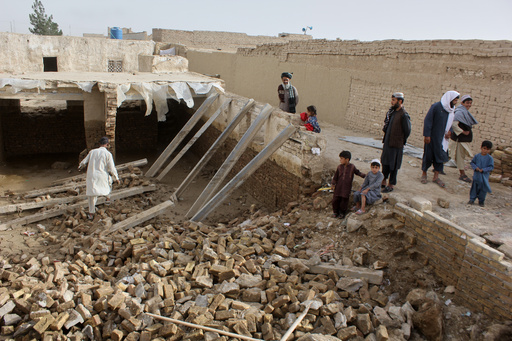
The severe weather also left 147 homes either completely or partially destroyed, wiped out 80 kilometers (about 50 miles) of roads and destroyed agricultural land and irrigation canals and businesses, Hammad said. In all, he said, 530 families were affected.

Heavy rainfall was also forecast to affect eastern and central parts of the country Monday, and Hammad warned flooding was also possible in those areas. The disaster management authority warned residents to avoid river banks and areas at risk of flooding in those regions, and ordered local officials to be on standby to provide assistance.

Earlier this year, heavy snowfall and flash floods left dozens of people dead across the country.

Afghanistan is highly vulnerable to extreme weather events, with snow and heavy rain that trigger flash floods, often killing dozens, or even hundreds, of people at a time. In 2024, more than 300 people died in springtime flash floods.

Decades of conflict, coupled with poor infrastructure, a struggling economy, deforestation and the intensifying effects of climate change have amplified the impact of such disasters, particularly in remote areas where many homes are built of mud and offer limited protection against sudden deluges or heavy snowfall.

Pope Leo XIV opens Holy Week with Palm Sunday that recalls final days of Pope Francis’ life

ROME (AP) — Pope Leo XIV celebrated Palm Sunday before tens of thousands of people in St. Peter’s Square, as he opened his first Holy Week as pontiff that for many people recalled the final, suffering days of Pope Francis’ life.

The celebration began with a procession of cardinals, bishops, priests and laypeople walking into the square carrying olive branches and palm fronds, some intricately braided. They stopped at the central obelisk, where Leo delivered an opening prayer, and then processed toward the altar to begin the Mass.

Palm Sunday marks Jesus’ triumphant entrance into Jerusalem in the time leading up to his crucifixion, which Christians observe on Good Friday, and resurrection on Easter Sunday.

When Holy Week opened last year, Francis was still recovering at the Vatican after a five-week hospital stay for double pneumonia. He had delegated the liturgical celebrations to others, but rallied on Easter Sunday to greet the faithful from the loggia of St. Peter’s Square. Most poignantly, he then made what became his final popemobile loop around the piazza.

Francis died the following morning, Easter Monday, after suffering a stroke. His nurse, Massimiliano Strappetti, later told Vatican Media that Francis had told him: “Thank you for bringing me back to the square” for the final salute.

Leo is due to preside over this week’s liturgical appointments and is returning to tradition with the Holy Thursday feet-wash ceremony that commemorates Jesus’ Last Supper with his disciples.

During his 12-year pontificate, Francis famously celebrated the Holy Thursday ritual by travelling to Rome-area prisons and refugee centers to wash the feet of people most on society’s margins. His aim was to drive home the ritual’s message of service and humility, and he would frequently muse during his Holy Thursday homilies “Why them and not me?”

Francis’ gesture had been praised as a tangible evidence of his belief that the church must go to the peripheries to find those most in need of God’s love and mercy. But some critics bristled at the annual outings, especially since Francis would also wash the feet of Muslims and people of other faiths.

Leo, history’s first U.S.-born pope, is returning the Holy Thursday foot-wash tradition to the basilica of St. John Lateran, where popes performed it for decades. The Vatican hasn’t yet said who will participate, though Popes Benedict XVI and John Paul II normally washed the feet of 12 priests.

On Friday, Leo is due to preside over the Good Friday procession at Rome’s Colosseum commemorating Christ’s Passion and crucifixion. Saturday brings the late night Easter Vigil, during which Leo will baptize new Catholics, followed a few hours later by Easter Sunday when Christians commemorate the resurrection of Jesus.

Leo will celebrate Easter Sunday Mass in St. Peter’s Square and then deliver his Easter blessing from the loggia of the basilica.

___

Associated Press religion coverage receives support through the AP’s collaboration with The Conversation US, with funding from Lilly Endowment Inc. The AP is solely responsible for this content.

Jerusalem heads into a subdued Passover and Easter under the shadow of the Iran war

JERUSALEM (AP) — Jerusalem’s major holy sites are shuttered and families are dejected and exhausted ahead of Passover and Easter as the Iran war enters its fifth week. The mood stands in stark contrast to a usual spring, when longer days herald a period of family gatherings and an influx of tourists for the major Jewish and Christian holidays.

Metal shutters are drawn on nearly all stores in the Old City, home to key holy sites, and only scattered footsteps echo on deserted stone alleyways. Vast plazas are missing the typical throngs of faithful and tourists.

Jerusalem has largely escaped past wars, with Israel’s enemies appearing to be hesitant to launch missiles near the city’s Muslim holy sites. But since Israel and the United States launched strikes on Iran on Feb. 28, Jerusalem has repeatedly come under fire.

Earlier this month, an intercepted Iranian missile sprayed shrapnel on the rooftop of the Greek Orthodox Patriarchate, just steps from the Church of the Holy Sepulcher, one of the most important sites in Christianity. The church, built on what is revered by many Christians as the site of Jesus’ crucifixion, burial and resurrection, remains closed under Israeli military guidelines prohibiting gatherings of more than 50 people.

Missile debris also hit a road leading to the Western Wall, the holiest site where Jews can pray.

From his office overlooking the plaza at the Western Wall, now also closed to worshipers, Rabbi Shmuel Rabinowitz, lamented the empty plaza.

“The heart aches greatly, it bleeds, seeing the Western Wall as it looks now,” he said.

The massive priestly blessing for Passover, which usually draws tens of thousands, will take place with just 50 worshippers, Rabinowitz said. That’s the maximum allowed to pray together in the enclosed area by the Western Wall under wartime safety guidelines — reminiscent of the restrictions imposed during the coronavirus pandemic.

Easter celebrations are canceled

The Latin Patriarchate has canceled a procession on Sunday commemorating Jesus’ triumphant entry into Jerusalem, the Christian celebration known as Palm Sunday.

Any other year, tens of thousands of Christians from around the world would walk down the narrow, hilly streets toward the Old City, waving palm fronds and singing.

Rami Asakrieh, the parish priest for Jerusalem’s Catholics, said the community will sorely miss the procession, a deeply emotional and spiritual part of the holiday. But the cancellation is also a reminder that faith comes internally from the heart, not from external actions, he added.

“We are celebrating resurrection, resurrection is from death and winning the pain and the war,” he said. “It will not come by having fear, but by having faith.”

A local Catholic high school, empty of students as classes have been canceled, was also recently hit by debris from an Iranian missile interception, Asakrieh said.

A Franciscan priest, Asakrieh is still celebrating Mass for up to 50 parishioners at the Saint Savoir monastery’s cavernous marble hall, near the centuries-old complex’s music school, the Magnificat Institute. The school was built in what was once the convent’s basement, which has been approved by the Israeli military as a suitable shelter.

Jerusalem’s smaller synagogues, mosques and churches are also open to groups of up to 50 people — if they are located close to a shelter or a safe space.

Closed for most of Ramadan

Next to the Western Wall is Al Aqsa Mosque compound, Islam’s third-holiest site, which has also stood empty since the war started, canceling prayers during most of the Muslim holy month of Ramadan, which ended 10 days ago.

Fayez Dakkak, a third-generation Muslim storeowner in the Old City whose shop has catered to Christian pilgrims since 1942, said he was heartbroken over Al Aqsa’s closure during the Islamic holy month.

“It’s like there was no Ramadan for us,” Dakkak said. He added that he prayed several times at a local mosque but that it can’t compare to being able to pray at Al Aqsa.

Police orders have closed his shop, along with all non-food stores in the Old City — also part of the safety guidelines during the war.

Dakkak said that for years now, as the numbers of pilgrims and tourists plummeted, he’s barely been able to make ends meet. Still, it would have been nice to open his shop for some semblance of routine and just chat with other storeowners.

Cleaning for Passover, running for the shelter

Israelis have also grown weary after nearly a month of daily sirens, 16 civilian deaths and dozens of people seriously injured.

For seder, Jewish families are planning smaller, stripped-down ceremonial Passover dinners that commemorate the Jewish exodus from Egypt — a far cry from times when large family gatherings often welcomed relatives from abroad. Israel’s Ben Gurion airport has been operating on a severely limited basis throughout the war. Many point out the irony that ahead of Passover, Israelis are fleeing the country through the land border crossing with Egypt to the Sinai desert, while the holiday commemorates the story of ancient Israelites leaving Egypt via Sinai to Israel.

Observant Jewish families are frantically cleaning for Passover to remove traces of leavening, which requires “turning the house upside-down in between running for the shelter,” said Jamie Geller, a cookbook author who works in Jerusalem’s Old City.

From her office at Aish, a Jewish educational institute with headquarters next to the Western Wall plaza, Geller can see where shrapnel dented and smashed rooftops, roads and a parking lot in the area.

“It’s shocking,” she said. “The Old City has always been a bit off limits for international terror and war, but not this time.”

Disney opens World of Frozen at renamed Paris park in 2 billion euro expansion

CHESSY, France (AP) — The kingdom of Arendelle in Disney’s “Frozen” now has a permanent address just east of Paris, complete with a lagoon, a wooden Nordic village and a robotic snowman that talks back to children.

Walt Disney Studios Park officially becomes Disney Adventure World on Sunday with the opening of “World of Frozen,” the centerpiece of a 2 billion euro ($2.18 billion) expansion reshaping Europe’s most-visited theme park.

The enchanted land at Disneyland Paris features the Frozen Ever After boat ride and character encounters with Anna and Elsa.

The broader relaunch adds a vast central lake, a “Tangled” attraction, 15 new dining locations and a nighttime spectacular using what Disney calls the world’s first combined aquatic and aerial drone system.

More than 90% of the second park will have been redesigned since it opened in 2002.

It is no coincidence that “Frozen” and “Tangled” anchor the new lineup at Europe’s sole Disney resort.

Both are rooted in European folklore — “Frozen” loosely in Hans Christian Andersen’s “The Snow Queen,” and “Tangled” in the Brothers Grimm’s Rapunzel — and Disney is leaning into that heritage.

“’Frozen’ has its roots in European storytelling,” said Michel den Dulk, vice president and creative director at Walt Disney Imagineering. “To have a northern European, charming wooden little village here in Disneyland Paris just made sense.”

The park opened in 1992 as Euro Disney to withering criticism. French intellectuals at the time called it a “cultural Chernobyl.”

Now Disney says the resort has drawn 445 million visits and supports 70,000 jobs.

The Paris investment is reportedly one piece of a roughly $60 billion global expansion of Disney’s parks and experiences business, which generated 57% of the company’s segment operating income in fiscal 2025.

French President Emmanuel Macron called the resort “the leading tourist destination in Europe” during a visit to the park Friday and said the expansion would create 1,000 direct jobs.

Electric bikes can be fast and dangerous. Here’s how to stay safe

SIOUX FALLS, S.D. (AP) — The 14-year-old was riding an electric bicycle at an estimated 25 mph when he slammed into Janet Stotko during her evening walk, leaving her unconscious and bleeding on a sidewalk in her Minnesota neighborhood.

The 2024 crash nearly killed Stotko, who was raced to a hospital with severe brain injuries, a facial fracture and broken eardrum. But after being on a ventilator for two days, spending three weeks in the hospital and enduring brain surgery, she survived, surprising even her doctors.

At a checkup, she said, her doctors told her, “Wow, we can’t believe you’re here.”

Now, she’s pushing for stricter laws regulating e-bikes in hopes that others won’t be hurt.

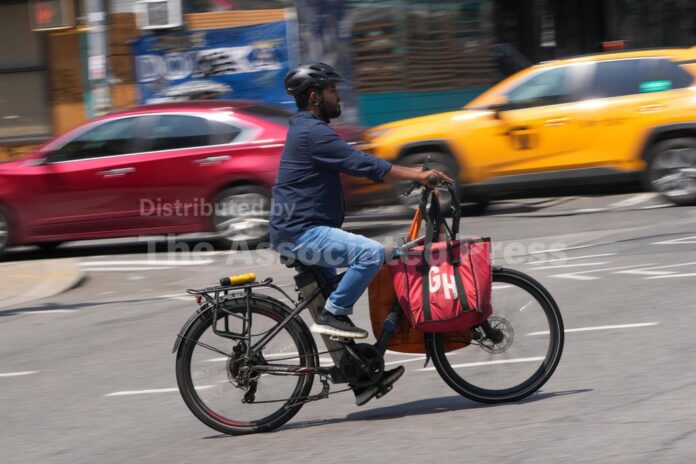
E-bikes offer a convenient, eco-friendly and cost-effective alternative to cars, but their increasing use is drawing safety concerns. A study by the University of California, San Francisco found that rider injuries from e-bikes nearly doubled each year from 2017 to 2022, and a University of California, San Diego study showed injuries in San Diego among e-bike riders under 18 soared 300% from 2019 to 2023.

Under federal law, most e-bikes are considered nonmotorized vehicles just like traditional bicycles, so riders don’t need a driver’s license or insurance and they don’t have to wear a helmet. But many states have more stringent rules, and regulations vary widely.

Health experts have called for new laws and better enforcement of existing regulations, and officials in many places are taking action.

Here’s what e-bikers should know to keep themselves and people around them safe.

Not all e-bikes are the same

Many states have adopted a three-tier classification of e-bikes: Class 1 have motors that kick in while riders pedal with maximum speeds of 20 mph; Class 2 have throttles that reach the 20 mph maximum without pedaling; and Class 3 provide pedal-assist up to 28 mph.

There are faster versions available, sometimes called e-motos, that can reach 40 mph even without pedaling. Many states treat these bikes like motorcycles, so they’re not allowed on sidewalks or paths, but in some states there are no specific rules for the ultra-fast bikes.

As John Maa, a general surgeon at MarinHealth Medical Center in Northern California, notes, it’s basic math that increased speeds lead to increased injuries.

“It’s Newton’s principles, right? Force equals mass times acceleration, and also kinetic energy is mass times velocity squared,” Maa said.

Learn where you can and can’t ride

Speed limits, helmet requirements and other rules for e-bikes are changing rapidly, and what’s legal in one city or state might be illegal in the next.

New York City imposed a speed limit of 15 mph on all electric bikes in October, and Florida lawmakers recently sent the governor a bill limiting e-bike speeds to 10 mph within 50 feet of pedestrians. In Connecticut, an October law requires all e-bike riders to wear a helmet, and bikes without pedals equipped with batteries over 750 watts will require a driver’s license.

“We were not only hearing from manufacturers and riders, but we were hearing from concerned citizens trying to share the road with these new electric bikes and e-scooters, and also law enforcement who really needed some clear policies set into place,” said Christine Cohen, the Connecticut state senator behind the legislation.

Know your bike

The market is full of vehicles that blur the line between a traditional e-bike and something closer to a motorcycle, and manufacturers don’t always make the distinction easy to spot.

To understand a bike’s capabilities and where it can be legally ridden, check its top speed, motor wattage, and whether it requires pedaling or operates on throttle alone. Anything outside the three-class classification could be subject to motor vehicle regulations, making it illegal to ride on some shared-use paths where slower e-bikes are allowed.

“The first thing we always tell people is familiarize yourself, read the manual, look at some videos, look at your specific model,” said Charles DiMaggio, an injury public health researcher and professor at New York University’s medical school.

Going to a local bike shop instead of buying online can help, enabling riders to ask questions, take a test ride and learn what’s legal and what isn’t.

Follow traditional bike safety measures

Hospitals and medical groups like the American College of Surgeons and American Association of Neurological Surgeons have called for stricter policies and offered safety tips.

Above all, they stress wearing a helmet. Other tips include riding defensively around cars, using front and rear lights, wearing reflective vests in the dark, and avoiding biking under the influence of drugs or alcohol. Experts also recommend against altering an e-bike to make it faster.

Maa added that e-bike riders should consider wearing a motorcycle helmet that covers the neck to protect against spinal injuries. He also advises parents to make sure their children can comfortably ride a pedal bike before they graduate to e-bikes.

“Make sure they’re comfortable, they understand the rules of the road, they’re able to navigate turns, understand the flow of traffic, the use of bicycle lanes,” Maa said.

Minnesota victim wants accountability

After she was injured, Stotko told the city council in her community of Hastings, Minnesota, about her crash to push for a stricter ordinance. The city agreed, reducing maximum e-bike speeds to 15 mph on city trails, prohibiting e-bikes on sidewalks and imposing penalties.

City police issued a citation to the 14-year-old rider for operating an e-bike underage, but no one was charged for the injury to Stotko.

“It’s really about taking accountability and ownership of owning an e-bike and operating one,” she said.