Home Blog Page 451

The Latest: Supreme Court strikes down Trump’s tariffs, upending central plank of economic agenda

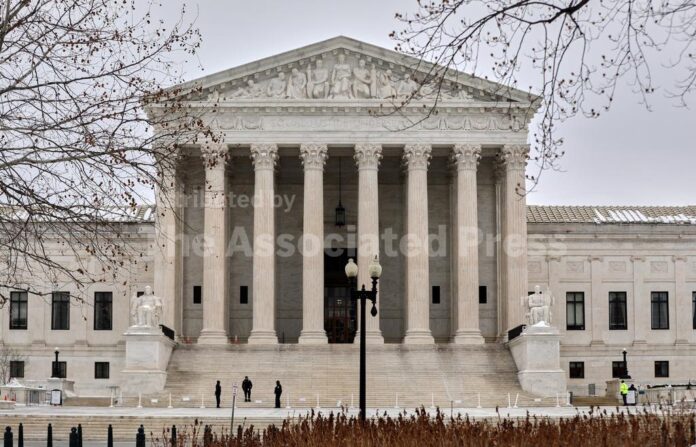
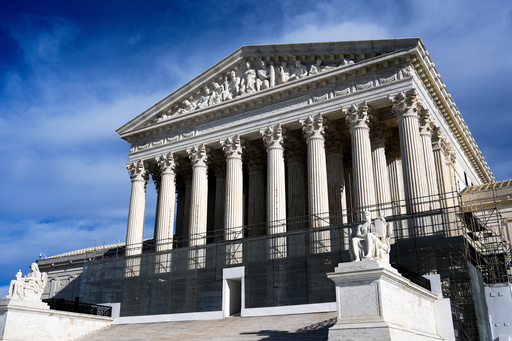
The Supreme Court struck down President Donald Trump’s far-reaching global tariffs on Friday, handing him a significant loss on an issue crucial to his economic agenda.

The 6-3 decision centers on the tariffs Trump unilaterally imposed under an emergency powers law, including the sweeping “reciprocal” tariffs levied on nearly every other country.

It’s the first major piece of Trump’s broad agenda to come squarely before the nation’s highest court, which he helped shape with the appointments of three conservative jurists in his first term.

The majority found that the Constitution “very clearly” gives Congress the power to impose taxes, which include tariffs. “The Framers did not vest any part of the taxing power in the Executive Branch,” Chief Justice John Roberts wrote.

“The tariffs at issue here may or may not be wise policy. But as a matter of text, history, and precedent, they are clearly lawful,” Kavanaugh wrote in the dissent.

The Latest:

The court majority did not address whether companies could get refunds

Companies have collectively paid billions in tariffs. Many companies, including the big-box warehouse chain Costco, have already lined up for refunds in court, and Kavanaugh noted the process could be complicated.

“The Court says nothing today about whether, and if so how, the Government should go about returning the billions of dollars that it has collected from importers. But that process is likely to be a ‘mess,’ as was acknowledged at oral argument,” Justice Kavanaugh wrote in the dissent.

Small businesses hope for a quick refund

We Pay the Tariffs, a coalition of more than 800 small businesses that has been advocating against the tariffs, said a process for refunding the tariffs is imperative.

“A legal victory is meaningless without actual relief for the businesses that paid these tariffs,” executive director Dan Anthony said in a statement. “The administration’s only responsible course of action now is to establish a fast, efficient, and automatic refund process that returns tariff money to the businesses that paid it.”

‘Welcome news for American importers’

Scott Lincicome, at Cato’s Herbert A. Stiefel Center for Trade Policy Studies said the Supreme Court’s decision “is welcome news for American importers” and the U.S. economy, however “the federal government must refund the tens of billions of dollars in customs duties” that it collected pursuant to its perceived International Emergency Economic Powers Act power authority that the court says it does not have.

“That refund process could be easy, but it appears more likely that more litigation and paperwork will be required,” Lincicome said.

No immediate White House response

Trump had been steeling himself for the possibility that the Supreme Court could reject his power to declare an emergency and impose tariffs — but the White House stayed conspicuously quiet in the roughly 20 minutes after the court ruled against Trump.

The ruling delivered a colossal blow to Trump’s belief that he could impose import taxes without needing to go through Congress, adding to the chaos that Trump’s back and forth over tariffs since his return to the White House have provoked.

The president has previously said that losing the case would derail the U.S. economy and cause the budget deficit to explode without the tariff revenues.

Small business group applauds ruling

The CAMEO Network, a small business organization, praised the Supreme Court’s ruling Friday.

“Tariffs are holding back U.S. manufacturing, driving up costs for businesses and consumers, and slowing our economy,” said Carolina Martinez, CEO of CAMEO. “Our hope is that this ruling provides relief for business owners who have been navigating supply chain shocks and uncertainty over the past year.”

Previous rulings from the emergency docket

The Supreme Court ruling comes despite a series of short-term wins on the court’s emergency docket that have allowed Trump to push ahead with extraordinary flexes of executive power on issues ranging from high-profile firings to major federal funding cuts.

US stocks hold relatively steady

U.S. stocks are edging higher in tentative trading after the Supreme Court struck down President Trump’s sweeping tariffs, which had been a source of volatility for the market.

The S&P 500 was 0.1% higher a few minutes after the court announced its ruling. It had been drifting between small gains and losses earlier in the morning, after discouraging reports showing slowing growth for the economy and faster inflation created relatively few ripples in the market.

The Dow Jones Industrial Average added 20 points, or less than 0.1%, and the Nasdaq composite rose 0.1%. Treasury yields also remained fairly muted in the bond market.

Can Trump still impose tariffs?

Yes, but not under the fast-acting law he previously used. Top administration officials have said they expect to keep the tariff framework in place under other authorities, though alternative laws carry greater limitations on the speed and severity of Trump’s actions.

What was the impact of Trump’s tariffs?

They were estimated to have an economic impact of some $3 trillion over the next decade, according to the Congressional Budget Office.

What did each side argue?

The Justice Department argued that a 1977 law allowing the president to regulate imports during emergencies also includes setting tariffs. The challengers argued that the law doesn’t even mention tariffs and that Trump’s use of it fails several legal tests, including one that doomed then-President Joe Biden’s $500 billion student loan forgiveness program.

The chief justice and 2 Trump appointees ruled against the president’s tariffs

Chief Justice John Roberts wrote the court’s majority opinion, joined by Justices Neil Gorsuch and Amy Coney Barrett, two of Trump’s three Supreme Court picks. The three liberal justices were also part of the majority.

Justice Brett Kavanaugh, Trump’s other appointee, wrote the main dissent, joined by Justices Clarence Thomas and Samuel Alito.
Supreme Court strikes down Trump’s sweeping tariffs, upending central plank of economic agenda

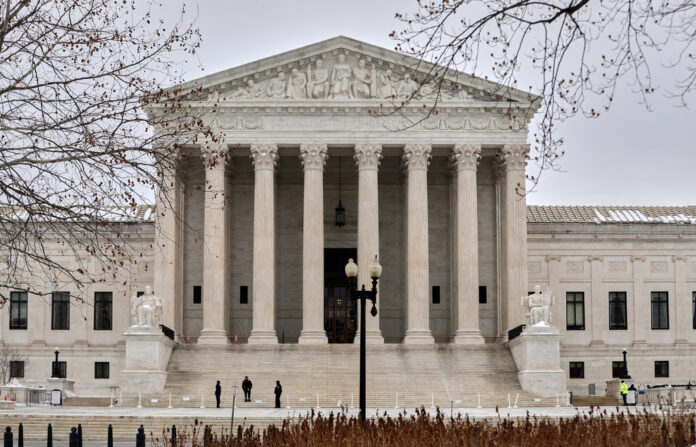
WASHINGTON (AP) — The Supreme Court struck down President Donald Trump’s far-reaching global tariffs on Friday, handing him a significant loss on an issue crucial to his economic agenda.

The 6-3 decision centers on tariffs imposed under an emergency powers law, including the sweeping “reciprocal” tariffs he levied on nearly every other country.

It’s the first major piece of Trump’s broad agenda to come squarely before the nation’s highest court, which he helped shape with the appointments of three conservative jurists in his first term.

The majority found that the Constitution “very clearly” gives Congress the power to impose taxes, which include tariffs. “The Framers did not vest any part of the taxing power in the Executive Branch,” Chief Justice John Roberts wrote.

Justices Samuel Alito, Clarence Thomas and Brett Kavanaugh dissented.

“The tariffs at issue here may or may not be wise policy. But as a matter of text, history, and precedent, they are clearly lawful,” Kavanaugh wrote in the dissent.

The tariffs decision doesn’t stop Trump from imposing duties under other laws. While those have more limitations on the speed and severity of Trump’s actions, top administration officials have said they expect to keep the tariff framework in place under other authorities.

The Supreme Court ruling comes despite a series of short-term wins on the court’s emergency docket that have allowed Trump to push ahead with extraordinary flexes of executive power on issues ranging from high-profile firings to major federal funding cuts.

The Republican president has been vocal about the case, calling it one of the most important in U.S. history and saying a ruling against him would be an economic body blow to the country. But legal opposition crossed the political spectrum, including libertarian and pro-business groups that are typically aligned with the GOP. Polling has found tariffs aren’t broadly popular with the public, amid wider voter concern about affordability.

The Constitution gives Congress the power to levy tariffs. But the Trump administration argued that a 1977 law allowing the president to regulate importation during emergencies also allows him to set tariffs. Other presidents have used the law dozens of times, often to impose sanctions, but Trump was the first president to invoke it for import taxes.

Trump set what he called “reciprocal” tariffs on most countries in April 2025 to address trade deficits that he declared a national emergency. Those came after he imposed duties on Canada, China and Mexico, ostensibly to address a drug trafficking emergency.

A series of lawsuits followed, including a case from a dozen largely Democratic-leaning states and others from small businesses selling everything from plumbing supplies to educational toys to women’s cycling apparel.

The challengers argued the emergency powers law doesn’t even mention tariffs and Trump’s use of it fails several legal tests, including one that doomed then-President Joe Biden’s $500 billion student loan forgiveness program.

The economic impact of Trump’s tariffs has been estimated at some $3 trillion over the next decade, according to the Congressional Budget Office. The Treasury has collected more than $133 billion from the import taxes the president has imposed under the emergency powers law, federal data from December shows. Many companies, including the big-box warehouse chain Costco, have already lined up in court to demand refunds.


‘A huge mistake.’ Kompany hits out at Mourinho for Vinícius Júnior comments

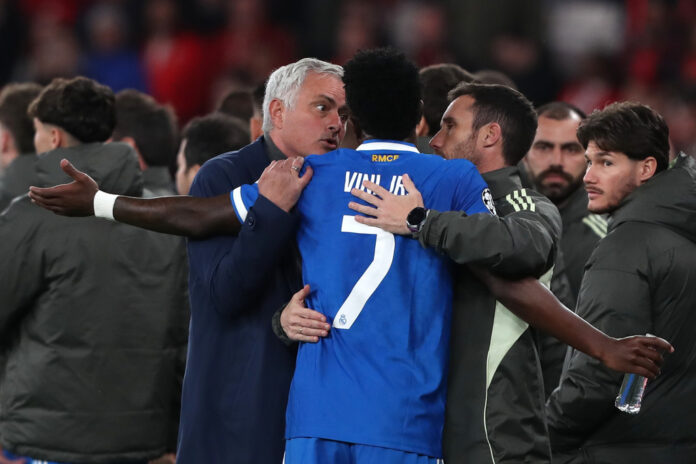
Bayern Munich coach Vincent Kompany has criticized José Mourinho for attacking the character of Vinícius Júnior after the Real Madrid star accused an opponent of racially insulting him during a Champions League match.

Benfica coach Mourinho suggested that Brazil forward Vinícius had incited Benfica’s players with his celebrations after scoring the only goal in Tuesday’s playoff match.

Vinícius accused Benfica’s Gianluca Prestianni of calling him “monkey” during a confrontation after his goal.

Mourinho also questioned why Vinícius, who is Black and has been subjected to repeated racist insults in Spain, was so frequently targeted.

“There is something wrong because it happens in every stadium,” Mourinho said. “The stadium where Vinícius played something happened. Always.”

Speaking on Friday, Kompany condemned Mourinho’s comments.

“So after the game you have the leader of an organization, José Mourinho, who attacks the character of Vinícius Júnior by bringing in the type of celebration to discredit what Vinícius is doing in this moment,” Kompany said. “And for me in terms of leadership, it’s a huge mistake and it’s something that we should not accept.”

Mourinho’s celebrations

UEFA appointed a special investigator on Wednesday to gather evidence about what happened in Lisbon in Madrid’s 1-0 win in the first leg of the Champions League playoffs. Madrid said it had sent “all available evidence” of the alleged incident to European soccer’s governing body.

Referring to Vinícius’ celebrations after curling a shot into the top corner, Mourinho said he should “celebrate in a respectful way.”

Kompany pointed out Mourinho’s own history of exuberant celebrations — such as when he ran down the sideline to cheer when his Porto team beat Manchester United in the Champions League.

Kompany said Mourinho’s former players “love him” and added “I know he’s a good person.”

“I don’t need to judge him as a person, but I know what I’ve heard. I understand maybe what he’s done, but he’s made a mistake and it’s something that hopefully in the future won’t happen like this again,” he said.

Prestianni denied racially insulting Vinícius. Benfica said the Argentine player was the victim of a “defamation campaign.”

‘Right thing to do’

Kompany said Vinícius’ reaction “cannot be faked.”

“You can see it — his reaction is an emotional reaction. I don’t see any benefit for him to go to the referee and put all this misery on his shoulders,” he said. “There is absolutely no reason for Vini Junior to go and do this.

“I think in his mind he’s doing it more because it’s the right thing to do in that moment.”

Kompany added: “You have a player who’s complaining. You have a player who says he didn’t do it. And I think unless the player himself comes forward, it’s difficult. It’s a difficult case.”

___

James Robson is at https://x.com/jamesalanrobson

___

AP soccer: https://apnews.com/hub/soccer

Nearly 3.4 million pounds of recalled Trader Joe’s chicken fried rice products may contain glass

PORTLAND, Ore. (AP) — A Portland, Oregon, company is recalling nearly 3.4 million pounds of frozen chicken fried rice products sold at Trader Joe’s stores and in Canada because they may contain pieces of glass, U.S. Agriculture Department officials reported.

Ajinomoto Foods North America Inc. pulled Trader Joe’s Chicken Fried Rice from stores nationwide. The frozen product — containing fried rice, vegetables, chicken meat and eggs — is sold in 20-ounce plastic bags. The affected packages have best-by dates of Sept. 8 through Nov. 17, 2026. The products are stamped with the establishment number P-18356 inside the USDA mark of inspection.

The company also recalled cardboard packages containing six bags of frozen Ajinomoto Yakitori Chicken with Japanese-Style Rice with best by dates of Sept. 9 to Nov. 12, 2026. Those products were sold only in Canada.

The problem was detected after four consumers complained of finding glass. No injuries have been reported. Consumers should avoid eating the product and throw it away or return it to the store where it was purchased.

___

The Associated Press Health and Science Department receives support from the Howard Hughes Medical Institute’s Department of Science Education and the Robert Wood Johnson Foundation. The AP is solely responsible for all content.

‘Hotdog’ in the halfpipe! Alex Ferreira finally wins his Olympic gold

LIVIGNO, Italy (AP) — The next time you see a senior citizen barreling down the mountain, maybe doing a double-cork while he’s at it, don’t think twice. That might just be your neighborhood’s friendly new Olympic champion.

Alex Ferreira, the freeskier known to don prosthetics to look 80 and turn into a character named “Hotdog Hans” when he’s not kicking butt in the halfpipe, added a gold medal Friday night to the silver and bronze he’d won at the last two games to “finish the rainbow,” as his mother said.

The 31-year-old, a longtime fixture on the slopes and in the schools and rec centers in Aspen, Colorado, also put America in the win column for the first time in two weeks of halfpipe, slopestyle and big air action at the Livigno Snow Park.

“I’m going to drink copious amounts of beer,” Ferreira said when asked how he would celebrate.

He’s fun like that. This was a popular victory all across the park, squeezed out of a tight, brutal, all-night battle with runner-up Henry Sildaru of Estonia — who skis slopestyle and big air, too, just like Eileen Gu — and Canada’s Brendan Mackay, who finished third.

Bedlam and tears broke out in the stands after Mackay laid down the night’s last run, a solid one, but came up 2.75 points short of Ferreira’s winning score: 93.75.

When the Canadian’s mark came up, Ferreira bent to one knee and flashed a smile that lit up the mountain.

“Best moment of my life,” he said.

Asked what the best thing about the new Olympic champion was, Mackay said there was too much to list.

“But honestly, the biggest thing that stands out about Alex, is that he is just an incredibly nice guy,” he said.

Among those near the medal stand to congratulate Ferreira was two-time Olympic titlist David Wise, who made the trip despite not making the Olympic team. He was ranked eighth in the world in halfpipe this season — a true sign of how deep the American team runs.

Also sharing hugs was Nick Goepper, the American three-time medalist in slopestyle who switched to the halfpipe in search of his first gold.

In the evening’s most visceral sign of what this contest really meant, Goepper threw caution to the wind on his last run and flung his body high above the halfpipe, his back slamming wickedly on the deck before he bounced to the bottom of the pipe.

He was lucky to walk away from that — not as fortunate that Mackay’s 91 on the last run of the night bumped him from third to fourth by a scant 2 points.

“To go for it in that moment took serious guts,” Ferreira said. “He is a real man.”

Drama involving Hess extended beyond the halfpipe

Clutch skiing and huge crashes were only part of the drama that played out among these halfpipe riders. The show started two weeks earlier.

American Hunter Hess opened the morning’s qualifying by landing a good run, then putting his thumb and forefinger in the shape of an “L.” It was a nod to the eruption that occurred Feb. 8 when President Donald Trump called Hess a “total Loser,” in response to Hess’ saying “Just because I’m wearing the flag doesn’t mean I represent everything that’s going on in the U.S.”

“I had a week that was pretty challenging,” Hess said after qualifying, speaking of the threats and vitriol lobbed his way after the president weighed in. He finished 10th in the final and did not stop for interviews.

Ferreira fills in the final missing piece to a fantastic career

Ferreira, not surprisingly, spent the entire aftermath of the contest smiling. There’s more to come.

He has already shot six episodes of his YouTube streamer “Hotdog Hans,” an entertaining trip to the mountain in which the 80-something daredevil does truck-driver grabs and 1080s in front of unsuspecting resort goers who cannot believe their eyes.

“Just trying to bring some humor and funniness to the world,” he explained.

In between the fun and games lies a more serious pursuit.

Ferreira went 7 for 7 in World Cup events in 2024 — the sort of undefeated streak that really doesn’t happen much in sports, especially not in this one, where talent, like the medals, are spread very evenly across the United States, Canada, Estonia — the world.

Those sort of streaks, in Olympic off-years, can sometimes leave a guy wondering.

“You don’t want to peak two years before the Games,” said Gus Kenworthy, the 2014 slopestyle silver medalist who finished sixth in this one. “But I’m stoked for him that it worked out tonight. It was one of the best runs I’ve seen him do in a long time, maybe ever, and I’m happy.”

When Ferreira’s skis smacked down lightly on the fifth of five butter-smooth landings in the contest winner, he started whipping around his right ski pole — his signature move in what now goes down as his signature win.

A few minutes later, his sisters and parents were crying and he was on the top step of the podium, singing out loud as the “Star-Spangled Banner” played for the first time at the Livigno Snow Park.

He used to be the best freeskier in the world without an Olympic title. Not anymore.

“He had the silver, the bronze and he needed the gold,” said Alex’s mother, Colleen Ferreira. “He was driven. A year ago, he said he was going to do this, and he did it.”

___

AP Sports Writer Joseph Wilson contributed.

___

AP Winter Olympics: https://apnews.com/hub/milan-cortina-2026-winter-olympics

___

AP Winter Olympics: https://apnews.com/hub/milan-cortina-2026-winter-olympics

Supreme Court strikes down Trump’s sweeping tariffs, upending central plank of economic agenda

WASHINGTON (AP) — The Supreme Court struck down President Donald Trump’s far-reaching global tariffs on Friday, handing him a significant loss on an issue crucial to his economic agenda.

The 6-3 decision centers on tariffs imposed under an emergency powers law, including the sweeping “reciprocal” tariffs he levied on nearly every other country.

It’s the first major piece of Trump’s broad agenda to come squarely before the nation’s highest court, which he helped shape with the appointments of three conservative jurists in his first term.

The majority found that the Constitution “very clearly” gives Congress the power to impose taxes, which include tariffs. “The Framers did not vest any part of the taxing power in the Executive Branch,” Chief Justice John Roberts wrote.

Justices Samuel Alito, Clarence Thomas and Brett Kavanaugh dissented.

“The tariffs at issue here may or may not be wise policy. But as a matter of text, history, and precedent, they are clearly lawful,” Kavanaugh wrote in the dissent.

The tariffs decision doesn’t stop Trump from imposing duties under other laws. While those have more limitations on the speed and severity of Trump’s actions, top administration officials have said they expect to keep the tariff framework in place under other authorities.

The Supreme Court ruling comes despite a series of short-term wins on the court’s emergency docket that have allowed Trump to push ahead with extraordinary flexes of executive power on issues ranging from high-profile firings to major federal funding cuts.

The Republican president has been vocal about the case, calling it one of the most important in U.S. history and saying a ruling against him would be an economic body blow to the country. But legal opposition crossed the political spectrum, including libertarian and pro-business groups that are typically aligned with the GOP. Polling has found tariffs aren’t broadly popular with the public, amid wider voter concern about affordability.

The Constitution gives Congress the power to levy tariffs. But the Trump administration argued that a 1977 law allowing the president to regulate importation during emergencies also allows him to set tariffs. Other presidents have used the law dozens of times, often to impose sanctions, but Trump was the first president to invoke it for import taxes.

Trump set what he called “reciprocal” tariffs on most countries in April 2025 to address trade deficits that he declared a national emergency. Those came after he imposed duties on Canada, China and Mexico, ostensibly to address a drug trafficking emergency.

A series of lawsuits followed, including a case from a dozen largely Democratic-leaning states and others from small businesses selling everything from plumbing supplies to educational toys to women’s cycling apparel.

The challengers argued the emergency powers law doesn’t even mention tariffs and Trump’s use of it fails several legal tests, including one that doomed then-President Joe Biden’s $500 billion student loan forgiveness program.

The economic impact of Trump’s tariffs has been estimated at some $3 trillion over the next decade, according to the Congressional Budget Office. The Treasury has collected more than $133 billion from the import taxes the president has imposed under the emergency powers law, federal data from December shows. Many companies, including the big-box warehouse chain Costco, have already lined up in court to demand refunds.

___

Follow the AP’s coverage of the U.S. Supreme Court at https://apnews.com/hub/us-supreme-court.

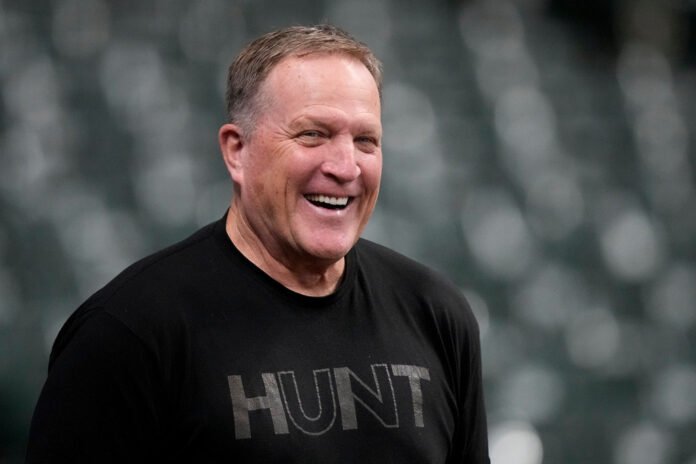
Milwaukee’s Pat Murphy agrees to extension after managing Brewers to 2 straight division titles

PHOENIX (AP) — Milwaukee’s Pat Murphy has agreed to a multi-year contract extension after leading the Brewers to division titles and getting selected as NL manager of the year each of his first two seasons.

Murphy’s contract had been set to expire at the end of the season if he hadn’t agreed to an extension. He had taken over as Milwaukee’s manager after predecessor Craig Counsell let his contract run out after the 2023 season and then signed a lucrative deal with the rival Chicago Cubs.

The Brewers didn’t release terms when announcing the deal Friday. The Athletic, which first reported Murphy’s new deal, said he now has a three-year contract with a club option for 2029.

“Pat Murphy has been an incredible partner and leader here for over a decade,” Brewers president of baseball operations Matt Arnold said in a statement. “I’m thrilled that we have been able to come up with a framework that keeps Murph with the Brewers for years to come and maintains the special relationship that we have established. I look forward to continuing the pursuit of a World Series championship with Murph and his staff.”

Murphy, 67, owns a 190-134 record as Milwaukee’s manager and has helped the Brewers wildly outperform preseason forecasts each of the last two years. The Brewers earned a franchise-record 97 wins last season, won a third straight NL Central title and beat Counsell’s Cubs in the NL Division Series before getting swept in the NL Championship Series by the eventual World Series-winning Los Angeles Dodgers.

The Brewers went 93-69 and won the NL Central championship in 2024 before losing an NL Wild Card Series to the New York Mets.

Murphy is the first Brewers skipper ever to get named NL manager of the year, and he has done it each of his two years in Milwaukee. The only other people ever to get selected as manager of the year in consecutive seasons are Atlanta’s Bobby Cox (2004-05), Tampa Bay’s Kevin Cash (2020-21) and Cleveland’s Stephen Vogt (2024-25).

___

AP MLB: https://apnews.com/hub/mlb

You can give old batteries a new life by safely recycling them

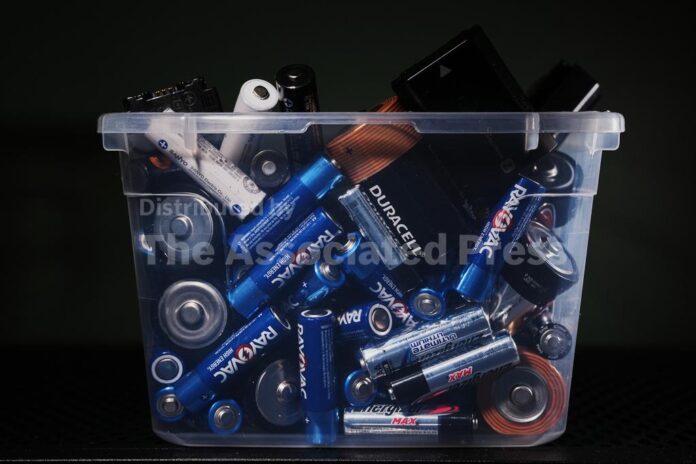
NEW YORK (AP) — When household batteries die, it’s hard to know what to do with them. So they get shoved into a junk drawer or sheepishly thrown into the trash.

But dead batteries aren’t quite finished. They can leak heavy metals like cadmium and nickel into soil and water once they reach the landfill. Some of them can also overheat and cause fires in garbage trucks and recycling centers.

The good news is, safely disposing of your batteries takes just a few steps. They’ll get shipped to recycling centers that break down their contents to make new things.

Battery recycling processes could use some fine-tuning, but it’s still a simple and responsible way to get rid of them.

Recycling old batteries “keeps you safe, keeps the waste industry safe, keeps the first responders safe and responsibly sees that battery reach a proper end of life,” said Michael Hoffman, president of the National Waste and Recycling Association.

Small batteries can have a big environmental impact

Batteries keep things running in our homes, powering everything from alarm clocks and TV remotes to gaming controllers. Millions are bought and used every year in the U.S., according to the Environmental Protection Agency.

They leave their stamp on the environment at nearly every stage of their life span.

Many of the materials used to make batteries — elements like lithium and nickel — are mined. Over half the world’s cobalt reserves are in Congo.

Once mined, those materials are shipped around to be refined, fashioned into a battery and packaged for sale. All the ships, trucks and planes moving them add to batteries’ carbon footprint. Making the batteries can release carbon emissions and pollution into the air and atmosphere, too.

Though household batteries are far smaller than the big ones that power EVs and electric bicycles, there are a lot more of them and it’s worth figuring out how to get rid of them.

“One person’s single battery is not necessarily a lot,” said environmental scientist Jennifer Sun with Harvard University. “But everyone uses many batteries.”

Recycle batteries at a registered drop-off site

To begin, wrangle your old batteries and figure out what kind they are. Batteries “come in all shapes and sizes, but what’s inside differs,” said materials scientist Matthew Bergschneider of the University of Texas at Dallas.

Alkaline and zinc-carbon batteries are generally single-use and come in AA, AAA and more. These can be safely thrown in the household trash in most places, but the EPA still recommends recycling them so that their materials can be made into something new.

Lithium-ion batteries — commonly found in things like power tools and cordless vacuums — are a risk to cause fires and leak toxic gases in garbage trucks and landfills. A lot of rechargeable batteries are lithium-ion, but more single-use batteries are being made this way too.

Be sure to look up battery disposal laws for your area: Places like New York, Vermont and Washington, D.C. have special rules about throwing away household or rechargeable batteries.

Once you’ve corralled your batteries, tape their ends or put them in plastic bags to avoid the possibility of sparking. Then, take them to a drop-off location. How easy or hard this is depends on where you live.

Many hardware and office supplies stores accept old batteries. Look into city and state drop-off programs or search by ZIP code using The Battery Network, a nonprofit geared toward safe battery recycling.

Have a location in your home to collect the batteries over time and then “at some point, hopefully among all the other things that we all have in our lives, you can find a convenient drop-off location,” said Todd Ellis of The Battery Network.

If your batteries look swollen, cracked or are leaking, don’t drop them off. You’ll need to get in touch with your local hazardous waste removal agency to figure out how to turn them in.

Recycled batteries can have a second life

Once batteries are dropped off at a collection site, they’re sorted by type and taken to a recycling facility where they’re broken down into their essential components — like cobalt, nickel or aluminum. Some bits can be used to make new batteries or other things. Nickel, for example, can be used to make stainless steel products and alkaline batteries can be turned into sunscreen.

Safely recycling a battery doesn’t cancel out the environmental cost of making it. But it does give the battery’s components their best chance at becoming something new.

“You continue to recycle and you don’t have to go back to the Earth to mine,” said public health expert Oladele Ogunseitan, who studies electronic waste at the University of California, Irvine.

Good battery habits are also good for us. It protects against old or damaged batteries leaking toxic compounds into our cabinets and junk drawers.

“I think it’s one of the simplest and most controllable actions that we can take to reduce our impact,” said Sun, the Harvard scientist.

___

The Associated Press Health and Science Department receives support from the Howard Hughes Medical Institute’s Department of Science Education and the Robert Wood Johnson Foundation. The AP is solely responsible for all content.

Injured Sidney Crosby is out for Canada vs. Finland in the semifinals at the Olympics

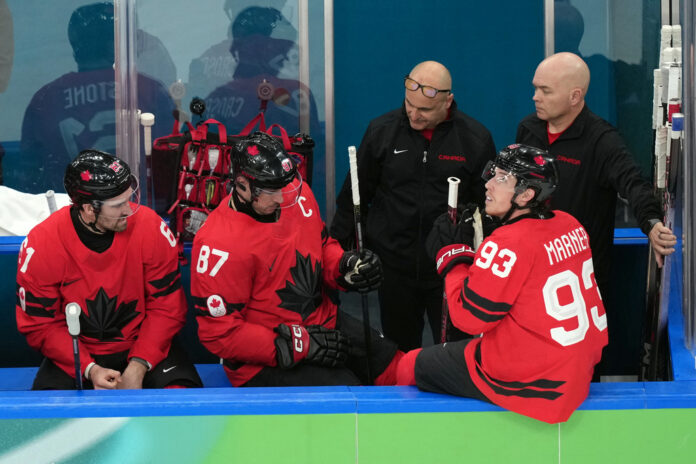
MILAN (AP) — Sidney Crosby is not playing for Canada against Finland in the semifinals at the Olympics on Friday because of injury.

Crosby appeared to injure his right knee in the second period of the quarterfinals against Czechia on Wednesday night. He did not practice Thursday, when coach Jon Cooper said Crosby was not being ruled out while still being evaluated.

It was not immediately clear if the 38-year-old captain would be available if Canada advances to the gold-medal game Sunday.

Connor McDavid will wear the “C” because international rules require a player to be designated captain for each game. Nathan MacKinnon joins Cale Makar as the alternates.

Crosby is a two-time Olympic gold medalist, with wins in 2010 and ‘14, and a three-time Stanley Cup champion with the NHL’s Pittsburgh Penguins.

___

AP Winter Olympics: https://apnews.com/hub/milan-cortina-2026-winter-olympics

Norway wins its 17th gold medal, breaking record for most golds won in a single Winter Olympics

ANTERSELVA, Italy (AP) — Johannes Dale-Skjevdal of Norway was the only biathlete to hit all 20 of his targets in the 15-kilometer mass start race Friday and skied his way to gold — Norway’s 17th gold medal of the Milan Cortina Winter Olympics — breaking the record for the most gold medals won by a nation at a single Winter Olympics.

Norway had set the record at the 2022 Beijing Olympics with 16 gold medals.

Dale-Skjevdal had taken the lead after the first standing bout with clean shooting and completed the five laps on newly packed snow and gusty winds in 39 minutes, 17.1 seconds. His teammate Sturla Holm Laegreid only missed one target and finished 10.5 seconds back for silver — his fifth medal of these Olympic Games.

Philipp Horn of Germany only missed one target on his last shooting bout and left the range in third place, but Quentin Fillon Maillet of France, who missed four on the day, chased Horn and passed him on a big hill, taking him to the finish for a bronze, 25.6 seconds behind Dale-Skjevdal.

Fillon Maillet, who was on the gold medal winning team in the mixed relay and men’s relay, also won gold in the sprint.

Only the top 30 biathletes compete in the mass start race — based on World Cup rankings and Olympic performance. They ski five, 3-kilometer loops, shooting twice in the prone position and twice standing.

___

AP Winter Olympics: https://apnews.com/hub/milan-cortina-2026-winter-olympics