
Legal Advertisement CAUSE NO. 03D01-2603-EU-001521 NOTICE OF UNSUPERVISED ADMINISTRATION In the Bartholomew Superior Court 1, Indiana. Notice is hereby given that Randall L. Settle was on March 15, 2026, appointed personal representative of the estate of Robert L. Settle, deceased, who died on February 3, 2026. All persons who have claims against this estate, whether or not now due, must file the claim in the Office of the Clerk of this Court within three (3) months from the date of the first publication of this notice, or within nine (9) months after the decedent’s death, whichever is earlier, or the claims will be forever barred. Dated at Columbus, Indiana: March 19, 2026 Shari J. Lentz Clerk of the Bartholomew Superior Court 1 Blake C. Reed (#28026-49) Attorney at Law VOELZ, REED, &MOUNT, LLC 2751 Brentwood Drive Columbus, IN 47203 Telephone: (812) 372-1303 60158719 R 03-25—04-01-2026
Growing internationally: County population increases, but only with significant increases in international migration

Mike Wolanin | The Republic The exterior of The Commons with the Bartholomew County Courthouse pictured in the background in downtown Columbus, Ind., Tuesday, Jan. 24, 2017.
Bartholomew County’s population reached a record high last year, driven almost entirely by international workers that experts say are drawn to the community to fill highly skilled roles for global companies operating in the area.
The county’s population grew by an estimated 787 people last year, reaching 85,729 as of July 1, 2025, a 4% increase since 2020, according to new data from the U.S. Census Bureau. Net international migration accounted for 79% of that growth last year, with 619 more people moving to the county from abroad than leaving.
The figures underscore the degree to which the county’s economy is tied to global companies, experts and local officials said.
Cummins Inc., the county’s largest employer, is headquartered in Columbus and has around 67,400 employees worldwide. Additionally, more than 35 international companies employ more than 9,000 people locally, according to the Greater Columbus (Indiana) Economic Development Corp.
“(International migration) is to be expected simply from the standpoint that we have so many international, global companies in Columbus,” said Steve Mohler, assistant professor of management at IU Columbus. “…We’re pretty heavily tied to global companies.”
Population trends
While international migration has increased, Bartholomew County has seen decreases in net domestic migration in recent years. From 2020 to 2025, 764 more people moved out of Bartholomew County than moved in from elsewhere in the United States. Over the same period, net international migration totaled 3,447, and natural growth — the number of births minus the number of deaths — was 771.
The population increase in Bartholomew County stands in contrast to neighboring Jackson and Jennings counties, which both saw population declines last year.
Jackson County lost 66 residents largely due to a net outflow of 432 domestic residents that was not offset by international migration. Jennings County’s population fell by 102, with net domestic migration of negative 122 and virtually no natural growth.
“You have to have population growth if you’re going to survive economically,” Mohler said. “…We would have trouble sustaining our economic levels (without population growth). If we see population decline, we will have trouble overall. How would the economic development folks and the chamber attract anybody to Columbus if we didn’t have population growth, if we didn’t have people for them to hire? They wouldn’t. They would have to look elsewhere.”
International migration is not new to Bartholomew County and has been driving population growth in the community for years as employers turn to foreign talent to fill roles they have struggled to fill domestically, according to local officials and state and federal records.
During the 21-year period from 2004 to 2025, net international migration in Bartholomew County was 8,961, while net domestic migration was negative 42, according to STATS Indiana.
But that trend has accelerated over the past decade. From 2016 to 2025, net international migration in Bartholomew County was 5,861, while net domestic migration was negative 1,835.
“We’ve benefited from international migration for decades with the investment that we’ve had from international companies, which then brings international employees,” said Columbus Mayor Mary Ferdon. “…I think growth is always good, and Columbus has always welcomed diversity for decades. And we see a lot of value (of that) in our neighborhoods and our businesses and our schools, which embrace a lot of cultures.”
Ferdon said the decline in domestic migration is a “double-whammy” of sorts that many communities in Indiana are experiencing, as workers and retirees have tended to move to the southeastern and southern states due to milder winters and a perceived lower cost of living.
Highly skilled workers
The new data also provides an initial snapshot of migration patterns since President Donald Trump returned to the White House in January 2025, promising a crackdown on immigration and implementing policies that have increased costs and restrictions on visas for highly skilled workers.
In September, the Trump administration added a $100,000 fee to applications for H-1B visas, which allow companies to temporarily hire foreign professionals for roles requiring specialized knowledge and at least a bachelor’s degree.
The visa program is intended to address critical labor shortages by allowing companies to hire qualified workers they cannot otherwise find in the U.S. workforce. Critics — including those at the White House — contend that it allows employers to undercut U.S. workers by hiring foreign professionals willing to work for less.
Several local employers — including Cummins, Toyota Material Handling, Columbus Regional Health and others — have sponsored H-1B visas for workers over the years, according to federal records.
The Census Bureau data, current through July, does not capture the impact of the fee increase, which took effect in September, just days after the proclamation was signed.
“If this H-1B visa fee of $100,000 curtails companies from bringing in foreign workers, it would, in my perspective, be a drain on our economy at least in the near term,” Mohler said. “…We can’t graduate students fast enough to replace (highly skilled foreign workers) in the next three or four years, because to get them in and get through the bachelor’s degree is four years. If it’s an advanced degree, it’s six or eight (years). Therefore, if that $100,000 is a deterrent to our companies, we will struggle unless we’re able to attract other workers.”
The most recent federal data shows that from September through December, local employers received approval for 96 new H-1B visas. In the prior fiscal year, which ran from Oct. 1, 2024, to Sept. 30, 2025, 120 new applications were approved for local employers.
However, it is hard to say what the impact of the new fee has been locally. The $100,000 charge applied only to applications filed after Sept. 21. Because the government data does not specify when applications were filed, it is unclear how many of the 96 approvals were subject to the fee.
At one point last year, H-1B processing times averaged three to six months, according to Washington-based Boundless Immigration. That suggests that applications filed as early as March 2025 — and possibly earlier — would not have been subject to the fee.
Ferdon said it hard to say how much of an impact the new fee has had on local employers but could end up reducing international migration in Bartholomew County if the policy is left in place long term.
“I imagine it will have an impact if (the new fee) continues long term,” Ferdon said. “…I imagine … over time we will see a decrease in international migration if the H-1B visa process continues down the same path. But I’m hopeful that it will change because we value the employees that we’re able to bring to Columbus with the visa program. It’s of immense value to our companies.”
Aging workforce
At the same time, Bartholomew County’s workforce is aging, experts said.
In 2024, residents 65 and older made up 25% of Bartholomew County population ages 25 and up, an increase from 22% in 2015 and 20% in 2010, Census Bureau figures show.
In the same time period, 17% of Bartholomew County residents with a bachelor’s degree or higher — nearly 3,300 people — were at least 65 years old in 2024, up from 14% in 2015 and 13% in 2010.
“Our population 65 and over has been increasing,” Mohler said. “…But the scary part is … a significant part of our population with the higher degrees are 65 and older. …With people over 65 holding a number of degrees and the population is not increasing, when those folks do decide to leave the labor market, it will be a drain on us.”
Teacher injury reports: BCSC approves new policy, with some concerns

Jason Major Mike Wolanin | The Republic
Bartholomew Consolidated School Corp. board members on Monday night approved a new policy that outlines how the district should go about counting and reporting incidents when a school employee is injured on the job by students, although further changes are likely.
The new policy, D525: School Employee Injury Reporting, comes against the backdrop of a state law from 2023, IC 20-26-5-42, which required each public school to provide data to the state about school employees on the job who were injured by a student in the previous school year.
During the first year of required reporting in 2023-24, BCSC reported the second-highest number of incidents in Indiana. However administrators said at the time that the numbers they submitted reflected over-reporting because of a lack of clarity from the state about what incidents should be submitted. Between the 2023-24 and 2024-25 reporting period, BCSC went from 142 reported incidents to 20.
But the number of “information-only” incidents has continually climbed over the past couple of years, according to District 1 school board member Jason Major, who authored the policy and receives confidential, information-only reports given to school board members from administrators quarterly.
Major stated that during a closed session in October 2025 regarding school safety, school board members learned that through the first three months of the school year, the number of information-only incidents was already at 80% of the total from the 2024-25 school year.
Information-only reports can range from a student stepping on a teacher’s foot to a student with special needs, for example, unintentionally striking a teacher. Information-only reports refer to any time a student and staff member had an incident resulting in a staff member going to a school nurse, but there was not a medical claim made.
Information-only does not necessarily mean the incident was minor, just that it didn’t currently meet criteria for formal action under policy or law.
The school employee injury reporting policy received its first reading during the school board meeting on March 2, although there was no discussion about it. The policy was finalized Monday by a 5-1 vote, with Board President Rich Stenner, District 2, the lone vote against because he thought the policy wasn’t fully ready. Nikki Wheeldon, District 7, was absent.
The new policy was not approved without school board members first bickering about procedural minutiae, disputes and finger pointing about which members actually are operating in the best interests of teachers and whether board leadership was slow-rolling consideration of the new policy.
Those interested can watch the matter discussed via a recording of Monday night’s school board meeting on BCSC’s YouTube page, starting at 1:15:50.
The school board initially was going to hold a work session to discuss the policy, but one was not scheduled in the time since March 2. The board did meet, however, for a closed session on March 23. Also of note is that spring break was held from March 16 to March 20.
Board leadership, in coordination with BCSC administration, is in charge of scheduling work sessions, according to BCSC officials.
Superintendent Chad Phillips remarked that there had been “multiple instances (in the past) in which a work session was requested, but was not scheduled before the next board meeting, just depending on the timing.”
Phillips emphasized that internal work is being done to produce a similar policy, also noting the district’s excellent teacher retention rates.
“That doesn’t mean we’re perfect, and it doesn’t mean that we don’t need to continue to share more information,” Phillips said. “But people are doing work right now to keep all of our teachers, staff and students safe.”
The policy wasn’t on the board agenda heading into Monday night’s meeting, but Major, before reading a long written statement, requested that it be added, which was approved 4-2, with Stenner and Dale Nowlin, District 4, voting against.
The policy drafted listed March 30 as the second reading of the policy, but Michael McIver, BCSC’s legal counsel, said that meetings are driven by the printed agenda.
McIver indicated that the policy as it was written was not fully fleshed out in his eyes, and that a work session would still be a worthy idea.
“What I would encourage the board to avoid is creating its own policy that creates a mandate to report without providing clear instructions as to what it is that the administration is supposed to report,” McIver said.
Informing that view is recently passed state legislation in House Enrolled Act 1249 that changes how school employee injuries are reported, replacing the 2023 law.
The new law treats injuries to school staff primarily though the lens of “battery,” making reporting requirements more about intentional acts such as teachers being hit or kicked than general injury tracking as was the case with the 2023 law. HEA 1249 also strengthens the criminal consequences of harming a school employee.
Assistant Superintendent for Human Resources Erin Stalbaum said that the reporting structure through the new law has not yet been clearly defined.
Nowlin, the school board’s legislative liaison, said that he had sent the policy to Julie Slavens, the senior counsel and director of policy services for the Indiana School Boards Association, who stated the policy was “excessively long,” Nowlin said, and that much of what was included in it would be better placed in administrative guides. Nowlin said he still believed the board should conduct a work session to work through details, but was generally in favor of such a policy.
Whittney Loyd, District 3, seemed to agree, saying that she had particular suggestions about the policy but that she wasn’t going to vote against it as of now because of that.
It was generally well-understood by the board that it would be likely the policy would be amended again, but Major, who is up for re-election in November, opted to move forward.
Major was frustrated that there hadn’t been discussion in the time since the first reading about the policy among board members, and that no emails were shared among them about any suggestions. The original policy draft was provided to every school board member on Feb. 3, Major said, adding that he had been in conversation with Tom Glick, District 5, and Logan Schulz, District 6, about the policy.
The policy was approved, but there really wasn’t any discussion about the contents itself.
Policy information
The policy establishes a transparent process for reporting employee injuries caused by student, parent or staff conduct and supports data collection for continuous improvement.
According to D525, the school board will designate a corporation administrator to collect and maintain records of each unique employee injury incident, which will be reported to the school board with regular frequency.
If a workers compensation claim is filed or an employee has to miss school because of an injury, a closed session of school board members will be convened to discuss the incident, including, among other things, any potential action against the person responsible for the injury.
A committee of safety and security team leaders, school board members, school faculty and staff, and parents of students will also be appointed by the board to review the policy, monthly reports, end-of-semester reports and end-of-year reports. Based on those reports, the committee will create and present recommendations of changes to the policy or school safety improvement plans to the school board.
Those interested can read the policy in full at BCSC’s BoardDocs page.
CEA viewpoint
The president of the BCSC teacher’s union, the Columbus Educators Association (CEA), Amy London, said that the matter of school employees being injured by students is in no way just a BCSC phenomenon, but something school districts across the state and country are dealing with.
London said the increased numbers of information-only incidents described by Major ring true to the experience of CEA membership and that the majority of the incidents involve students on the elementary level. She also said that many of the students involved in these incidents are in special education.
“I think it’s a very individualized situation because in my observation of being a teacher for the last 26 years, the type of behavior support that students have needed has increased and become more intense,” London said. “Mental health issues have been something that teachers have had to try to support students with in the classroom and we are not necessarily trained to do that.”
“It just seems to be the level of the type of behavior that students are exhibiting is more severe,” London went on. “…We see that a lot of the students that exhibit these behaviors are in special ed.”
BCSC is working to foster a culture of safety for its teachers and students, London said, but the accountability piece is still missing.
“I worry that we are not at a point, based on the behaviors that we see from kids now, that we are not working to foster a culture of accountability,” London “.. “Even 10 years ago in teaching, if a student were to exhibit a particular behavior or harm someone, there was a specific consequence that happened. And it seems like the line has moved.”
London reasoned that the moving of that line doesn’t come from BCSC in particular, but pointed to social media and the behavior it can bring out in students as one factor.
London said that the new policy itself does a “good job of making sure that incidents are reported,” but that it’s missing the accountability piece.
She also had further questions about some of the process of the policy, including but not limited too, more information about the administrator that would be in charge of maintaining the records and how it would ensure incidents are all reported in the same way.
She also said that she would hope that monthly and end-of-semester reports giving an overview of all incidents would be made public versus just being presented to the school board, plus that the committee that would continually review the policy and discuss certain incidents would also have a CEA representative.
Chang Ung, North Korean ex-IOC member who brokered Olympic joint marches with South, dies

SEOUL, South Korea (AP) — Chang Ung, a former North Korean member of the International Olympic Committee who once led sports exchanges with rival South Korea including joint marches of their athletes at the Olympics, has died, the IOC announced Wednesday. He was 87.
The IOC said on its website that it had learned with “extreme sadness” of Chang’s death on Sunday. It said the Olympic flag will be flown at half-mast for three days at Olympic House in Lausanne, Switzerland in a show of respect.
The IOC statement didn’t describe the cause of Chang’s death. North Korea’s state media has not reported on his death.
Born in 1938, Chang was originally a basketball player who captained the North Korean national team. After retiring from the sport, he became an athletics administrator, serving as a vice sports minister, a vice chairman of North Korea’s national Olympic Committee and a vice president of the Olympic Council of Asia.
In 1996, Chang was elected to the IOC. As North Korea’s only-ever IOC member, he represented his country on international sports fields and headed numerous — if often rocky — talks with South Korea to promote sports exchange and cooperation programs between the rivals.
The most notable results of this diplomacy came at the 2000 Sydney Olympics, when athletes of the two Koreas marched together under a “unification flag” depicting their peninsula during the opening and closing ceremonies, the first joint parade since their division in 1945.
Athletes of the Koreas walked together at following Olympic Games and major international sports events, including the 2018 Pyeongchang Olympics in South Korea. After watching a joint march in Pyeongchang’s opening ceremony, Chang told reporters that he was “deeply moved.”
Chang played a key role in earlier talks with South Korea, which led to the two countries sending their first unified male and female teams to the 1991 world table tennis championships in Chiba, Japan. In Pyeongchang, the two Koreas fielded their first combined Olympic team for women’s ice hockey.
But sports ties between North and South Korea have suffered as political relations frayed.
There have been no sports and any other exchanges programs between the countries for years. North Korea has shunned talks with South Korea and the U.S. since its leader Kim Jong Un’s broader nuclear diplomacy with U.S. President Donald Trump collapsed in 2019. He’s also branded South Korea a permanent enemy and rejected the idea of future unification.
The IOC said Chang’s contributions helped advance sports participation, cultural exchanges and the role of sport in society.
“His efforts to promote cooperation on the Korean Peninsula demonstrated the power of sport to build bridges and inspire hope,” IOC President Kirsty Coventry said.
The IOC said Chang served on several commissions including Sport for All and International Olympic Truce Foundation.
North Korea’s official news agency, KCNA, last mentioned Chang in 2023, when he was awarded the Olympic Order, an award given to those who have made extraordinary contributions to the Olympics, during an IOC session in Mumbai, India. Chang, then an honorary IOC member, joined the ceremony by video.
Umpire loses track of count, leading to walk instead of strikeout for Astros’ Cam Smith vs. Red Sox

HOUSTON (AP) — Plate umpire Mark Wegner acknowledged he lost track of the count during Cam Smith’s nine-pitch walk Tuesday night in the fifth inning of the Houston Astros’ 9-2 win over the Boston Red Sox.
In fact, Smith should have been out on strikes after the third pitch.
Smith swung and missed at two cutters from Red Sox starter Brayan Bello to begin the plate appearance. After the second pitch, Joey Loperfido stole second base and Christian Walker scored on the play thanks to a throwing error by catcher Connor Wong. After about 40 seconds, Smith swung and missed at a sweeper.
That should have been strike three but Wegner, a crew chief working his 29th major league season, flashed 1-2 for the count. Six pitches later, Smith worked a walk.
“I just watched the video. I didn’t know what happened until I came in here and apparently, I somehow didn’t count the second swinging one because I said the count was 1-2. It was actually strike three,” Wegner told a pool reporter after the game. “Had anybody caught it, we can always go and call replay and check the count. I’ve never done that before. I’m not happy about it. Just made a mistake.”
Wegner said no one on the field raised an issue in the moment.
Bello said Wegner gave the count as 1-1 after his second pitch, and he didn’t question it at the time.
“I thought the first pitch was a strike and I thought that he swung at the second pitch,” Bello said in Spanish through a translator. “None of that took me out of my focus in that inning. I tried to get out of that inning, and it didn’t happen.”
Smith was the last batter Bello faced in his season debut. He allowed six runs, five earned, on eight hits and three walks over 4 2/3 innings.
___
AP MLB: https://apnews.com/hub/mlb
California woman returns home after the Trump administration deported her to Mexico
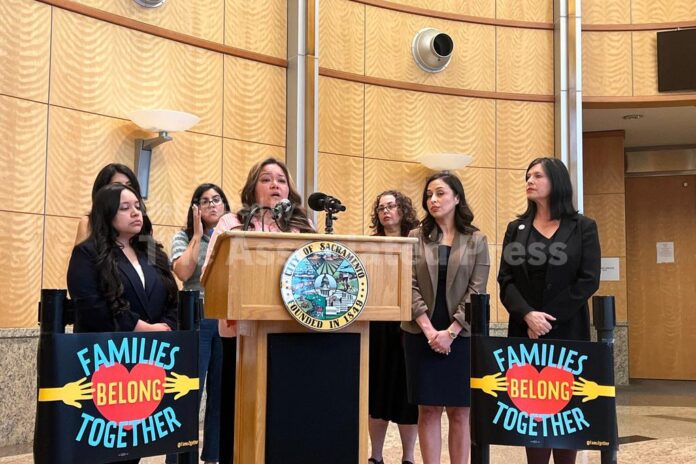
SACRAMENTO, Calif. (AP) — A California woman who had been living in the U.S. for 27 years before the Trump administration deported her to Mexico in February reunited with her daughter this week after a judge ordered her return.
Mexican citizen Maria de Jesús Estrada Juárez was among the hundreds of thousands of people shielded from deportation under an Obama-era program allowing people brought to the U.S. as children to stay in the country if they generally stay out of trouble.
But that changed Feb. 18 when she showed up for an immigration hearing and was arrested by U.S. Immigration and Customs Enforcement and deported the next day.
“I didn’t get to say goodbye,” the 42-year-old mother said at a news conference Tuesday in Sacramento. “It all happened so fast. This has been one of the most painful experiences of my life.”
Estrada Juárez held hands with her daughter and began to choke up as she recounted those experiences.
“It’s hard to describe what it feels like to lose your mother so suddenly, especially when you believed she was safe,” said Damaris Bello, Estrada Juárez’s 22-year-old daughter. “It was like grieving someone who was still alive.”
The federal government has arrested several other recipients of the Deferred Action for Childhood Arrivals program, also known as DACA, during President Donald Trump’s second term. The events come amid the Trump administration’s reshaping of immigration policy more broadly.
Immigration advocates say Estrada Juárez’s removal highlights the need to offer more permanent protections for DACA recipients, often referred to as “Dreamers.”
The case is a rare example of a judge ordering a person’s return to the United States after being deported, said Talia Inlender, deputy director of the Center for Immigration Law and Policy at the UCLA School of Law.
“But, perhaps unsurprisingly, it feels like this is happening with more frequency under the current administration which is prioritizing speed and quotas, rather than fairness and process, in facilitating removals,” Inlender said in a statement.
The federal administration said Estrada Juárez was deported because of a 1998 removal order when Estrada Juárez was a teenager, shortly after she arrived in the U.S. She was sent to Mexico at the time but returned to the U.S. weeks later and has had DACA status since 2013. Federal officials reinstated the 1998 order in February after arresting her.
Estrada Juárez spent the next few weeks after being deported with relatives, stressed about being separated from her daughter.
“You can’t enjoy life when the most important part of your life is not there,” she said.
U.S. District Judge Dena Coggins, who was appointed by then-President Joe Biden, issued a temporary restraining order on March 23, giving the federal government seven days to facilitate Estrada Juárez’s return to the U.S. Her deportation was a “flagrant violation” of her DACA protections and infringed upon her due process rights, Coggins wrote.
The U.S. Department of Homeland Security has defended the deportation.
“ICE follows all court orders,” a department spokesperson said in a statement. “This is yet another ruling from a Biden-appointed activist judge.”
But Estrada Juárez wasn’t aware of the 1998 order, which her lawyer argues wasn’t final.
“DACA gives you a vested right to not be deported once it’s granted,” said Stacy Tolchin, an immigration attorney based in Pasadena, California. “I really don’t understand what they’re doing.”
Bello, who was reunited with her mother Monday night, said she is recovering from the events and hopes other families don’t have to endure the same thing.
“Having her back home means everything to me,” she said. “It means we can begin to heal, to rebuild and to move forward together as a family.”
A messy California governor’s race raises Democratic fears of potential loss

LOS ANGELES (AP) — Democrats have run California for years, but in a nationally critical election the party is being confronted by the limits of its own power: the race for governor is out of control.
Barely a month before the start of mail-in voting, Democratic leaders are openly dreading the possible loss of a statewide election for the first time in two decades. As candidates jockey in a crowded field, the contest has degenerated into finger-pointing over debate eligibility, identity politics and 2025 ballot counting, issues distant from voters struggling with the soaring cost of gas and groceries.
“Squabbles about debates or other inside baseball politics are likely under the radar for most voters and seem almost absurd, given what’s facing us,” Kim Nalder, director of the Project for an Informed Electorate at California State University, Sacramento, said in an email.
Candidates agree that a large number of voters remain undecided on the question of who should take charge of the nation’s most populous state that, by itself, represents the world’s fourth-largest economy. There are more than 50 candidates on the ballot — including eight established Democrats and two leading Republicans.
Dominant Democrats contend with uncertainty
For the first time in a generation the governor’s contest is being defined by uncertainty, not inevitability — former Gov. Jerry Brown and outgoing Gov. Gavin Newsom coasted through their elections. How do Democrats reassert their political clout and regain control of the race in a state where the party holds every statewide office, dominates the legislature and outnumbers registered Republicans by nearly 2-to-1?
“I have no idea and anybody who tells you they do, they don’t know either,” said veteran Democratic consultant Dan Newman, who is not involved in the race.
For Democrats, the party’s dicey chances in the June 2 primary stem from the state’s unpredictable “top two” primary system that puts all candidates on one ballot, with only the top two vote-getters advancing to November, regardless of party. The fear is the party’s 24 listed candidates will undercut each other and divide the Democratic vote into small fractions, clearing the way for the two leading Republicans — Riverside County Sheriff Chad Bianco and conservative commentator Steve Hilton, both supporters of President Donald Trump — to advance.
While affordability is a top issue around the country, the race for governor has detoured into messy personal attacks and squabbles that have given the campaign a chaotic aura. A major televised debate was canceled after an uproar over the selection criteria that resulted in six white candidates qualifying for the stage while Black, Latino and Asian candidates were snubbed.
The University of Southern California, where the debate was to be held, said the dispute “created a significant distraction from the issues that matter to voters.” The school’s decision to cancel the event followed accusations of discrimination by candidates of color who were not invited.
The scratched debate came shortly after state Democratic Chair Rusty Hicks pleaded with lagging candidates to drop out of the race. Meanwhile, Rep. Eric Swalwell, one of the leading Democrats, accused Trump of trying to influence the contest after reporting that administration officials ordered FBI agents to gather documents about a decade-old investigation into the congressman’s ties to a suspected Chinese spy. The probe did not result in criminal charges.
Earlier this week, Bianco, after seizing more than half a million 2025 election ballots, said he paused a probe into election fraud allegations, citing mounting legal challenges from the state and a voting rights group.
A ripple effect down the ticket?
Elsewhere in the country, Democrats have been heartened by victories in a string of races — even on Trump’s home turf — that they see as promising signs ahead of this year’s midterm elections, when control of Congress will be in play. Democratic officials in California fear a vacancy at the top of the ticket in November could depress turnout in critical U.S. House races.
Such a scenario could “imperil Democrats’ chances to retake the House,” Hicks, the state Democratic chair, has warned.
The contest to succeed Newsom is playing out with Trump the ubiquitous foil for Democratic candidates — California is regarded as the home of the so-called Trump resistance. Simultaneously the state is beset with a long-running homeless crisis, commonplace seven-figure home prices and projected future budget shortfalls, while residents contend with some of the nation’s highest gas prices, taxes and utility bills.
Polling in early February by the nonpartisan Public Policy Institute of California found the field had broken into two distinct groups, with Bianco, Hilton and three Democrats — Swalwell, former Rep. Katie Porter and billionaire climate activist Tom Steyer — in close competition, with other candidates trailing.
The volatile race has recalled the surprise outcome in 1998 — the last wide-open race for governor — when underdog Democrat Gray Davis surged past two leading Democrats in the primary who relentlessly attacked each other, with Davis going on to win in November.
The rules have changed in the attention economy, where candidates must compete with digital platforms and content creators to connect with distracted voters.
“Normally people would paying attention,” Newman said. “The whole campaign has been in slow motion.”
Board condemns 13th Street house

City code enforcement asked the Columbus Board of Public Works and Safety to approve an order to vacate and condemn a house due to unsafe conditions.
Code Enforcement Officer Fred Barnett said he has been working with the 2909 13th St. property since the first of the year with issues regarding garbage, trash and unlicensed inoperable vehicles which he said the property owner did handle.
Barnett said that after the outside of the home was fixed up, his team inspected the inside of the building. He told the board that inside the building were issues such as holes in the roof and electrical issues from open-panels and spigot leaks next to electrical panels.
Due to these issues, he asked that the house be vacated, condemned and that legal action be taken if needed. Barnett also added a building permit requirement for any action taken on fixing the house.
Board member John Pickett asked if there is anything the board or the Columbus City Council could do to prevent houses from getting bad enough to the point of condemnation.
“It would be nice if we could be more proactive, because we have some crap housing stock,” Pickett said.
The board voted unanimously to approve the order to condemn, vacate and take legal action on the 13th Street home.
BCSC updates board on IREAD-3 projections
Hack
Bartholomew Consolidated School Corp. is continuing to make significant progress in fostering the skills of young readers, according to IREAD-3 projections provided to school board members on Monday night.
IREAD is an online test given to second- and third-graders across the state to determine their ability to understand letter sounds and assess their vocabulary and reading comprehension.
Just over 89% of BCSC third-graders passed the IREAD-3 assessment last year, up nearly 10 points from 2022-23, and projections show that figure is expecting to climb to 90% in 2026 at school year’s end.
The current crop of third-graders took the test as second-graders to give district officials and teachers the chance to find out ways to support those who are at risk of not passing, and that strategy has proved effective.
Students are able to take IREAD three different times before the year is out, and if they don’t pass, state law requires they be held back.
Students can also qualify for a good-cause exemption that would allow them to move on to fourth grade even if they don’t pass, including students who have been in the United States for fewer than two years or those who have an individualized education plan (IEP).
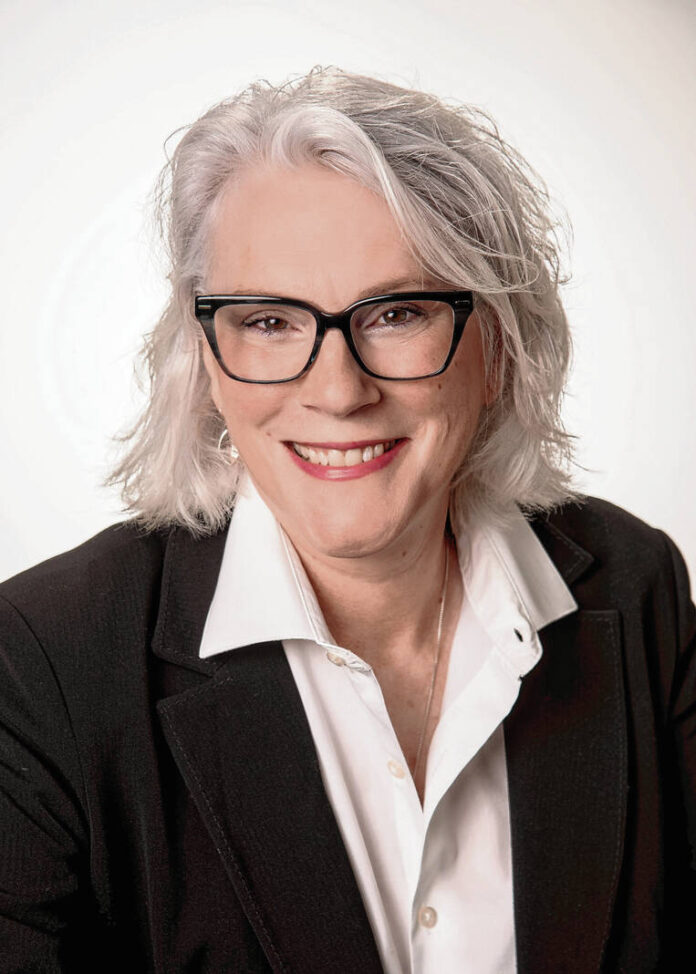
Students took the first administration of the test during the first two weeks of March. Director of Elementary Education Laura Hack, Elementary Curriculum Specialist Jeannie Long, and Taylorsville Elementary Principal Jennifer Dettmer talked about the results.
Of the current second-graders who took the test meant for third-graders, 54% were able to pass the test, Long said, up from 50% in 2025 and 44% from 2024.
“Over the past two years we’ve made intentional investments in structural consistency with teacher development grounded in the science of reading,” Long said. “These efforts have yielded measurable results.”
The science of reading is a way of teaching reading based on a large body of research on how kids actually learn to read.
Of the 819 second-graders testing, 441 passed. There are 90 students on track to pass the assessment next year as third-graders and 288 identified as at risk of not passing. There were 2% fewer students deemed at risk of not passing compared to 2025, according to BCSC.
Of the 810 current third-graders, 664 of those either passed the test in second grade or during the first administration of the test, or 82%. Of the remaining third-graders, 72 are on track to pass over the next to administrations and 74 were identified as at-risk of not passing.
“We still have intentional work to do with these students,” Hack said. “This comes in the form of small-group instruction and progress monitoring from now until the next two (test) administrations.”
The next two chances to take IREAD will be in May and June.
Some of strategies that district officials say have paid dividends include the small-group instruction and progress monitoring, but also mentoring of first year K-3 teachers by experienced colleagues; clear and consistent communication with student families about where their child is at; and strategic staffing of teachers in second- and third-grade that have experience with the science of reading.
Record low Colorado mountain snow won’t bode well for water in the drought-stricken US West

WALDEN, Colo. (AP) — Hydrologist Maureen Gutsch trudged through the mud and slush to confirm a grim picture: Colorado just had its worst snowpack since statewide record keeping began in 1941.
Even more troubling, mountain snow accumulations peaked a month early and contained just half the average moisture.
As a warm winter with poor skiing conditions gave way to early springtime record heat, snow is vanishing from all but the highest elevations in the West. It’s a clear sign that water shortages could worsen the ongoing significant drought, barring an unexpected deluge.
Gutsch struggled to match the mood of the sunny, 56-degree (13.3 degrees Celsius) weather as she stood in a section of the Rocky Mountains that’s considered the headwaters of the Colorado River.
“We love being out here. We love being in the snow, taking these measurements. This year, it’s kind of hard to enjoy it because it’s slightly depressing with the conditions that we’ve seen,” said Gutsch, who is with the U.S. Department of Agriculture’s Natural Resources Conservation Service.
Department hydrologists told The Associated Press of the dismal, record-low snowpack after concluding their field assessments late Tuesday.
Cities in the region are imposing water-use restrictions, and ranchers are wondering how they will feed and water their cattle. Meanwhile, the threat of devastating wildfires looms.
High (country) and dry
Ranchers in Colorado’s scenic mountain valleys near the Continental Divide are, in a sense, among the first in the region affected by drought, being nearest to the melting mountain snowpack.
They hardly need Gutsch to tell them how parched this winter and spring have been. They remember past droughts — bad ones in 2002, 1981, 1977 — and wonder just what this dry winter will mean for their operations.
“I’ve never seen it so warm so early and no snow all winter long,” said Philip Anderson, a retired teacher who also has ranched most of his life in Colorado’s North Park valley.
The heaviest snows in the Rockies fall in late winter and early spring, including now. Snowfall isn’t unusual in the highest regions even into June.
Anderson’s place is at about 8,100 feet (2,500 meters) in elevation. There, in a typical year, a foot (30 centimeters) or more of snow will linger on his pastures until springtime, helping the grass to green up and stock water ponds to refill.
But without snow on the land, his cows are grazing his grass before it can grow high, and several of his ponds are dry. The ditch that would usually move water from the nearby Illinois River to his property is also dry — tapped already by neighbors with more senior water rights than his.
“A lot of the people which are closer to the mountains have to let the water go by and let those folks with the senior water rights have it,” Anderson said.
The last time Anderson had to haul water in his truck from a nearby wildlife refuge was in 2002. That same year, he had to sell off his herd.
North Park — about 100 miles (161 kilometers) from the South Park valley that inspired the cartoon TV show — is a headwaters of the eastward-flowing Platte River system. Thirty-five miles (56 kilometers) to the west of Anderson’s place, across the Continental Divide, is the Stanko Ranch on the Yampa River.
Jo Stanko dreads low flows because they allow her cattle to wade across the Colorado River tributary. Then they need to be rounded up and brought back home.
This year, Stanko has been watering her parched meadow earlier than ever in her 50 years of ranching. She plans to cut hay before June and is considering buying hay soon to feed her 70 cows afterward.
“Hay’s always a good investment, you know, because it might be really expensive,” she said.
Go with the flow? Not when low
An old saying in the West is that whiskey’s for drinking and water’s for fighting over. It applies all the more when water becomes scarce amid a decades-long drought driven in part by human-caused climate change.
Meanwhile, the river’s Upper Basin states of Colorado, New Mexico, Utah and Wyoming remain at an impasse in negotiations with the Lower Basin states of Arizona, California and Nevada to create new rules for managing the water during shortages.
Like the water itself, time is running short — the current rules expire in September.
A recent federal plan would conserve river water “completely on Arizona’s back,” Democratic Gov. Katie Hobbs told a U.S. Chamber of Commerce meeting in March.
Upper Basin states say their cities, farmers and ranchers already use far less water than they are entitled to under the existing agreements. That’s because they honor senior water rights — some of which date to the 1880s — before those who own newer rights during droughts, Becky Mitchell, the Colorado River negotiator for Colorado, recently told other Upper Basin representatives.
“When there is less, we use less. This is not voluntary and no one gets paid as a result,” Mitchell said.
After missing multiple deadlines set by federal officials in recent months to, at least, create outlines of an agreement, the two sides are hiring more lawyers in case the dispute goes to court.
Cities cut back
After the driest and warmest winter on record, Salt Lake City announced a 10% daily cut in water use.
Reductions will be voluntary for residents, but the biggest nonresidential water users will have to consume no more than 200,000 gallons (2.6 million liters) per day.
On the other side of the Rockies, Denver Water approved limits to watering lawns and other restrictions, with hopes of achieving a 20% cut.
Water officials urged even less watering. Lawns in the Front Range region are just beginning to green up and don’t need watering twice a week until at least mid-May, they pointed out.
The city gets much of its water from mountain snow that accumulates east of the Continental Divide and on the western side. Tunnels under the mountains divert half the city’s water from snow-fed streams on the western side.
“We’re 7 to 8 feet (2 to 2.4 meters) of snow short of where we need to be,” Nathan Elder, water supply manager for Denver Water, said in a statement. “It would take a tremendous amount of snow to recover at this point, so it’s time to turn our attention to preserving what we have.”
Wildfire risk looms large
On the same day Denver approved the water restrictions, the city set a new high temperature record for March: 87 degrees (30 Celsius).
The previous record of 85 degrees (29 Celsius) was set just a week earlier.
Drought was bearing down west of the Rockies, too. In California, snowpack in the Sierra Nevada measured only 18% of the average for this time of year, state data showed.
Hot, dry weather is a recipe for wildfires. While other parts of the U.S., including the South and Southwest, face higher fire risk this spring, forecasters expect the threat in the Rockies to rise as above-average temperatures and below-normal precipitation persist into summer.
This week, the region is getting a reprieve of cooler, damper weather, with snow back in the forecast by the end of the week in North Park. But Anderson said he needs a lot more — half an inch (1 centimeter) of rain every other day for several days — to get out of the drought.
Until then, he suggested that North Park senior and junior water-rights holders work together to ensure everybody has enough.
“It’s pretty serious,” Anderson said. “If we just talk and communicate together and cooperate, we might be able to make it through this. But we’ll see.”
___
Amy Taxin in Santa Ana, California, contributed.
___
The Associated Press’ climate and environmental coverage receives financial support from multiple private foundations. AP is solely responsible for all content. Find AP’s standards for working with philanthropies, a list of supporters and funded coverage areas at AP.org.
