Home Blog Page 636

Washington Post eliminates sports department and reduces overseas journalists, AP source says

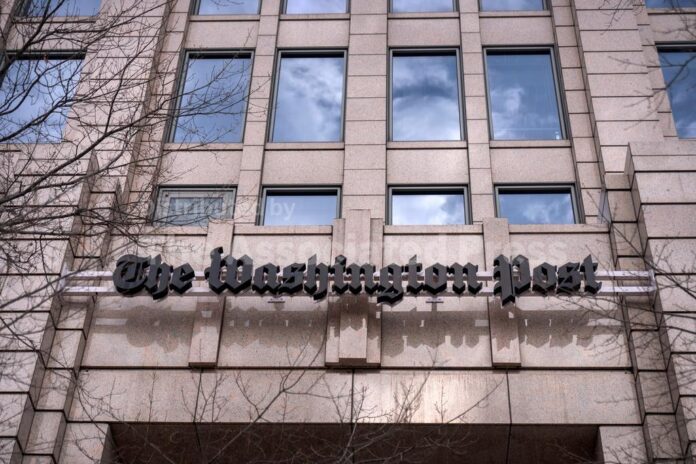
The troubled Washington Post has begun implementing large-scale cutbacks, including eliminating its sports department and shrinking the number of journalists it stations overseas.

The changes were announced in a Zoom meeting with staff on Wednesday by executive editor Matt Murray. That’s according to a person who listened to the call but was not authorized to speak with the media and spoke on the condition of anonymity.

Trump’s border czar announces 700 immigration officers to immediately leave Minnesota

MINNEAPOLIS (AP) — The Trump administration is reducing the number of immigration enforcement officers in Minnesota after state and local officials agreed to cooperate by turning over arrested immigrants, border czar Tom Homan said Wednesday.

About 700 of the roughly 3,000 federal officers deployed around Minnesota will be withdrawn, Homan said. The immigration operations have upended the Twin Cities and escalated protests, especially since the killing of protester Alex Pretti, the second fatal shooting by federal officers in Minneapolis.

“Given this increase in unprecedented collaboration, and as a result of the need for less public safety officers to do this work and a safer environment, I am announcing, effective immediately, we’ll draw down 700 people effective today — 700 law enforcement personnel,” Homan said during a news conference.

Homan said last week that federal officials could reduce the number of federal agents in Minnesota, but only if state and local officials cooperate. His comments came after President Donald Trump seemed to signal a willingness to ease tensions in the Minneapolis and St. Paul area.

Homan pushed for jails to alert ICE to inmates who could be deported, saying transferring such inmates to the agency is safer because it means fewer officers have to be out looking for people in the country illegally.

The White House has long blamed problems arresting criminal immigrants on places known as sanctuary jurisdictions, a term generally applied to state and local governments that limit law enforcement cooperation with the Department of Homeland Security.

When questioned, Homan said he thinks the ICE operation in Minnesota has been a success.

“Yeah, I just listed a bunch of people we took off the streets of the Twin Cities, so I think it’s very effective as far as public safety goes,” Homan said. “Was it a perfect operation? No. No. We created one unified chain of command to make sure everybody is on the same page. And make sure we follow the rules. I don’t think anybody, purposely, didn’t do something they should have done.”

___

Associated Press reporter Corey Williams in Detroit contributed.

Backyard vegetable gardens are healthy for people and the planet. Here’s how to start yours

If you want healthy food, experts say to eat what’s local, organic and in-season. Those foods benefit the planet too, because they are less taxing on the soil and they don’t travel as far.

It doesn’t get more local, organic and in-season than a backyard vegetable garden.

At this time of year, many backyards across the country are still covered in snow. But it’s the perfect time to start planning for a garden because you’ll want to have supplies ready to start planting just after the last frost date in your area.

Below are some tips on how to plan a backyard garden and reasons why you should do it.

Homegrown vegetables have fewer emissions

Vegetable gardens benefit the surrounding ecosystem by adding diverse plant life, especially where they replace grass or cover a deck or patio. They also can provide flowering plants for pollinators.

The plants capture and store carbon in the soil, promote healthy soil by preventing compaction and can make the air cooler on rooftops and patios, according to Ellen Comeau, who chairs the advisory council for the Cuyahoga County Master Gardener Volunteers with the Ohio State University Extension program.

Homegrown vegetables and fruits are responsible for fewer emissions than their store-bought counterparts because grocery store produce typically travels long distances on trucks.

“There’s this whole idea of a zero-kilometer meal, that I don’t have to travel anywhere, except my backyard, to make food. That certainly helps the climate,” said Carol Connare, editor of The Old Farmer’s Almanac.

Gardening has health benefits

The health benefits from gardening are multifaceted, “social, emotional, nutritional, physical,” said Katherine Alaimo, an associate professor of food science and human nutrition at Michigan State University.

Gardening promotes physical health because it requires a lot of movement. The food is typically picked at the height of ripeness and eaten fresh so it tends to have more nutrients than grocery store produce.

Alaimo said most gardeners don’t use pesticides and grow their food organically. And of course, when you grow more produce, you eat more produce.

“That’s going to reinforce people eating more fruits and vegetables even in the off season when they’re not growing food. So they try new foods, they potentially increase creativity and their cooking skills,” she said.

Alaimo said gardening also connects people with nature, provides a sense of responsibility and accomplishment and encourages sharing harvests with friends. All of that can contribute to reduced stress, lower blood pressure and higher energy, she said.

Picking the right spot and budgeting

Sunlight is the biggest factor in choosing where to put your garden. Most produce wants at least six hours of sunlight per day. If sunny spots are few, save them for fruiting plants because leafy greens can tolerate more shade.

It also helps to have a nearby water source because you’ll get more food for less effort if you’re not lugging buckets of water a long way.

If you’re growing in the ground, Comeau said to start with a soil test to determine its acidity and nutrient makeup. Soil samples, once bagged or boxed, can typically be sent to a cooperative extension office at a university. The Old Farmer’s Almanac offers a list of extension offices by state. The results will give you an idea of what to grow and whether you need fertilizer or other amendments.

If you have barren soil or a concrete patio, you can buy or build raised beds with purchased soil. Connare said raised beds have advantages such as controlling the soil, but the disadvantages include the cost and the likelihood of compacting soil and eventually needing to replace it.

After finding the right spot, Comeau said the next step is figuring out how much you have to spend. That determines how big the garden is, whether you sow seeds or buy baby plants known as starts and how many supplies you can afford.

Another major investment: fencing for pests. That means digging fences into the soil to stop burrowing animals like groundhogs, making them tall to deter deer or installing netting for climbing critters.

Choosing what to grow and when to start

What you can grow depends on what falls into your region’s plant hardiness zone. Californians can grow olives more easily than Ohioans, for example.

Connare recommends finding out what plants are working for your neighbors.

“They might be able to tell you, ‘I can’t grow a Cherokee tomato here to save my life, but these tie-dye ones do great,’” she said.

Once you’ve narrowed down what can grow, pick what appeals to you. Kevin Espiritu, founder of Epic Gardening, said he used to advise people to focus on what grows the fastest and easiest, but now he also emphasizes choosing what you like to eat.

Connare also recommends adding flowers to attract pollinators. Local garden centers are good sources of knowledge about what native plants will attract beneficial insects.

Espiritu said to figure out the last frost date in your area and plan around that. Many fruits and vegetables are best planted after the frost threat has passed, but some can go in earlier. Cool-season crops like leafy vegetables can tolerate slightly colder temperatures. Seeds can get started indoors weeks before the last frost date.

Comeau said seed packet labels often provide instructions.

“The label will tell you when you can start it and when it can go into the ground. Some obviously go right into the ground and some can be started ahead of time,” she said.

___

The Associated Press’ climate and environmental coverage receives financial support from multiple private foundations. AP is solely responsible for all content. Find AP’s standards for working with philanthropies, a list of supporters and funded coverage areas at AP.org.

Talks between Iran and the United States will be held on Friday in Oman, Iranian media say

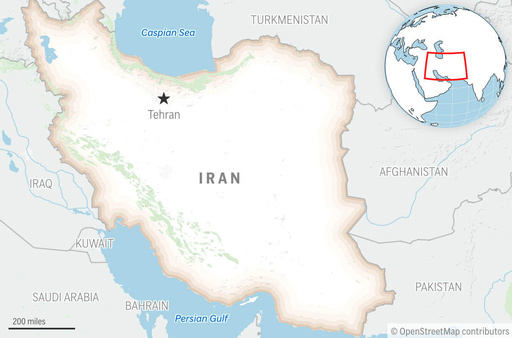
DUBAI, United Arab Emirates (AP) — Talks between Iran and the United States will be held Friday in Oman, Iranian media reported Wednesday as tensions remain high with Washington after Tehran’s bloody crackdown on nationwide protests last month.

The semiofficial ISNA and Tasnim news agencies, as well as the Student News Network, all reported the talks would take place in Oman, though the sultanate did not immediately acknowledge it would host them. Oman has hosted multiple rounds of earlier nuclear talks between Iran and the U.S. in the past.

The U.S. has not acknowledge the talks would take place in Oman, though the White House said it anticipated the negotiations would take place even after the U.S. shot down an Iranian drone Tuesday and Iran attempted to stop a U.S.-flagged ship.

Also on Wednesday, activists said the number of arrests topped 50,000 in the government crackdown, according to the U.S.-based Human Rights Activists News Agency, which has been accurate in other rounds of unrest in Iran.

At least 50,834 people have been arrested in connection with the Iranian government’s crackdown on protests, the activists said. The crackdown on the demonstrations has also killed at least 6,876 people, though there are fears many more may be dead.

The Associated Press has been unable to independently assess the death toll due to the sweeping internet shutdown in Iran.

An angel resembling Italy’s Meloni is painted over after an outcry from church and state

ROME (AP) — Call it divine intervention, or maybe just a hasty fix-it job to put an end to days of speculation and scandal. But the end result is that the Angel Meloni is no more.

A painting of a cherub with a face bearing a remarkable resemblance to Italian Premier Giorgia Meloni attracted large crowds to the Basilica of San Lorenzo in Lucina, one of the oldest basilicas in Rome. That angel’s face was gone when the church opened its doors Wednesday: the cherub’s body remains, but the face has been erased with a sloppy slab of paint or plaster.

La Repubblica newspaper, which broke the story Saturday when it published the Meloni-esque angel on its front page, said the restorer responsible for the Meloni cherub had covered it up overnight at the request of church authorities.

Restorer Bruno Valentinetti admitted to the paper that he had styled the angel on Meloni, but didn’t say why.

The diocese of Rome and the Italian Culture Ministry had both launched investigations into the angel after the image of the cherub was first published.

The original painting only dated from 2000, so it wasn’t a matter of damage to the church’s historic patrimony. But Cardinal Baldassare Reina, the pope’s vicar for Rome, insisted that a political figure had no place in church art.

The ruckus gave the basilica newfound celebrity status, with curious locals and tourists lining up to photograph the Meloni cherub, at times disrupting Mass.

Valentinetti had first made the image in 2000, when one of the basilica’s front chapels was renovated to include a bust of the last king of Italy, Umberto II. Included in the decoration was a cherub holding a map of Italy, seemingly kneeling down before the king.

The cherub was restored after water infiltrations damaged the basilica starting in 2023, and emerged with the face of Meloni.

The investigations that were launched were to identify how the original 2000 cherub looked, with the aim of restoring the painting to that image. The faceless cherub seen Wednesday appeared a temporary fix to erase Meloni’s likeness from the work.

The Italian premier had made light of the whole thing. “No, I definitely don’t look like an angel,” Meloni wrote on social media on the weekend with a laughing/crying emoji alongside a photo of the work.

___

Associated Press religion coverage receives support through the AP’s collaboration with The Conversation US, with funding from Lilly Endowment Inc. The AP is solely responsible for this content.

An angel resembling Italy’s Meloni is painted over after an outcry from church and state

ROME (AP) — Call it divine intervention, or maybe just a hasty fix-it job to put an end to days of speculation and scandal. But the end result is that the Angel Meloni is no more.

A painting of a cherub with a face bearing a remarkable resemblance to Italian Premier Giorgia Meloni attracted large crowds to the Basilica of San Lorenzo in Lucina, one of the oldest basilicas in Rome. That angel’s face was gone when the church opened its doors Wednesday: the cherub’s body remains, but the face has been erased with a sloppy slab of paint or plaster.

La Repubblica newspaper, which broke the story Saturday when it published the Meloni-esque angel on its front page, said the restorer responsible for the Meloni cherub had covered it up overnight at the request of church authorities.

Restorer Bruno Valentinetti admitted to the paper that he had styled the angel on Meloni, but didn’t say why.

The diocese of Rome and the Italian Culture Ministry had both launched investigations into the angel after the image of the cherub was first published.

The original painting only dated from 2000, so it wasn’t a matter of damage to the church’s historic patrimony. But Cardinal Baldassare Reina, the pope’s vicar for Rome, insisted that a political figure had no place in church art.

The ruckus gave the basilica newfound celebrity status, with curious locals and tourists lining up to photograph the Meloni cherub, at times disrupting Mass.

Valentinetti had first made the image in 2000, when one of the basilica’s front chapels was renovated to include a bust of the last king of Italy, Umberto II. Included in the decoration was a cherub holding a map of Italy, seemingly kneeling down before the king.

The cherub was restored after water infiltrations damaged the basilica starting in 2023, and emerged with the face of Meloni.

The investigations that were launched were to identify how the original 2000 cherub looked, with the aim of restoring the painting to that image. The faceless cherub seen Wednesday appeared a temporary fix to erase Meloni’s likeness from the work.

The Italian premier had made light of the whole thing. “No, I definitely don’t look like an angel,” Meloni wrote on social media on the weekend with a laughing/crying emoji alongside a photo of the work.

___

Associated Press religion coverage receives support through the AP’s collaboration with The Conversation US, with funding from Lilly Endowment Inc. The AP is solely responsible for this content.

Hank and John Green’s studio becomes a nonprofit as they aim to make ‘trustworthy content’ online

NEW YORK (AP) — Author-vloggers Hank and John Green often end their popular “Crash Course” videos with a donation appeal to keep the YouTube show “free for everyone forever.” The multihyphenate brothers now hope they’ve figured out a way to do just that — by changing their production studio’s tax status.

Their educational media company Complexly, which has garnered billions of views through web series that explain just about every classroom subject from animal biology to Latin American literature, will now operate as a nonprofit.

The change is intended to ensure viewers have access to engaging, fact-based content that can compete free of advertisers’ interests in the attention economy. It comes as artificial intelligence gives rise to absurdist “ brain rot ” and distorted deepfake images while public media struggles to make ends meet amid sudden cuts in federal funding.

“Part of what Complexly’s trying to do is create good information on the internet,” Hank told the Associated Press. “Let’s actually just say that this is our goal. Like, our goal isn’t to build a big company and sell it someday.”

“There’s never been more information and yet there’s never been less information that you feel you can trust,” John added. “Our goal at Complexly has always been to make trustworthy content. And making Complexly a public good, for me, is the next step in that process.”

Strong audience and philanthropic support

Nonprofit status has been a consideration for several years, according to Complexly CEO Julie Walsh Smith.

The studio already receives sizable philanthropic funding — including $4.8 million last year. The nonprofit’s initial supporters are led by existing partners such as YouTube, PBS, and the Alfred P. Sloan Foundation. Other funders such as Arizona State University and the Howard Hughes Medical Institute underwrite a number of “Crash Course” projects.

While about one-third of their revenue comes from a YouTube program that gives creators a share of advertising earnings, strong audience support made them confident in their ability to reach individual donors.

John estimates that another third of their revenue comes from Patreon, a platform where fans can contribute to their favorite online creators often in exchange for bonus content. Monthly Patreon subscribers tend to give $5 or $10 to help them make shows such as “Crash Course.”

They also sell minted silver “Crash Course” coins every year that can cost thousands of dollars. Hank said they have relationships with the individuals who buy the most expensive versions of the coin — and that most of those high-dollar supporters have said they want to increase their support but maybe “felt a little weird” giving money to a for-profit entity.

The small donors provide general funds that Hank said give them flexibility to “invest in the ideas that we think are most likely to deliver impact through reach.”

It is “hard to do the thing that we have to do where we compete with MrBeast and cat videos and all of the very attention-grabbing dashcam fights that YouTube has to offer,” he said. “But we really take that responsibility very seriously. We are not just here to make educational video. We are here to make educational video that people choose to watch. And so that’s the fight that we are fighting.”

New roles and new shows

The nonprofit transition requires Hank and John, best known for his young adult novels “The Fault in Our Stars” and “Looking for Alaska,” give up any equity they held in Complexly. While the Montana-headquartered nonprofit expects to maintain its staff of roughly 80 employees, Smith says its growth means they no longer require the founders’ “day-to-day leadership.”

John will move forward as “founder emeritus” — he doesn’t know exactly what that means but says he is “looking forward to finding out” — while Hank will join the nonprofit’s board of directors and continue hosting some shows.

“The way I like to think about it is they’re going from leaders of the organization to cheerleaders,” said Smith.

John promised that the viewing experience won’t change much. If anything, he said, there are potential new shows “that have long been great ideas that weren’t possible because they didn’t make sense from a business perspective.”

Complexly is committing $8.5 million to a new educational series that neither its founders nor CEO would discuss yet. But Smith did say they are seeking additional funding for an upcoming series that will follow Hank as he goes behind the scenes at zoos and museums to spotlight the specimens they don’t display.

As far as new mediums such as TikTok go, Smith said they’re focused on YouTube while staying committed to being in the spaces “where audiences are spending their time.”

Living in an ‘advertising-funded internet’

The duo has long tried to crack the economics of the internet.

They founded the crowdfunding platform Subbable in 2013 to help creators raise money for specific projects. There was even a point where Hank tried to form a union for creators, whose livelihoods are subject to the unpredictability of social media platforms’ algorithmic priorities and advertising share models.

This shift wasn’t motivated by any doubts about their business’ health, they insisted, but rather other concerns.

“We’ve always worried about being overly reliant on advertising,” John said. “I think that an advertising-funded internet is a complicated place to live, as I’ve observed from the last 25 years of my life.”

By leaning into philanthropic funding, John says the desire is for Complexly to exist “for the good of the people who benefit from it” and not “for anyone else’s benefit.”

“That’s not the same path a lot of digital media companies take,” Smith said. “Often, they’ll put premium content behind paywalls or behind a subscription service. And we’re just never gonna do that.”

No strangers to the nonprofit world

It’s hardly their first foray into philanthropy.

The brothers say they have granted more than $17 million to dozens of charities through their Foundation to Decrease World Suck. They fund those donations with the profits from everyday purchases made on the Good Store, their online retailer.

That familiarity has made them aware of the fact that many nonprofits struggle with the nimbleness required of a digital production studio. But they emphasized that there are many ways to run a nonprofit. John noted that Partners in Health — one of the Good Store’s charitable partners — track tuberculosis in Lesotho with an app that is “on par with anything being done in the private sector.”

“It’s perfectly possible for nonprofits to be innovative and fast movers,” John said. “It’s just that you need to set that up from the beginning.”

“Can we signal to other people that there is no reason why you can’t do this and also model, as we go forward, that if that’s a choice that other people want to make then there’s good ways to do it?” Hank added.

___

Associated Press coverage of philanthropy and nonprofits receives support through the AP’s collaboration with The Conversation US, with funding from Lilly Endowment Inc. The AP is solely responsible for this content. For all of AP’s philanthropy coverage, visit https://apnews.com/hub/philanthropy.

The Latest: Trump administration looks to rebuild critical mineral supply chain

President Donald Trump’s administration is expected to unveil its grandest plan yet to rebuild supply chains of critical minerals needed for everything from jet engines to smartphones, likely through purchase agreements with partners on top of creating a $12 billion U.S. strategic reserve to help counter China’s dominance.

Vice President JD Vance is set to deliver a keynote address Wednesday at a meeting Secretary of State Marco Rubio is hosting with officials from several dozen European, Asian and African nations. The U.S. is expected to sign deals on supply chain logistics, though details haven’t been revealed. Rubio met Tuesday with foreign ministers from South Korea and India to discuss critical minerals mining and processing.

The meeting and expected agreements will come just two days after Trump announced Project Vault, or a stockpile of critical minerals to be funded with a $10 billion loan from the U.S. Export-Import Bank and nearly $1.67 billion in private capital.

Here’s the latest:

Prosecutors will seek life sentence for man who tried to shoot Trump at a Florida golf course

Ryan Routh is scheduled to appear Wednesday before U. S. District Judge Aileen Cannon in Fort Pierce. Her courtroom erupted into chaos in September shortly after jurors found Routh guilty on all counts, including attempting to kill a presidential candidate and several firearm-related charges. Routh tried to stab himself in the neck with a pen, and officers quickly dragged him out.

Routh’s sentencing had initially been scheduled for December, but Cannon agreed to move the date back after Routh decided to use an attorney during the sentencing phase instead of representing himself as he did for most of the trial.

Prosecutors said in a sentencing memorandum filed last month that Routh has yet to accept any responsibility for his actions and that he should spend the rest of his life in prison, in accordance with federal sentencing guidelines.

Read more

Federal judge to hear arguments as court gives Trump another shot at nixing hush money conviction

The 2nd U.S. Circuit Court of Appeals in November ordered U.S. District Judge Alvin K. Hellerstein to reconsider his decision to keep the case in state court instead of moving it to federal court, where President Trump can seek to have it thrown out on presidential immunity grounds.

A three-judge panel ruled Hellerstein erred by failing to consider “important issues relevant” to Trump’s request to move the New York case to federal court. They said they “express no view” on how he should rule.

Trump, a Republican, isn’t expected to attend Wednesday’s arguments in federal court in New York City, which were preceded by lengthy written submissions from Trump’s lawyers and the Manhattan district attorney’s office, which prosecuted the case and wants it to remain in state court.

Trump was convicted in May 2024 of 34 felony counts of falsifying business records to conceal a hush money payment to adult film actor Stormy Daniels, whose allegations of an affair with Trump threatened to upend his 2016 presidential campaign. He was sentenced to an unconditional discharge, leaving his conviction intact but sparing him any punishment.

Trump denies Daniels’ claim and said he did nothing wrong.

The difficulty in reaching a bipartisan consensus on ICE funding

Despite rare negotiations between Democrats and President Donald Trump, a bipartisan agreement on new restrictions for federal immigration enforcement in the next two weeks will be exceedingly difficult — or even “an impossibility,” as Republican Senate Majority Leader John Thune said.

Congress is discussing potential new rules for Immigration and Customs Enforcement and U.S. Customs and Border Protection after officers shot and killed two Minneapolis protesters in January. The negotiations come amid some bipartisan sentiment that Congress should step in to de-escalate tensions over the enforcement operations that have rocked Minnesota and other states.

But it’s unclear if the president or enough congressional Republicans will agree to any of the Democrats’ larger demands that the officers unmask and identify themselves, obtain judicial warrants in certain cases and work with local authorities, among other asks. Republicans have already pushed back.

Read more

Complaint accuses Gabbard of playing politics with intelligence, which spy agency rejects

A complaint made about Director of National Intelligence Tulsi Gabbard months ago relates to an allegation that she withheld access to classified information for political reasons, according to a memo sent to lawmakers by the Inspector General’s Office and obtained by The Associated Press.

That allegation in the complaint filed in May appeared to not be credible, according to the former watchdog for the intelligence community that initially reviewed it. It has become a flashpoint for Gabbard’s critics, who accuse her of withholding information from members of Congress tasked with providing oversight of the intelligence services.

Copies of the top-secret complaint are being hand-delivered this week to the “Gang of Eight” lawmakers — a group comprised of the House and Senate leaders from both parties as well as the top Democrats and Republicans on the House and Senate intelligence committees.

Gabbard’s office has denied the allegations and disputed that it withheld the complaint, saying the delay in getting it to lawmakers was due to an extensive legal review necessitated by the complaint’s many classified details, as well as last year’s government shutdown.

Read more

Trump looks to rebuild critical mineral supply chains for everything from jet engines to smartphones

President Donald Trump’s administration is expected to unveil its grandest plan yet to rebuild supply chains of critical minerals needed for everything from jet engines to smartphones, likely through purchase agreements with partners on top of creating a $12 billion U.S. strategic reserve to help counter China’s dominance.

Vice President JD Vance is set to deliver a keynote address Wednesday at a meeting that Secretary of State Marco Rubio is hosting with officials from several dozen European, Asian and African nations. The U.S. is expected to sign deals on supply chain logistics, though details have not been revealed. Rubio met Tuesday with foreign ministers from South Korea and India to discuss critical minerals mining and processing.

The meeting and expected agreements will come just two days after Trump announced Project Vault, or a stockpile of critical minerals to be funded with a $10 billion loan from the U.S. Export-Import Bank and nearly $1.67 billion in private capital.

Read more

Renters use ‘rent now, pay later’ services to manage monthly payments, but fees raise concerns

NEW YORK (AP) — Rent can eat up an entire paycheck at the start of the month, so a growing number of renters are turning to a financial product that promises relief by letting them split the bill — for a price.

So-called “rent now, pay later” services have emerged over the past few years as housing costs climb and paychecks grow less predictable, particularly for lower-income and gig-economy workers. According to the Bureau of Labor Statistics, rents have jumped nearly 28% in past five years.

Companies such as Flex, Livble and, more recently, Affirm, say breaking rent into multiple payments can help renters manage cash flow. But consumer advocates warn the products typically function like short-term loans, layering fees onto already strained budgets and, in some cases, carrying triple-digit effective interest rates — raising questions about whether they ease financial pressure or deepen it.

Kellen Johnson, 44, started using Flex to split up his rent payments about two years ago. Instead of paying the whole $1,850 of his rent on the first of the month, Johnson would pay $1,350 on that date, and $500 on the 15th. For the service, Flex collected a $14.99 monthly subscription fee, as well as 1% of the total rent, which for Johnson was $18.50, bringing his monthly charges for the app to more than $33.

Johnson said he was willing to pay the extra costs in part because he worked as an independently contracted delivery person for Amazon at the time, and his paychecks could vary.

“It was an expense that I was incurring, but I went ahead as it was more convenient,” said Johnson, who now works as a driver for senior citizens in Sacramento, California.

Roughly 109 million Americans, or about 42.5 million households, are renters in the United States. The Census Bureau estimated in 2024 that a large share of those households pay 30% or more of their monthly income on rent. The bureau considers such households to be “cost burdened,” meaning rent consumes so much of their income that they have less ability to plan for future expenses or build wealth.

Rent now, pay later services generally operate the same way: The company pays the landlord the full rent when due, and the renter repays the company in two or more installments over the course of the month. Because rent can be such a large expense, the companies argue that spreading payments out can give renters more cash on hand.

Many of these services come with fees. The fees can be structured differently but should be generally thought of as cost of credit, consumer advocates warn. In Johnson’s case, he was paying $33.49 for a two-week loan of $500, for an effective annual percentage rate of 172%, when expressed using standard consumer-lending calculations.

“Renters should be skeptical of any financing providers that have partnered with a landlord and be skeptical of anything that sells itself as no fees or no interest,” said Mike Pierce, executive director of Protect Borrowers. Pierce previously worked at the Consumer Financial Protection Bureau.

Launched in 2019, Flex is one of the largest companies focused on splitting rent payments. The company says its 1.5 million customers now send about $2 billion a month in rent through its system, and several of the country’s largest landlords accept Flex as a payment option.

Flex says most of its customers are lower-income renters with weaker credit profiles. The company reports a median credit score of 604 among its users and says about one in three customers works more than one job to make ends meet. A Flex spokesman says the average customer uses the service three to four times a year. Johnson used it every month.

Livble does not charge a subscription, but charges renters a fee ranging from $30 to $40, according to the company’s help page. Depending on how long the renter defers part of the payment, Livble’s fees can translate into effective annual percentage rates of roughly 104% to 139%.

The buy now, pay later company Affirm said this month that it is piloting a program allowing some customers to split rent into two payments. The program is being tested in partnership with Esusu, a company that reports rent payments to credit bureaus to help consumers build credit. An Affirm spokesman said the company is not charging renters interest or fees to use the product, but may charge landlords fees.

As another financing option, landlords are increasingly accepting credit cards for rent payments. Bilt, a credit card startup, built its brand around targeting renters when it launched, and some tenants also use credit cards to accumulate rewards or points.

But paying rent by credit card can also be costly. Landlords typically pass the processing fees on to tenants. Depending on the card issuer and payment network, these fees can range from about 2.5% to 3.5% of the rent. For a renter paying $1,500 a month, that translates to roughly $37.50 to $52.50 in fees — a monthly cost comparable to what services like Livble and Flex charge.

Economists and renters’ advocates argue that none of these financing options address the fundamental issue of affordability in the rental market. If credit cards, or flexible rent payment options become more widely used, they worry rents could rise further as landlords start factoring in a potential renters’ weekly cash flow as opposed to the rental market in the area the building is located in.

Merchants already pass along credit card processing costs to customers in the form of higher prices, and advocates worry that the rental market could adopt similar patterns. For example, Livble is owned by RealPage, which last year settled allegations that its algorithm allowed landlords to collude and push rents higher.

___

Economics Writer Christopher Rugaber contributed from Washington.

AP Decision Notes: What to expect in New Jersey’s special congressional primary

WASHINGTON (AP) — Voters in northern New Jersey will select nominees in a special congressional primary on Thursday to replace Democrat Mikie Sherrill in the U.S. House now that she’s governor.

The crowded, 11-candidate Democratic primary field features Passaic County Commissioner John Bartlett, venture capitalist Zach Beecher, attorney and comedian J-L Cauvin, nonprofit executive Cammie Croft, Essex County Commissioner Brendan Gill, Morris Township Committeeman Jeff Grayzel, former U.S. Rep. Tom Malinowski, progressive organizer Analilia Mejia, Chatham Borough Councilman Justin Strickland, former Lt. Gov. Tahesha Way and community activist Anna Lee Williams. Two additional candidates have dropped out of the race, but their names will remain on the ballot.

The winner will face the only candidate in the Republican primary, Randolph Township Mayor Joe Hathaway, on April 16. The Democratic-leaning district could further narrow the 218-214 Republican majority in the U.S. House. Two previously Republican-held seats in Georgia and California are also vacant.

Malinowski entered the final stretch of the abbreviated campaign leading the field in fundraising. But he is also the target of a $1.6 million negative ad campaign by a super PAC affiliated with the American Israel Public Affairs Committee. That group targeted members of the progressive congressional group known as the Squad in 2024. Meanwhile, a super PAC affiliated with the Democratic Lieutenant Governors Association has spent about $1.5 million on behalf of Way.

The eventual Democratic nominee will have an advantage heading into the April special general election. Sherrill won reelection in 2024 with about 57% of the vote, while Democratic presidential nominee Kamala Harris carried the district with 53% at the top of the ballot. Sherrill was elected governor in November and was sworn in last month.

More than half of the district’s 588 precincts are in Morris County, with about 39% in Essex County and 9% in Passaic County. Beecher, Grayzel, Strickland and Williams are from Morris County. Cauvin, Croft, Gill and Mejia are from Essex County, while Way hails from Passaic County. Malinowski lives outside of the 11th Congressional District but previously represented a portion of Essex County until his 2022 loss to GOP U.S. Rep. Tom Kean.

The Associated Press does not make projections and will declare a winner only when it’s determined there is no scenario that would allow the trailing candidates to close the gap. If a race has not been called, the AP will continue to cover any newsworthy developments, such as candidate concessions or declarations of victory. In doing so, the AP will make clear that it has not yet declared a winner and explain why.

New Jersey does not have automatic recounts, but candidates and voters may request and pay for them, with the cost refunded if the outcome changes. The AP may declare a winner in a race that is subject to a recount if it can determine the lead is too large for a recount or legal challenge to change the outcome.

Here’s a look at what to expect on Thursday:

When do polls close?

Polls close at 8 p.m. ET.

What’s on the ballot?

The AP will provide vote results and declare a winner in the Democratic special primary for New Jersey’s 11th Congressional District. The Republican primary is uncontested.

Who gets to vote?

Registered party members may vote only in their own party’s primary. In other words, Democrats can’t vote in the Republican primary or vice versa. Independent or unaffiliated voters may participate in a party’s primary if they affiliate with that party at the polling place.

What do turnout and advance vote look like?

As of Sunday, there were about 602,000 registered voters in the 11th Congressional District. Of those, about 226,000 were Democrats, about 165,000 were Republicans and about 206,000 were not affiliated with any party. The remainder were registered with various minor parties.

About 52,000 votes were cast the 11th Congressional District Democratic primary in 2024 and about 38,000 in 2022. Early and absentee voting comprised about 48% of the primary vote in 2024 and about 47% in 2022.

More than 25,000 ballots from registered Democrats and about 5,400 ballots from registered Republicans had already been cast as of Monday. An additional 29 ballots from unaffiliated voters had also been cast.

How long does vote-counting usually take?

In the 2024 11th District Democratic primary, the AP first reported results at 8:11 p.m. ET, or 11 minutes after polls closed. The tabulation ended for the night at 11:18 p.m. ET with about 90% of total votes counted.

When are early and absentee voting results released?

All counties in New Jersey release most or all the results from early and absentee voting in the first vote update of the night, before any in-person Election Day results are released.

Are we there yet?

As of Thursday, there will be 70 days until the special general election in the 11th Congressional District and 271 days until the 2026 midterm elections.

___

Associated Press writer Leah Askarinam contributed to this report.