Home Blog

FIFA appears to have technical difficulties with World Cup ticket sales

FIFA appeared to have technical difficulties when it resumed World Cup ticket sales Wednesday after the 48-team field was finalized.

Soccer’s governing body did not say which games and price categories were available.

Some people who clicked on what FIFA called its “last-minute sales phase” when sales opened at 11 a.m. EDT were directed into a queue for “PMA late qualifier supporters sales phase,” aimed for a segment of fans for the six nations who earned berths on Tuesday.

FIFA appeared to have lengthy waits to purchase tickets, with people who joined the queue at the start still waiting to get through the queue 90 minutes later.

FIFA did not have an explanation for why the link misdirection occurred but said around noon that the links were working properly.

FIFA also said that not all remaining tickets were being put on sale for the 104 games to be played in the U.S., Mexico and Canada from June 11 to July 19 and that additional tickets will be released on a rolling basis.

This was the fifth phase of ticket sales following a Visa presale draw from Sept. 10-19, an early ticket draw from Oct. 27-31, a random selection draw from Dec. 11 to Jan. 13 and an unscheduled 48-hour availability in late February.

FIFA said this phase, which will remain open through the tournament, marked the first time a specific seat location could be purchased rather than a request for a ticket in a category.

FIFA is using dynamic pricing for the tournament, which will be played in 11 U.S. cities plus three in Mexico and two in Canada.

For the month-long sales phase after the Dec. 5 draw, tickets were priced at $140 to $8,680. After complaints, FIFA said $60 tickets would be made available to each participating national federation for their most loyal supporters, an amount likely to be 400-700 per team for each match.

“The employment of dynamic ticket pricing for the 2026 FWC starkly contrasts with FIFA’s core mission to promote the accessible and inclusive promotion and development of soccer globally,” 69 Democratic members of Congress wrote in a March 10 letter to FIFA President Gianni Infantino. “Despite host cities’ cooperation in bringing the vision of the largest, most global World Cup in history to fruition, the consequences of dynamic pricing will make the 2026 FWC the most financially exclusionary and inaccessible to date.”

FIFA also has its own resale market, collecting 15% from both the buyer and seller.

Bosnia-Herzegovina, Congo, the Czech Republic, Iraq, Sweden and Turkey completed the World Cup field. Fans of teams eliminated Tuesday could attempt to resell tickets they already had purchased, nations that include Italy, Poland, Denmark, Jamaica and Bolivia.

Infantino claimed in January that the amount of ticket requests FIFA had received was the equivalent of “the request for 1,000 years of World Cups at once.”

“This is unique,” he said at the time. “It’s incredible.”

It was unclear if many of those requests were for seats in the lowest-price categories.

Fan groups have voiced concern over the soaring costs for resold tickets and one filed a formal complaint to the European Commission last month.

Infantino defended FIFA’s cut of resales, saying the governing body was engaged in a legal commercial activity under U.S. law. Some European countries have laws which can restrict resale by requiring tickets to be sold for face value or only by authorized partners of the event organizers.

___

AP soccer: https://apnews.com/hub/soccer
Judge tosses lawsuit filed by parents of ‘Cop City’ protester who was killed by troopers

ATLANTA (AP) — A federal judge has dismissed a civil rights lawsuit filed by the parents of an environmental activist who was shot dead by Georgia state troopers, saying their actions were “objectively reasonable” when they shot pepper balls into the activist’s tent and ultimately fired fatal gunshots after the 26-year-old shot one of the troopers.

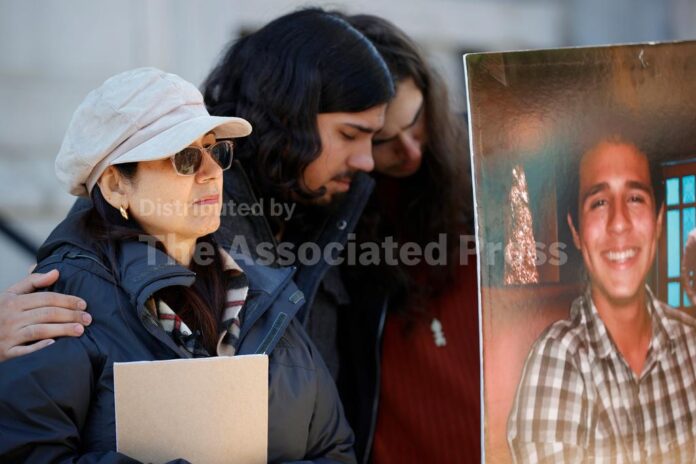
The Jan. 18, 2023, shooting of Manuel Paez Terán, known as “Tortuguita,” was a galvanizing moment for the movement to halt the construction of what critics labeled “Cop City,” a sprawling police and firefighter training center that opened last year on the site of a forest and former prison farm just outside Atlanta.

Paez Terán’s family later sued three law enforcement officers who they say planned and carried out the raid against protesters who had spent months camping in the woods near the DeKalb County construction site. The lawsuit said troopers violated Paez Terán’s free speech rights and used excessive force against the activist, who then panicked and began firing shots. An autopsy commissioned by the family concluded that Paez Terán, who used they/them pronouns, was sitting cross-legged with their hands in the air when they were shot more than a dozen times.

In a ruling Monday, U.S. District Judge Steven Grimberg noted that, as the plaintiffs have acknowledged, Paez Terán fired at the troopers, wounding one of them, which the judge said makes the troopers’ lethal response reasonable. Grimberg also said that prior to the shooting, troopers were within their rights to fire pepper balls at Paez Terán after the activist, who was accused of criminal trespass, did not comply with orders to leave the tent.

“Because Paez Teran initiated gunfire with the (Georgia State Patrol) officers, Plaintiffs cannot maintain that Defendants’ actions were the proximate cause of the use of deadly force that ultimately ended the decedent’s life,” the judge wrote.

Grimberg also ruled that the officers had qualified immunity, special legal protection that prevents people from suing over claims that police or government workers violated their constitutional rights.

Paez Terán’s parents, Belkis Terán and Joel Paez, are “devastated” by the judge’s ruling, according to their attorneys, Jeff Filipovits and Wingo Smith.

“They feel they are being denied the accountability they deserve,” the attorneys said in a statement. “The records of their child’s death still have not been publicly released. They will be reviewing all their legal options.”

Body camera footage from four Atlanta officers involved does not show the shooting itself, the Georgia Bureau of Investigation has said. But the agency said footage shows the officers encountered Paez Terán in a tent in the woods and fired in self-defense after the activist shot at troopers and ignored verbal commands to leave the tent.

A prosecutor declined to charge the troopers who killed Paez Terán, saying their use of deadly force was “objectively reasonable.” Investigators have also said ballistics evidence shows the injured trooper was shot with a bullet from a gun Paez Terán legally purchased in 2020.

Activists formed the “Stop Cop City” movement to protest the construction of an 85-acre (34-hectare) Atlanta Public Safety Training Center, which they said would cause environmental damage by cutting down huge swathes of trees and exacerbate flooding fears in a poor, majority-Black neighborhood. They also opposed the use of tens of millions in public funding on what critics described as a training ground for “urban warfare.”

Protests against the facility at times veered into violence, with some masked activists torching police cars and construction equipment — actions that ultimately led to a sprawling racketeering indictment against 61 protesters in 2023. A Fulton County judge tossed the landmark case on procedural grounds last year, but Republican Attorney General Chris Carr is appealing the ruling.

Though the movement has receded since the filing of the racketeering charges and the opening of the training center, the name Tortuguita is still invoked at anti-police protests, and the activist’s image has become a common sight in murals and flyers across Atlanta.

FDA grants speedy approval to Eli Lilly’s weight-loss pill for obesity

Federal regulators on Wednesday approved Eli Lilly’s new weight-loss pill, a second daily oral medication to treat obesity and other weight-related conditions.

The Food and Drug Administration granted expedited approval to orforglipron, a GLP-1 drug that works like widely used injectable medications to mimic a natural hormone that controls appetite and feelings of fullness.

The drug, which will be branded as Foundayo, is expected to begin shipping Monday. The company said people with insurance may be able to get the drug starting at $25 per month with a Lilly discount card. Prices for people paying cash will range between $149 per month to $349 per month, depending on the dose.

The new pill joins drugmaker Novo Nordisk’s oral Wegovy pill, which has spurred more than 600,000 prescriptions in the United States since it was approved in December.

The FDA authorized Eli Lilly’s drug as part of a new program aimed at cutting drug approval times. The agency said it reviewed the company’s application in 50 days.

In a clinical trial of more than 3,000 adults with obesity, participants who received the highest dose of orforglipron, 36 milligrams, lost 11.2% of their body weight –- about 25 pounds on average –- over more than 16 months. That compared with a 2.1% weight loss, or less than 5 pounds, in patients who received a placebo, or dummy pill, according to the New England Journal of Medicine.

Both the Lilly and Novo Nordisk pills resulted in less weight loss than the average achieved with Lilly’s injectable Zepbound, which results in a 21% average weight loss, or Novo Nordisk’s injectable Wegovy, which averages about 15%.

Both once-daily pills promise convenience, but orforglipron is a small-molecule GLP-1 drug that can be taken without restrictions. The Wegovy pill, a peptide, must be taken with a sip of water in the morning on an empty stomach, with a 30-minute wait before eating or drinking.

Users of orforglipron also saw improvements in waist circumference, blood pressure, triglyceride levels and cholesterol levels, the study found.

Side effects, mostly gastrointestinal issues, led between 5% and 10% of participants in the orforglipron study to discontinue treatment, compared with nearly 3% in the placebo group.

About 1 in 8 people in the U.S. have used injectable GLP-1 drugs, according to a survey from KFF, a nonprofit health policy research group. But many more have trouble affording the costly shots.

The pill from Indianapolis-based Lilly will be included in a Trump administration deal to lower prices on GLP-1 drugs.

___

AP Health Writer Matthew Perrone contributed to this report.

___

The Associated Press Health and Science Department receives support from the Howard Hughes Medical Institute’s Department of Science Education and the Robert Wood Johnson Foundation. The AP is solely responsible for all content.

Quadruple amputee cornhole player acted in self-defense when shooting car passenger, lawyer says

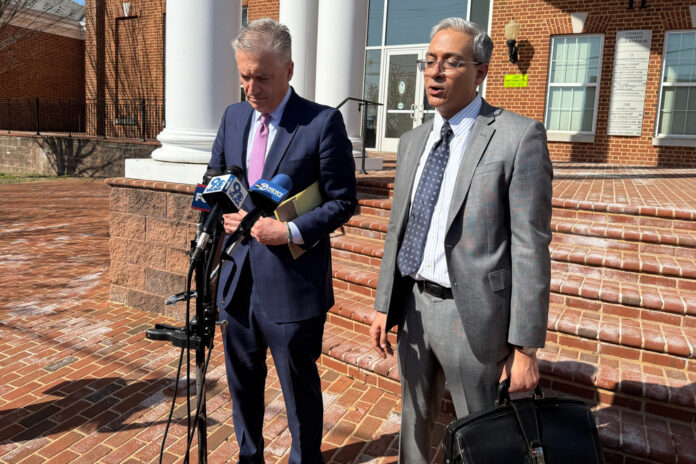
LA PLATA, Md. (AP) — A quadruple amputee professional cornhole player acted in self-defense when he shot and killed a passenger in his car during a heated argument, his attorney said Wednesday.

Dayton James Webber, 27, appeared in Charles County District Court via videoconference for the bail review Wednesday, where Judge Patrick Devine noted that he left Maryland after the March 22 shooting of 27-year-old Bradrick Michael Wells and ordered Webber to remain jailed without bail.

Webber, who was extradited from Virginia and is charged with first- and second-degree murder, hasn’t entered a plea yet and is due in court for a May 6 preliminary hearing. He also faces assault and firearm charges.

Defense attorney Andrew Jezic told the court that Webber acted in self-defense and that he anticipates “a lengthy trial” to prove it.

After the hearing, Jezic told reporters that his client was “terrified.”

“The truth here is that he would have been a murder victim if he had not acted immediately in defense of his life,” Jezic said.

Family members of Webber declined to comment after the hearing.

Webber, whose arms and legs were amputated when he was 10 months old to save his life after he contracted a serious blood infection, is accused of shooting Wells, of Waldorf, twice in the head during an argument, according to police charging documents.

Karen Piper Mitchell, a deputy state’s attorney, said witnesses in the car told authorities the argument was over a gun that a friend of Wells had stolen from Webber, and that Webber was upset Wells was still friends with the thief.

In arguing that Webber should remain in custody, Mitchell noted that he drove to Virginia after the shooting and owns firearms.

According to the charging documents, Webber pulled over after the shooting in La Plata, Maryland, and asked two backseat passengers to help pull the victim out, but they refused, got out of the car and flagged down police officers.

Webber fled with the victim still in the car, the Charles County sheriff’s office said. Two hours later, a resident in Charlotte Hall, about 10 miles (16-kilometer) away, found Wells’ body in a yard along a road and notified officers.

Detectives tracked down Webber’s car in Charlottesville, Virginia, and found Webber at a hospital where he was “seeking treatment for a medical issue,” the sheriff’s office said.

Webber was featured by ESPN in 2023 in a story of inspiration, noting he rode dirt bikes, wrestled and played football before becoming a professional cornhole player. The same year, he wrote an essay for the “Today” show about how he became a professional competitor. He said he learned to grab the bean bag by the corners and throw it using his amputated arms.

Max Thieriot is on fire. Meet the man behind TV hits ‘Fire Country’ and ‘Sheriff Country’

NEW YORK (AP) — Max Thieriot is carving out a role as the King of Friday TV.

He’s the star, co-creator and an executive producer of CBS and Paramount+’s “Fire Country” and a co-creator and executive producer of the spinoff freshman drama “Sheriff Country,” which both rule Friday nights as the No. 1 and No. 2 top-rated shows.

“It still feels a little surreal, for sure,” he says. “I didn’t feel like I was as smart as a lot of other writers, but the thing that I also realized early on is the biggest thing is you just need to connect with people. If you can move people, then you have them.”

“Fire Country” — the most watched freshman show of the 2022-23 season and now in its fourth season — and “Sheriff Country” are both set in the fictional California town of Edgewater, a rural community where everyone knows everyone else’s business.

Both marry things like office love triangles with plenty of heart-thumping action — knocking down canopy fires on “Fire Country” or solving a kidnapping tied to synthetic weed for the folks on “Sheriff Country,” led by actor Morena Baccarin.

“That’s what these shows are — they’re grounded human stories centered in this small, rural community where life is complex, things aren’t black and white, and I think that’s relatable to a lot of people,” says Thieriot.

On Friday, his two shows will have their first crossover event as Edgewater’s sheriffs and firefighters team up to search for nine missing teens amid escalating chaos, a two-hour block where actors from both shows mingle.

“I love the episodes and it really plays like one, big, two-part incident,” he says. “It feels very fluid but we get to dive a little bit into the fun, too, like there’s moments of levity and moments of heart and some great intrigue.”

Thieriot knows this place

Thieriot grew up in the Sonoma County town of Occidental, a former logging hub nestled among towering redwoods, and watched many of his friends join the ranks of Cal Fire, California’s Department of Forestry and Fire Protection.

Thieriot’s early acting gigs included “Bates Motel” and “SEAL Team” before he turned to writing. And when he did, he wrote what he knew.

“There’s a lot of things that people go through in their own personal life experiences or places they grew up that really could make for great television,” Thieriot says. “It almost takes somebody else looking at your crazy life to realize, ‘Wait a second, that sounds like a show.’”

Thieriot created the character of Bode Donovan, an inmate given the chance to join Cal Fire in exchange for a shortened prison sentence. Over the seasons, he’s faced drug dependency, a return to jail, family strains and heartbreak, in addition to harrowing wildfires.

Thieriot says he was deeply influenced by the show “Friday Night Lights,” which centered on a Texas town where the culture of high school football runs deep: “The thing that I loved about that show was you didn’t have to be a fan of football to like it. You saw how football was something in this community that brought everybody together, how life revolved around it.”

He hopes people tune into his show for the fires but stay for the characters. And with “Fire Country” a hit right out of the gate, Thieriot believed the town he created had more stories to tell. “We get to see one part of Edgewater in ‘Fire Country.’ Let’s bring the viewers the other part of Edgewater.”

Perhaps more than ruling Friday TV nights, Thieriot is proudest of creating jobs with his two shows: “One of the most gratifying things is knowing that between both shows there’s like 800 people that are getting paid every two weeks.”

Rural life

Running procedurals for two shows set in a working-class, rural community has its challenges. Unlike in a series set in an urban area, law enforcement and firefighters in Edgewater likely know the victims they race to help.

“There is something different about rolling up on a scene and it’s your friend or your neighbor,” says Joan Rater, who co-created both shows with Thieriot and her husband, Tony Phelan. “You know them as a whole person. And so you’re not going to come with certain assumptions you may come with if you didn’t know them.”

That means the writers need to play a long game — laying the groundwork for future drama by introducing and nurturing characters to weave in and out every week.

Phelan laughs that Thieriot is so plugged into his Northern California community that he always knows a buddy in firefighting or farming or law enforcement whom the writers can turn to for a storyline.

“Max is incredibly generous, but he also has a very clear idea of the story and the tone of the show and what feels true to him,” he says. “I think Max is really dialed into the audience of the show.”

Thieriot hopes the fictional community he’s created can help the real nation bridge some of its division. Neighbors in Edgewater might disagree but they’ve got each other’s backs and they need to stay civil because they’ll see them again real soon.

“I think it’s important to be reminded that we all live in the same country, we all bleed the same,” he says. “Obviously there’s differences between everybody, but that’s the great thing. It’s understanding those differences that makes us unique and special, not enemies.”

As for whether there’s another series in him, don’t bet against Thieriot. “My wheels are always turning,” he says, laughing. “I’m doing my best to add as much as I can to these two shows, but I’d be lying if I said if I wasn’t thinking about something else.”

Supreme Court hears arguments over Trump’s bid to limit birthright citizenship as he attends

Pro and anti-Trump demonstrators rally outside the U.S. Supreme Court, before justices hear oral arguments on whether President Donald Trump can deny citizenship to children born to parents who are in the United States illegally or temporarily, on Capitol Hill, in Washington, Wednesday, April 1, 2026. (AP Photo/J. Scott Applewhite)

WASHINGTON (AP) — The Supreme Court is taking up one of the term’s most consequential cases, President Donald Trump’s executive order on birthright citizenship declaring that children born to parents who are in the United States illegally or temporarily are not American citizens, and he was in the courtroom on Wednesday for some of the arguments.

The justices are hearing Trump’s appeal of a lower-court ruling from New Hampshire that struck down the citizenship restrictions, one of several courts that have blocked them. They have not taken effect anywhere in the country.

Trump is the first sitting president to attend oral arguments at the nation’s highest court. He spent just over an hour inside the courtroom, hearing arguments by the government’s lawyer, Solicitor General D. John Sauer. He left shortly after Sauer wrapped up and the plaintiff was invited to present her case.

The case frames another test of Trump’s assertions of executive power that defy long-standing precedent for a court that has largely ruled in the president’s favor — but with some notable exceptions that Trump has responded to with starkly personal criticisms of the justices. A definitive ruling is expected by early summer.

The birthright citizenship order, which Trump signed the first day of his second term, is part of his Republican administration’s broad immigration crackdown.

Birthright citizenship is the first Trump immigration-related policy to reach the court for a final ruling. The justices previously struck down global tariffs Trump had imposed under an emergency powers law that had never been used that way.

Trump reacted furiously to the late February tariffs decision, saying he was ashamed of the justices who ruled against him and calling them unpatriotic.

He issued a preemptive broadside against the court on Sunday on his Truth Social platform. “Birthright Citizenship is not about rich people from China, and the rest of the World, who want their children, and hundreds of thousands more, FOR PAY, to ridiculously become citizens of the United States of America. It is about the BABIES OF SLAVES!,” the president wrote. “Dumb Judges and Justices will not a great Country make!”

Trump’s order would upend the long-standing view that the Constitution’s 14th Amendment, ratified in 1868, and federal law since 1940 confer citizenship on everyone born on American soil, with narrow exceptions for the children of foreign diplomats and those born to a foreign occupying force.

The 14th Amendment was intended to ensure that Black people, including former slaves, had citizenship, though the Citizenship Clause is written more broadly. “All persons born or naturalized in the United States, and subject to the jurisdiction thereof, are citizens of the United States and of the State wherein they reside,” it reads.

In a series of decisions, lower courts have struck down the executive order as illegal, or likely so, under the Constitution and federal law. The decisions have invoked the high court’s 1898 ruling in Wong Kim Ark, which held that the U.S.-born child of Chinese nationals was a citizen.

The Trump administration argues that the common view of citizenship is wrong, asserting that children of noncitizens are not “subject to the jurisdiction” of the United States and therefore are not entitled to citizenship.

The court should use the case to set straight “long-enduring misconceptions about the Constitution’s meaning,” wrote Sauer, the solicitor general.

No court has accepted that argument, and lawyers for pregnant women whose children would be affected by the order said the Supreme Court should not be the first to do so.

“We have the president of the United States trying to radically reinterpret the definition of American citizenship,” said Cecillia Wang, the American Civil Liberties Union legal director who is facing off against Sauer at the Supreme Court.

More than one-quarter of a million babies born in the U.S. each year would be affected by the executive order, according to research by the Migration Policy Institute and Pennsylvania State University’s Population Research Institute.

While Trump has largely focused on illegal immigration in his rhetoric and actions, the birthright restrictions also would apply to people who are legally in the United States, including students and applicants for green cards, or permanent resident status.

___

Associated Press writer Darlene Superville contributed to this report.

Naomi Girma set to return home to San Jose for USWNT match against Japan

Naomi Girma is going to play at home in Northern California with the U.S. national team later this month for the first time since a send-off game for the 2023 Women’s World Cup.

Coach Emma Hayes announced Wednesday that Girma, who was born in San Jose and played at nearby Stanford, will be on the roster when the U.S. plays the first of three matches against Japan on April 11 at San Jose’s Pay Pal Park.

Her last U.S. national team appearance in her hometown was in a 2-0 victory over Wales ahead of the 2023 World Cup.

“Playing for the national team in the Bay always just feels like kind of surreal, and seeing a lot of people who come to support me, who were there when I was playing club soccer, just playing for fun, and being like, ‘Wow, I can’t believe that we’re all here and we’ve made it this far.’ So it always is really special for me,” Girma said.

Girma’s Stanford teammate Sophia Wilson was named to her first roster in 15 months after taking last year off for the birth of her daughter. Defender Tierna Davidson, who tore her ACL last season, will also return.

“I think it’s a great test for us,” Girma said about Japan. “They’re a great side, just won the Asian Cup. And I think they’re very organized in their defense, but then also in their attack and they bring something different to a lot of other opponents that we play. So I think it’s always a good test for us to measure ourselves against them.”

Girma plays professionally in England for Chelsea. She joined the Women’s Super League club in early 2025 on a $1.1 million transfer from the San Diego Wave. This past weekend the defender scored her first WSL goal in a 4-3 victory over Aston Villa to move the Blues in to second in the standings behind Manchester City.

She made her debut for the national team in 2022. She has appeared in 52 games with the United States and played on the squad that won the gold medal at the Paris Olympics.

Wilson was left off the U.S. roster for the recent SheBelieves Cup as she worked her way back from maternity leave with her club team, the Portland Thorns. Wilson has played in 58 games for the national team, scoring 24 goals, including three at the Olympics in France.

After the match in San Jose, the series against Japan will move to Seattle’s Lumen Field on April 14. The final game is set for April 17 at Dick’s Sporting Good’s Park in Commerce City, Colorado.

The roster by position with club affiliation:

Goalkeepers: Jane Campbell (Houston Dash), Claudia Dickey (Seattle Reign), Phallon Tullis-Joyce (Manchester United).

Defenders: Tierna Davidson (Gotham FC), Emily Fox (Arsenal), Naomi Girma (Chelsea), Avery Patterson (Houston Dash), Lilly Reale (Gotham FC), Emily Sams (Angel City), Emily Sonnett (Gotham FC), Gisele Thompson (Angel City), Kennedy Wesley (San Diego Wave).

Midfielders: Sam Coffey (Manchester City), Lindsey Heaps (OL Lyonnes), Claire Hutton (Bay FC), Rose Lavelle (Gotham FC), Olivia Moultrie (Portland Thorns), Jaedyn Shaw (Gotham FC), Lily Yohannes (OL Lyonnes).

Forwards: Michelle Cooper (Kansas City Current), Jameese Joseph (Chicago Stars), Trinity Rodman (Washington Spirit), Emma Sears (Racing Louisville), Ally Sentnor (Kansas City Current), Alyssa Thompson (Chelsea), Sophia Wilson (Portland Thorns).

___

AP soccer: https://apnews.com/hub/soccer

Reporter who was kidnapped in Baghdad was known for pursuing gutsy, low-budget assignments

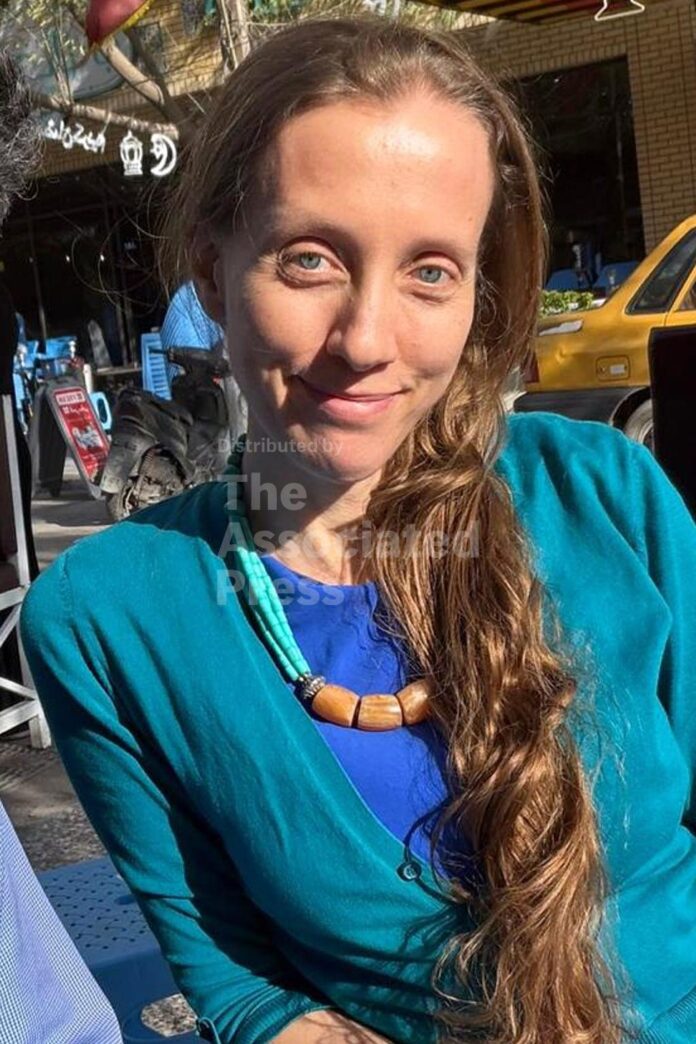
BAGHDAD (AP) — American freelance journalist Shelly Kittleson often worked without formal assignments from editors and on a shoestring budget, taking shared taxis to lawless corners of Iraq where militia rule outweighs government control.

Kittleson, 49, had lived abroad for years, using Rome as her base for a time and building a respected journalism career across the Middle East. On Tuesday, she vanished after being forced into a car by two men at a busy Baghdad intersection, surveillance camera footage showed.

“She is a great reporter and always wants to go to areas where no one wants to go,” said Patrizio Nissirio, a former editor at Italian news agency ANSA, who has known Kittleson since 2011, when she worked as a translator for the agency.

“I said to her, ‘You don’t need to be in a war zone to do good journalism,’ and she told me, ‘I think my work is worth something when I am in those areas,’” Nissirio said.

Curious reporter often worked alone

Friends and fellow journalists describe Kittleson as a determined, gutsy reporter who had spent over a decade reporting from Iraq, Syria and the wider Middle East for a variety of news outlets including Al-Monitor, a regional news site.

Deeply curious and self-directed, she often embedded herself in local communities, sometimes staying with families rather than in hotels.

Her independence meant she often worked alone, traveling long distances and carrying heavy belongings with her at all times, while operating without the backing of a larger news organization that might have offered some protection.

The Wisconsin native was kind and spiritual, friends say, and had embraced Islam.

She left Wisconsin in 1995, when she was 19, and headed first to Italy, where she went to school and worked as a nanny, according to her mother, Barb Kittleson. She spent about 10 years in Italy before eventually settling in Iraq, she added.

Kittleson’s mother said she had not seen her daughter in person since 2002, but they exchanged emails a couple of times a week, including on Monday, when her daughter sent her a couple of pictures.

“She said, ‘Here’s a current picture of me,’” her mother told The Associated Press. “That’s what she does a lot of times, quickly.”

She was a vegetarian, a lifestyle her close Iraqi friends said was often difficult to accommodate in meat-heavy Middle Eastern countries, and she was frequently teased for her backbreaking bags. She distrusted leaving them behind at the modest hotel in Baghdad where she stayed.

Three Iraqi friends and acquaintances of Kittleson spoke about her on condition of anonymity, fearing reprisal from armed groups if they were publicly linked to her.

In her final conversations before the abduction, she asked colleagues and friends about transport routes between cities while continuing to seek access to do stories.

US officials warned her about militia threat

Hours before she was kidnapped, Kittleson met a friend in Baghdad’s Karrada neighborhood and said she had received a warning: U.S. officials had told her a militia group intended to target her. She did not believe the threat was credible.

Kittleson had been stopped before by security forces and militias at checkpoints, Iraqi colleagues said, and had always managed to secure her release. “They will not hurt me,” she told her friend that afternoon before she was taken.

Instead, she spoke of mounting financial strain, saying she had no assignments while in Baghdad. She had long struggled financially, living a frugal existence.

As a freelancer, she often relied on the support of Iraqi journalists.

On March 9, Kittleson was in Syria, seeking to enter Iraq at the border crossing in al-Qaim. Border police gave her a visa, but she was soon stopped by Iraqi intelligence officers, who turned her back, citing kidnapping threats, according to three different accounts from people she called that day.

Kittleson then went to Jordan and entered Iraq from there with little issue.

“She always complained of the treatment of freelance journalists, saying they are not paid enough. She was always trying to make ends meet and said she would sleep on any couch she could find, unlike the big foreign correspondents that sleep in fancy hotels,” Nissirio said.

“Her job has always been difficult, but she had a burning passion for it that I respect and appreciate.”

Kittleson published her last story with Il Foglio on Monday, March 31. The story focused on the effect of the Iran war on Iraq’s Kurdish region.

“Journalism is what she wanted to do so bad,” Kittleson’s mother said. “I wanted her to come home and not do it, but she said, ‘I’m helping people.’”

___

Associated Press writers Trisha Thomas in Rome and Scott Bauer in Madison, Wisconsin, contributed to this report.

Italian coast guard finds 19 migrants dead and rescues 58 from dinghy off Lampedusa

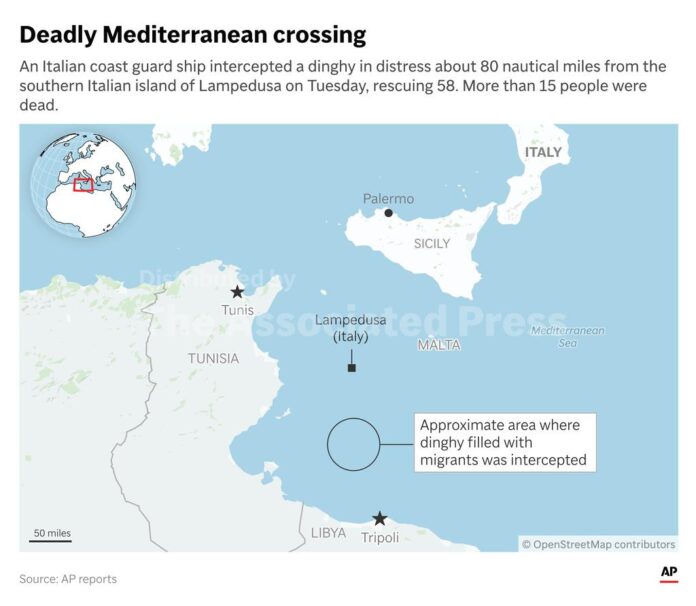
ROME (AP) — The Italian coast guard found 19 people dead and rescued 58 others after intercepting a dinghy filled with migrants that was in distress about 80 nautical miles from the southern Italian island of Lampedusa on Tuesday night.

The Italian coast guard operated in the Libyan search and rescue zone amid rough weather conditions, a spokesperson said on Wednesday.

“We were the only ones able to intervene, as there were no other ships or rescue teams in the area. Sea conditions were pretty extreme, with waves of more than 6-7 meters (20-23 feet),” said coast guard spokesperson Roberto D’Arrigo.

D’Arrigo said the migrants had probably departed from Libya and the victims likely died of hypothermia, but the cause of the deaths still needs to be verified.

The survivors were brought to Lampedusa after a 10-hour trip and are now in the care of local health services, the coast guard said.

The tiny island of Lampedusa is the main entry point to Europe for migrants crossing the Mediterranean Sea from North Africa, with thousands dying during the perilous journey.

Most of the deaths have been attributed to small boats setting off from the coasts of Tunisia and Libya.

The most recent deadly shipwreck off Lampedusa happened in August last year, when a boat carrying nearly 100 migrants capsized in international waters, killing at least 26 people.

Hershey says it will shift back to classic recipe for all Reese’s products after criticism

Hershey said Wednesday it will use classic recipes for all Reese’s products starting next year, a change that comes after the grandson of Reese’s founder criticized the company for shifting to cheaper ingredients.

Reese’s Peanut Butter Cups have always been made with real milk chocolate or dark chocolate and peanut butter. But a small portion of Hershey’s and Reese’s products, like mini Easter eggs, are now made with a coating that contains less chocolate.

Hershey said that in 2027, it will shift those products to “their classic milk chocolate and dark chocolate recipes.”

The Hershey, Pennsylvania-based company said it will also be making other changes to its sweets portfolio next year, including transitioning to natural colors and enhancing Kit-Kat’s recipe to make it creamier. The company said it plans to increase its research and development funding by 25% next year.

“Hershey is committed to making products consumers love and that means continually reviewing our recipes to meet evolving tastes and preferences,” the company said in a statement.

Brad Reese, the grandson of the inventor of Reese’s Peanut Butter Cups, ignited the controversy in a public letter he sent to Hershey’s corporate brand manager on Valentine’s Day.

“How does The Hershey Co. continue to position Reese’s as its flagship brand, a symbol of trust, quality and leadership, while quietly replacing the very ingredients (Milk Chocolate + Peanut Butter) that built Reese’s trust in the first place?” Reese wrote in the letter, which he posted on his LinkedIn profile.

Hershey acknowledged some recipe changes but said it was trying to meet consumer demand for innovation. High cocoa prices also have led Hershey and other manufacturers to experiment with using less chocolate in recent years.

The Associated Press left a message with Brad Reese on Wednesday seeking comment.

Brad Reese is the grandson of H.B. Reese, who spent two years at Hershey before forming his own candy company in 1919. H.B. Reese invented Reese’s Peanut Butter Cups in 1928; his six sons eventually sold his company to Hershey in 1963.