Home Blog Page 3

Megan Thee Stallion hospitalized after exiting ‘Moulin Rouge! The Musical’ mid-show

NEW YORK (AP) — Megan Thee Stallion was rushed to the hospital after “feeling very ill” while onstage on Broadway in “Moulin Rouge! The Musical.”

“During Tuesday night’s production, Megan started feeling very ill and was promptly transported to a local hospital, where her symptoms are currently being evaluated,” her representative, Didier Morais, said in a statement. “We will share additional updates as more information becomes available.”

The Grammy Award-winning rapper made her Broadway debut last week as nightclub impresario Harold Zidler in the show at the Al Hirschfeld Theatre, and was expected to conclude her run on May 17. Others who have played the part of Zidler include Boy George, Wayne Brady, Tituss Burgess and Bob the Drag Queen.

“Moulin Rouge! The Musical” is slated to close July 26 after a seven-year run. The show is about the goings-on in a turn-of-the-century Parisian nightclub, updated with tunes like “Single Ladies” and “Firework” alongside the big hit “Lady Marmalade.”

Shelby County Sheriff Department arrests teen after school threat

SHELBY COUNTY — The Shelby County Sheriff Department was notified of a threat made to a student of Morristown Jr.-Sr. High School on Tuesday afternoon, communicated using a social media app.

While the Sheriff Department Criminal Investigations Division conducted an investigation, several deputies assisted in the safe dismissal of all Morristown schools. A suspect was identified, located, and taken into custody. As a result of the investigation, Breanna Ramsey, 18, of Morristown has been arrested for intimidation as a Level 6 felony, the sheriff department said.

The Latest: Fueling begins as NASA aims to send 1st crew to the moon in 53 years

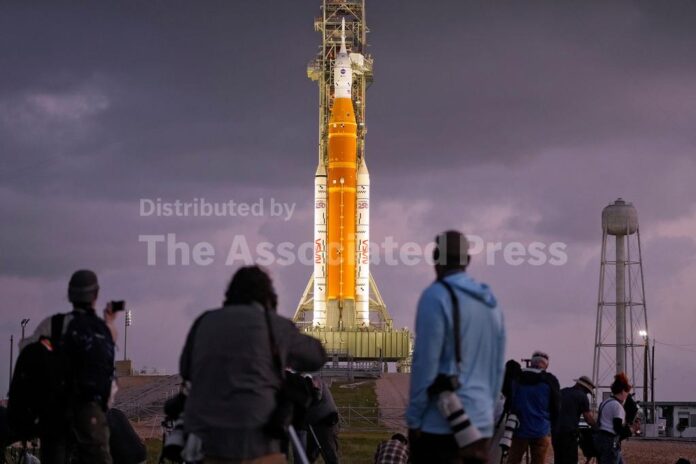
Launch preparations have begun for the Artemis II mission, NASA’s planned lunar fly-around by four astronauts that will be the first moon trip in 53 years.

Tensions were high as hydrogen fuel started flowing into the rocket hours ahead of the planned launch. Dangerous hydrogen leaks erupted during a countdown test earlier this year, forcing a lengthy flight delay.

The launch team needs to load more than 700,000 gallons of fuel (2.6 million liters) into the 32-story Space Launch System rocket on the pad before the Artemis II crew can board.

The 32-story Space Launch System rocket is poised to blast off Wednesday evening with a two-hour launch window beginning at 6:24 p.m. EDT at Kennedy Space Center in Florida.

Artemis astronauts Reid Wiseman, Victor Glover, Christina Koch and Jeremy Hansen will be on board. They’ll hurtle several thousand miles beyond the moon, hang a U-turn and then come straight back. No circling around the moon, no stopping for a moonwalk — just a quick out-and-back lasting less than 10 days. NASA promises more boot prints in the gray lunar dust, but not before a couple practice missions.

Unlike the Apollo missions that sent astronauts to the moonfrom 1968 through 1972, Artemis’ debut crew includes a woman, a person of color and a Canadian citizen.

Artemis II is the opening shot of NASA’s grand plans for a permanent moon base. The space program is aiming for a moon landing near the lunar south pole in 2028.

The Latest:

NASA controllers wear green for go

Launch director Charlie Blackwell-Thompson is wearing green as are many of the controllers alongside her in the firing room.

Green represents “go” for NASA, a color symbolizing good luck.

The team is monitoring the fueling of the 322-foot moon rocket, set to blast off Wednesday evening.

Moon mascot, unveiled

A plush toy named Rise will ride with the Artemis II astronauts around the moon, carrying the names of more than 5.6 million people.

Rise is what’s known as a zero gravity indicator, which gives the astronauts a visual cue of when they reach space.

The design was inspired by the iconic “Earthrise” photo during Apollo 8, showing the planet as a shadowed blue marble from space in 1968.

Rise was selected from more than 2,600 contest submissions. It was designed by Lucas Ye of California.

Commander Reid Wiseman and his crew tucked a small memory card into Rise before the toy was loaded into the Orion capsule. The card bears the names of all those who signed up with NASA to vicariously tag along on the nearly 10-day journey.

“Zipping that little pocket on the bottom of Rise was kind of the moment that put it all together for me,” Wiseman said. “We are going for all and by all. It’s time to fly.”

Rocket fueling is underway for NASA’s Artemis II moon launch

NASA is fueling the new rocket that will send four astronauts to the moon.

Launch teams have begun pumping more than 700,000 gallons (2.6 million liters) of liquid hydrogen and liquid oxygen into the Space Launch System rocket at Kennedy Space Center in Florida.

It’s the latest milestone in the two-day countdown that kicked off on Monday when launch controllers reported to duty.

It will take at least four hours to fully load the rocket before astronauts climb aboard for humanity’s first flight to the moon since Apollo 17 in 1972.

The two-hour launch window opens at 6:24 p.m. EDT.

▶ Read more about Apollo vs. Artemis

The Artemis II crew is historic for NASA’s moon missions

The Americans who blazed the trail to the moon more than half a century ago were white men chosen for their military test pilot experience.

The Artemis II crew includes a woman, a person of color and a Canadian, products of a more diversified astronaut corps.

▶ Read more about Christina Koch, Victor Glover, Jeremy Hansen and Reid Wiseman

Transatlantic rift widens as Trump lashes out at NATO allies over unpopular Mideast war

LONDON (AP) — President Donald Trump has said he is strongly considering pulling the U.S. out of NATO, ratcheting up his criticism of European allies and exposing a wider rift in the transatlantic alliance — this time over America’s war alongside Israel against Iran.

While Trump’s talk of a possible NATO pullout dates back years, the comments to Britain’s Telegraph newspaper, published Wednesday, were among the clearest and most disparaging yet — suggesting the fracture has deepened perhaps to a point of no return.

Asked whether he would reconsider U.S. membership in the alliance after the war on Iran ends, Trump replied: “Oh yes, I would say (it’s) beyond reconsideration.”

Contacted by The Associated Press, NATO did not provide an immediate comment.

British Prime Minister Keir Starmer, asked about the comment, said Britain was “fully committed to NATO” and called it “the single most effective military alliance the world has ever seen.”

Many European leaders have felt political pressure over the war, which faces opposition in their countries and has sent petroleum prices soaring as Iran has effectively shut the Strait of Hormuz, the narrow waterway between Iran and Oman through which about one-fifth of the world’s oil passes.

“Whatever the pressure on me and others, whatever the noise, I am going to act in the British national interest in all the decisions I make,” Starmer said Wednesday.

Long-simmering tensions within the alliance have bubbled up again over the war. As energy prices have spiked, Trump has been desperate to get countries to send their ships to the Strait. He’s called his NATO allies “cowards,” pulling at any rhetorical lever he can to get help with the fallout of a war that no ally was consulted on or asked to take part in.

For years, Trump has berated America’s European allies, urging them to assume greater responsibility for their own security and spend more on defense. He has argued that the U.S. has done more for them than the other way around.

A U.S. pullout would essentially spell the end of NATO, which flourished for decades under American leadership.

On Truth Social on Tuesday, Trump lashed out at countries “like the United Kingdom, which refused to get involved in the decapitation of Iran,” and suggested they buy U.S. oil or go to the Strait of Hormuz themselves “and just take it.”

He also wants allies to help fix damage from the war that they had no part in starting.

The U.K. is working on plans that could help assuage Trump.

On Thursday, Foreign Secretary Yvette Cooper will host a virtual meeting of 35 countries that have signed up to help ensure security for shipping in the Strait after the war. Starmer said military planners will also work on a postwar security plan for the strait.

The backdrop: NATO not on board to join US in war

NATO is built on Article 5 of its founding treaty, which pledges that an attack on any one member will be met with a response from them all.

As the Iran war has spread, missiles and drones have been fired toward NATO member Turkey and a British military base on Cyprus, fueling speculation about what might prompt NATO to trigger its collective security guarantee and come to their rescue.

The alliance has not intervened or signaled any plan to. Secretary-General Mark Rutte — who has voiced support for Trump and America’s role in the alliance — has been focusing mostly on Russia’s war against Ukraine, which borders four NATO countries.

NATO operates uniquely by consensus. All 32 countries must agree for it to take decisions, so political priorities play a role. Even invoking Article 5 requires agreement among the allies. Turkey or the U.K. cannot trigger it alone.

In the Mideast war, Trump has bristled at the across-the-board rejection from European and other allies, and even rival China, to help secure the Strait of Hormuz.

Many European Union and NATO member country leaders have fumed since the war’s outset on Feb. 28 because they weren’t informed ahead of time, seen as a break with precedent.

Trump insisted he needed the element of surprise, and he spoke out about possible military action and visibly built up U.S. forces in the region in the run-up to the war.

Rising voices, and tougher action, from Europe over the Mideast war

European leaders have called for the war to stop and want the United States and Iran to return to negotiations over Tehran’s nuclear program, which America and Israel see as a threat.

The vocal opposition in Europe to Trump’s war against Iran has started to turn into action.

Spain — the most vocal critic in Europe — on Monday said it closed its airspace to U.S. planes involved in the Iran war.

Early last month, France agreed to let the U.S. Air Force use a base in southern France after receiving a “full guarantee” from the United States that planes not involved in carrying out strikes against Iran would land there.

Other countries have spoken out against it: Frank-Walter Steinmeier, Germany’s largely ceremonial president, last week called the aggression against Iran a “dangerous mistake” in violation of international law.

U.S. relations with Europe had already soured in recent months over Trump’s call for Greenland — a semiautonomous territory of stalwart NATO ally Denmark — to become part of the United States, prompting many EU countries to rally behind Copenhagen.

___

Keaten reported from Geneva. Associated Press writer Lorne Cook in Brussels contributed to this report.

Warming winters lead to more nitrate pollution in the drinking water near farms

When pollution gets bad enough in the rivers supplying Iowa’s largest city with drinking water, it costs Des Moines around $16,000 a day to run a special system to filter out dangerous nitrates. It’s a fact of life in the agriculture-dependent state — and climate change is making the water quality problem even worse.

The nitrates come from fertilizer and pesticides that make their way into the soil and then waterways like the Raccoon and Des Moines rivers. It’s not usually a problem in winter, but this year Iowa’s capital had to filter in January and February — just the second time that’s happened in more than 30 years. That’s likely going to mean higher water bills for people who live in a state with some of the nation’s waterways that are most vulnerable to nitrate pollution.

Experts blame weather conditions, including warming winters, for a costly problem they say will only grow across farm country.

When it comes to winter nitrate pollution events, “We are more apt to see these in the future. Are they going to occur every year? No. But the ingredients are there for them to potentially occur more often,” said Justin Glisan, Iowa’s state climatologist.

Why warmer winters lead to more water pollution

The fertilizers and pesticides that farmers use leave nitrogen and phosphorus in their fields. Rain or snowmelt then carries the chemicals into drinking water, which is dangerous. Ingesting too many nitrates can cause health issues like cancer or blue baby syndrome, low oxygen levels in infants.

As Earth warms due to human-caused climate change, the ground isn’t staying frozen as consistently in many places, and snow is often melting or falling as rain on thawed ground. That all adds up to more winter days when nitrates are likely to reach unhealthy levels.

Scientists say one effect of Earth’s warming is more frequent extreme weather events, including drought and intense bursts of rainfall from an atmosphere that now holds more moisture than in the past.

Intense dryness followed by intense wetness means massive amounts of water moving through the soil, bringing farm chemicals like nitrogen with it, Glisan said.

And a warmer atmosphere is thawing Earth’s polar regions and causing more of those winter flip-flops from frigid polar air to warmer, less snowy weather, he said.

Even though some storms brought a lot of snow this winter, it didn’t stay on the ground for very long. Instead, snow insulated the soil in some areas from freezing too deep, and a quick thaw let melting snow, followed by pounding rain, travel down through the soil and eventually into streams.

Where the ground isn’t consistently frozen, nutrients aren’t as “locked in” to the soil frost.

“In central and southern Illinois, we’ve always dealt with a sort of ephemeral freeze-thaw, freeze-thaw process. What we’re seeing is that’s really tracking farther north,” said Trent Ford, Illinois’ state climatologist.

Stakes are high for low-income and rural communities

Nitrate pollution is a big problem for low-income, rural residents across the United States, said Samuel Sandoval Solis, a professor at the University of California-Davis and an extension specialist in water resources management.

While some communities already have the infrastructure to manage nitrate levels in drinking water, like filtration systems, many others don’t. Around 15% of the U.S. population relies on drinking water wells that are private, according to the U.S. Geological Survey. Nitrates can seep into those wells.

Testing well water regularly and correctly filtering it in a home can cost hundreds of dollars a year. Small communities whose water treatment facilities aren’t yet equipped to filter nitrates will also have expensive decisions to make, Sandoval said.

More research is connecting climate change, runoff and nutrient loss

States have been wrestling with nitrate pollution for years, but they’re starting to realize increasingly warm winters are making that tougher — like in Illinois, where yearly reports on the issue have started to more explicitly mention the role of climate change, said Joan Cox, program manager for the Illinois Nutrient Loss Reduction Strategy.

Scientists know there’s more nitrogen going downstream in the winter, but they’re still trying to figure out whether that means more pollution overall, said Carol Adair, a professor at the University of Vermont who has studied how rain-on-snow events could worsen nutrient pollution.

Either way, there’s little known about the consequences of those changes on ecosystems, Adair said. She thinks because there’s less plant life to suck up nitrogen in the winter, more could end up further downstream, like in the Gulf’s “dead zone” where fertilizer pollution contributes to an area of low to no oxygen, which kills fish and marine life.

Dani Replogle, a staff attorney for Food and Water Watch, a nonprofit for sustainable food and clean water, said factory farm operators try to plan manure and fertilizer applications when precipitation is unlikely. But that is “increasingly not a successful strategy because everything is becoming so unpredictable,” she said.

Regulating nutrient pollution has proven difficult

Mandating that producers curb farm chemicals in water has proven difficult in agricultural areas, especially in Iowa, where the state’s farm lobby has opposed mandatory rules.

Trump’s EPA has delisted seven Iowa waterways from the federal Impaired Waters List, which under the Clean Water Act would have required the state to set limits on how much pollution gets into them. Food and Water Watch has announced an intent to sue.

As for Iowa’s water treatment facilities, they are preparing resiliency plans for a future with more winter nutrient pollution, said Amy Kahler, CEO and general manager at Des Moines Water Works. But she thinks polluters upstream should clean up their acts.

“There really are two paths. One is conservation efforts and responsible watershed practices. And the other is spending hundreds of millions of dollars in treatment solutions,” Kahler said.

She thinks the best solution is the former, since it also has positive impacts on quality of life.

In 2015, the agency sued for the millions of dollars it was being forced to spend to filter unsafe levels from drinking water taken from the Des Moines and Raccoon rivers. A judge ultimately dismissed the lawsuit.

___

Follow Melina Walling on X @MelinaWalling and Bluesky @melinawalling.bsky.social.

___

The Associated Press’ climate and environmental coverage receives financial support from multiple private foundations. AP is solely responsible for all content. Find AP’s standards for working with philanthropies, a list of supporters and funded coverage areas at AP.org.

NASA begins fueling rocket to launch astronauts on the first lunar trip in half a century

CAPE CANAVERAL, Fla. (AP) — NASA begun fueling its moon rocket Wednesday for humanity’s first lunar trip in more than half a century, aiming for an evening liftoff with four astronauts.

Tensions were high as hydrogen fuel started flowing into the rocket hours ahead of the planned launch. Dangerous hydrogen leaks erupted during a countdown test earlier this year, forcing a lengthy flight delay.

The launch team needs to load more than 700,000 gallons of fuel (2.6 million liters) into the 32-story Space Launch System rocket on the pad before the Artemis II crew can board.

“It is time to fly,” commander Reid Wiseman said on the eve of launch via X. Favorable weather was forecast.

Three Americans and one Canadian will fly around the moon without stopping or even orbiting — then head straight back for a Pacific splashdown. They will set a new distance record for the farthest humans have traveled from Earth as they zoom some 4,000 miles (6,400 kilometers) beyond the moon and then hang a U-turn.

Astronauts last flew to the moon during Apollo 17 in 1972.

Artemis II is the opening shot of NASA’s grand plans for a permanent moon base. The space program is aiming for a moon landing near the lunar south pole in 2028.

“The next era of exploration begins,” NASA Administrator Jared Isaacman posted on X.

Best wishes already have started to pour in, including from England’s King Charles III to Canadian Space Agency astronaut Jeremy Hansen.

Hansen will become the first non-U. S. citizen to launch to the moon. The crew also includes Christina Koch and Victor Glover, the first woman and first Black astronaut, respectively, destined for the moon.

“In this historic moment, you stand as a bridge between nations and generations,” the king wrote in a letter to Hansen, “and I commend you for your courage, discipline and vision that have brought you to this threshold.”

___

The Associated Press Health and Science Department receives support from the Howard Hughes Medical Institute’s Department of Science Education and the Robert Wood Johnson Foundation. The AP is solely responsible for all content.

Retail sales rise 0.6% in February, but impact of Iran war threatens to derail spending

NEW YORK (AP) — Shoppers increased their spending in February after pulling back at the start of the year, reflecting volatile and cautious activity by American consumers even before the Iran war sent gasoline prices soaring.

Retail sales rose a better-than-expected 0.6% in February, after registering a 0.1% decline in January, the Commerce Department said Wednesday. There is a concern that Americans, already squeezed by years of elevated inflation, will cut spending further.

Gas sped past an average of $4 a gallon on Tuesday for the first time since 2022 and jumped another 4 cents overnight.

The national average for a gallon of regular gasoline hit $4.06 Wednesday. That was a dollar more per gallon before the war.

Business at clothing and accessories stores rose 2%, while business at electronics and appliance stores rose 0.5%. Online sales rose 0.7%

The snapshot offers only a partial look at consumer spending and doesn’t include things like travel and hotel stays. But the lone services category – restaurants – registered an increase of 0.4%.

The Iran war began Feb. 28 and has shut down the Strait of Hormuz, cutting off one-fifth of the world’s oil supply. The price for a barrel of Brent crude, the international standard, is up more than 45% since the start of the war. The cost of diesel fuel has risen faster than gasoline, driving up the cost of transportation for companies. Economists expect a related bump in inflation, potentially as soon as this month.

The Latest: Supreme Court to hear arguments over Trump’s birthright citizenship order

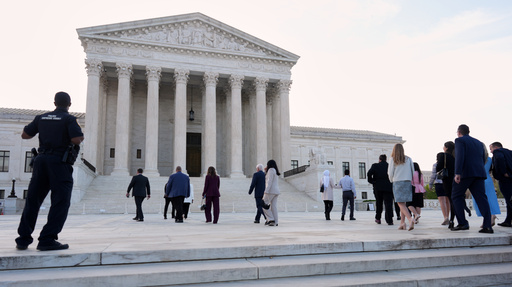
WASHINGTON (AP) — The U.S. Supreme Court is hearing arguments at 10 a.m. ET over the constitutionality of President Donald Trump’s order to end birthright citizenship for children born in the United States to someone in the country illegally or temporarily.

The birthright citizenship order, which Trump signed on Jan. 20, 2025, the first day of his second term, is part of his Republican administration’s broad immigration crackdown.

Trump plans to be in attendance. He will be the first sitting president to attend oral arguments at the nation’s highest court.

Every lower court to have considered the issue has found the order illegal and prevented it from taking effect. A definitive ruling by the nation’s highest court is expected by early summer.

Here’s the latest:

Trump’s presence unlikely to sway the court, expert says

Adam Winkler, a constitutional law professor at UCLA, told the The Associated Press that Trump’s attending SCOTUS oral arguments signals how important the president views this case.

However, Trump’s presence “is unlikely to sway the justices,” Winkler said, adding that the SCOTUS justices “pride themselves in their independence, even if some agree with much of Trump’s agenda.”

The fanfare of Trump being in the courtroom will make for a different experience for the justices themselves, however, as “Trump’s presence will make the atmosphere a little bit more circus-like,” Winkler said.

Top Trump lawyer argues against ACLU’s legal director

Solicitor General D. John Sauer is making his ninth Supreme Court argument and second in as many weeks. Sauer’s biggest win to date was the presidential immunity decision that spared Trump from being tried for his effort to overturn the 2020 election.

Sauer was a Supreme Court law clerk to Justice Antonin Scalia early in his legal career.

ACLU legal director Cecillia Wang, the child of Chinese immigrants, is presenting her second argument to the Supreme Court. In the first Trump administration, a 5-4 conservative majority ruled against Wang’s clients in another immigration case.

Alito celebrates his 76th birthday on the bench

It’s not an April Fool’s joke. Alito was born this day in 1950. Only Thomas, who turns 78 in June, is older than Alito among the nine justices.

Justice Clarence Thomas goes first

In the post-pandemic era, the other justices allow the 77-year-old Thomas, the longest-serving member of the court, to pose a question or two before the free-for-all begins.

In a second round of questioning, the justices ask questions in order of seniority. Chief Justice John Roberts, whose center chair makes him the most senior, gets the first crack.

Arguments are likely to exceed the allotted hour

The justices have routinely gone beyond the allotted time since returning to the courtroom following the Covid-19 pandemic.

Livestream begins a few minutes after 10 a.m., Eastern time

A buzzer and the court marshal’s cry, “All rise,” signal the justices’ entrance from behind red curtains. The livestream won’t kick in for several minutes, until after the ceremonial swearing-in of lawyers to the Supreme Court bar.

5 reasons why Italy has failed to qualify for 3 consecutive World Cups

ROME (AP) — Italy won’t get a chance at redemption for Roberto Baggio’s miss in the 1994 World Cup final at the Rose Bowl.

The four-time champion isn’t even going back to North America for this year’s tournament after a penalty shootout loss to 66th-ranked Bosnia-Herzegovina in the qualifying playoffs.

It’s the third straight World Cup that Italy will miss after getting eliminated at the same stage by Sweden ahead of the 2018 World Cup and by North Macedonia in 2022.

Here’s a look at five reasons why the Azzurri continue to struggle:

Del Piero and Totti long gone

Compared to the title-winning 2006 Italy squad that featured standouts like Alessandro Del Piero, Francesco Totti and Andrea Pirlo, there haven’t been Italian players of that caliber for years.

The most expensive player on the current squad is midfielder Sandro Tonali, who was purchased by Newcastle in 2023 for about 80 million euros ($93 million).

The only other world-class player is Manchester City goalkeeper Gianluigi Donnarumma.

The starting strikers are Argentine-born Mateo Retegui and Moise Kean of Fiorentina.

Serie A is now a retirement destination

The Italian league was considered the best in the world in the 1980s and 1990s when the likes of Diego Maradona, Marco van Basten and Ruud Gullit came to play in the primes of their careers. It’s where Kaka won the Ballon d’Or award with AC Milan in 2007 — the last Italy-based player to receive the honor.

These days, ageing standouts like 40-year-old Luka Modric (at Milan) and 39-year-old Jamie Vardy (Cremonese) come to Serie A to conclude their careers.

So without international stars, the league’s level has dropped and that has a trickle-down effect on the national team.

Juventus, which used to provide the backbone for Italy’s squad, hasn’t won Serie A since 2020. And there wasn’t a single Milan player on the playoff squad.

Tennis taking over with Jannik Sinner

Inspired by Jannik Sinner’s accomplishments, tennis is encroaching on soccer’s status as Italy’s most popular sport. Hordes of kids are gravitating to tennis instead of the traditional pastime of kicking a soccer ball around on a street.

In 2025, 21.6 million Italians said they were soccer fans and 19.9 million said they watched tennis and padel, according to Nielsen Fun Insights.

Italy is also finding success in Formula 1 with 19-year-old Kimi Antonelli winning the last two races.

And the host country is coming off a record performance at the Milan Cortina Winter Olympics.

“These things go in cycles,” Italy coach Gennaro Gattuso said last week. “When I see us winning in other sports it gets me motivated. It makes me feel pride. … Right now our history tells us that we’re struggling.”

No song and cheer

Apart from when it reaches the latter stages of major tournaments, Italy’s national team doesn’t inspire much interest at home and has no organized fans.

Whereas every professional club in Italy has an organized fan base or “ultras” that supports its team with chants and scarves, the Azzurri are not backed by song or cheer on a consistent basis.

Gattuso preferred to play last week’s playoff semifinal in Bergamo’s 23,500-seat stadium rather than the much larger San Siro because he noticed that Milan and Inter fans whistled at players from opposing clubs during a loss to Norway in Milan in November.

“At the first errant pass you start hearing the whistles,” Gattuso said.

Milan and Rome stadiums still in planning stages

Italy is also far behind other European leagues in terms of building new soccer stadiums.

Milan and Inter only recently purchased the San Siro from the city so they can tear it down and build a new stadium in time for the 2032 European Championship that Italy is co-hosting with Turkey.

Meanwhile, Roma is in the final stages of obtaining the necessary permits to build its own arena after more than a decade of delays so it can move out of the Stadio Olimpico.

Of Italy’s major clubs, only Juventus currently owns and operates a modern stadium.

The lack of club-owned stadiums means that teams can’t earn enough to compete with wealthy rivals from abroad — which weighs down Serie A and affects the national team.

___

AP soccer: https://apnews.com/hub/soccer

North Carolina’s electoral future may hinge on rural Black voters who feel ignored by Democrats

NASHVILLE, N.C. (AP) — Ricky Brinkley has lived in rural North Carolina nearly all of his 65 years, and he likes it “out in the county,” past the street lights and bustle of the small towns that carpet the landscape.

But the former truck driver can feel left out when elections roll around in this battleground state.

“People don’t come out like they should and ask you how you feel about things,” Brinkley said while he manned the counter at his daughter’s beauty supply store down the street from the Nashville courthouse. “You want somebody to vote, but you don’t want to do nothing to get the vote. No, it don’t work that way.”

Brinkley is among the rural Black residents who Democrats have often failed to mobilize as they try to dent Republican advantages here. It’s an urgent demographic puzzle for the party, which is normally strong with Black voters but tends to fall short in rural areas.

Success could help former Gov. Roy Cooper win a hotly contested U.S. Senate race this year and tilt the balance of power in Washington. It could also reshape presidential elections, providing Democrats with a wider path to the White House.

“People want to look at the word ‘rural’ in North Carolina and equate it to the word ‘white,’” said state party chair Anderson Clayton, a 28-year-old who won her job three years ago promising to expand the party beyond cities. “In my vision of a Democratic Party, when you talk about reaching out to rural voters, you are talking about rural Black voters.”

The Rev. James Gailliard, a former state lawmaker who leads a large Black congregation in Rocky Mount, put it even more bluntly.

“You don’t win this state in Durham,” Gailliard said. “You win it in the east.”

It’s about more than Cooper’s Senate bid

North Carolina is known for the university-heavy Research Triangle that includes Durham, Raleigh and Chapel Hill, along with Charlotte’s banking hub. But it also includes large swaths of small towns and rural areas where Democrats have lost ground in recent decades.

That’s not just because of white voters realigning with Republicans. It’s also because Black voters who lean Democratic don’t vote as often as their urban counterparts. Those rural Black voters are concentrated east of the triangle, extending along winding state highways through small towns, flatlands and farmland toward the Atlantic coastline.

Cooper, 68, won two terms as governor and four terms as state attorney general. However, Republicans control the state courts and the legislature, and they’ve redrawn the congressional map to expand their advantage in the U.S. House. Donald Trump carried the state for Republicans all three times he ran for the White House.

A native of rural Nash County, Cooper already in recent months held roundtable sessions with Black farmers, business owners and civic leaders in eastern North Carolina, along with students from North Carolina A&T University, a historically Black school that draws students from across the state. His campaign promises a statewide organizing effort before November.

Gailliard wants a more intentional effort

But Gailliard wants more.

The founding pastor at Word Tabernacle Church, Gailliard was among the Black state lawmakers who lost seats after Republican-led redistricting. He said regaining ground will require neighborhood-level organizing and investment from national Democrats, something he struggled to get from Kamala Harris’ 2024 presidential campaign.

“I couldn’t get any traction,” Gailliard recalled. “I begged them to bring her to Rocky Mount. I said, ‘Listen, Rocky Mount is the gateway to the East. If we crack Rocky Mount, we’ve cracked the East.’ Could not convince them to come. Two weeks later, guess who’s in Rocky Mount? Donald Trump.”

The Harris campaign sent former President Bill Clinton to the area instead.

Gailliard said Cooper needs people like him to get elected.

“Roy is a great friend, and I’m gonna run my butt off to help him in every way, but I’m not banking on his coattails,” Gailliard said. “I’m going to do the opposite. I’m going to grow coattails for him.”

The state party tries to fill gaps

Clayton, the state party chair, said the national party and its donors haven’t prioritized North Carolina early enough in recent cycles.

She said she’s relied mostly on local money to finance 25 full-time staffers, more than three times what the state party had heading into the 2022 midterms.

Bertie County Democratic chairwoman Camille Taylor, whose hometown of Powellsville has fewer than 200 residents, said she’s felt the shift.

She speaks regularly with a field organizer in nearby Greenville, the city closest to the northeastern counties with large proportions of Black residents. But she said it’s especially difficult to persuade rural voters to care about voting beyond the presidency, even though she tells them “these are the races and the people that you’re going to interact with more.”

Democrats have recruited candidates in all 170 legislative districts — two are Democratic-aligned independents — and every U.S. House district. State Supreme Court Justice Anita Earls, a noted civil rights attorney and Black woman, is running statewide for reelection.

Gailliard said he’s identified a few hundred nonprofits, neighborhood associations and other groups that can do issue-orientated work in his district as the election approaches. He wants to match each of them to specific precincts, routing money for them to reach voters and persuade them to vote.

He wants volunteers to get training from Democratic and left-leaning organizations rather than have the outsiders themselves knocking on rural Black voters’ doors.

“We can’t have 21-year-old recent college graduates from Utah knocking doors at $22 an hour in the hood,” Gailliard said. “That just does not work. They’re not a trusted messenger.”

Marginal voting changes add up

About 2 in 10 North Carolina voters in the 2024 and 2020 presidential elections were Black, according to AP VoteCast, as well as in the 2022 Senate election.

Roughly 4 in 10 Black voters in North Carolina’s last presidential election said they live in small towns or rural communities, similar to the share who said they live in the suburbs. Only about one-quarter reported living in urban areas.

Small shifts in persuasion matter, particularly when races are close. In 2008, Barack Obama became the last Democratic presidential candidate to win North Carolina, by a margin of just 14,000 votes out of 4.3 million votes cast.

Voter turnout between the 2020 and 2024 elections declined more in North Carolina counties that have larger Black populations.

Counties where Black voters make up about 30% to 40% of the electorate saw the biggest drop, with turnout falling by more than 3 percentage points. Counties with smaller Black populations saw more modest declines of about 1 percentage point. Overall, turnout remains higher in counties with fewer Black voters.

An old Cooper schoolmate just wants to be asked

Gailliard said Democrats cannot underestimate how much it means for someone to simply get asked for their vote.

“Black and rural voters are not transactional,” he said. “They are relational.”

Back in Nashville at the beauty supply store, Brinkley agreed.

“You get to be a big wheel, and you can forget where you came from,” Brinkley said. “I ain’t gonna say Roy forgot. He’s a hometown guy, so to speak, but I don’t expect to see him out here walking.”

Brinkley made it clear that if he votes, it would be for Cooper and other Democrats — but only if he votes.

“I could. I could. I may vote,” he said. “There’s just so much going on.”

___ Sweedler reported from Washington. Associated Press journalist Linley Sanders in Washington contributed to this report.