Home Blog Page 1004

The Latest: Rubio suggests US won’t run Venezuela day-to-day

Secretary of State Marco Rubio suggested Sunday that the U.S. would not take a day-to-day role in governing Venezuela, a turnaround after President Donald Trump announced a day earlier that the U.S. would be running Venezuela following its ouster of leader Nicolás Maduro.

Rubio’s statements seemed designed to temper concerns about whether the assertive American action to achieve regime change might again produce a prolonged foreign intervention or failed attempt at nation-building. They stood in contrast to Trump’s broad but vague claims that the U.S. would at least temporarily “run” the oil-rich nation.

Meanwhile, a tense calm hangs over Venezuela after the U.S. military operation that deposed Maduro, who was brought to New York to face criminal charges.

Maduro and his wife landed late Saturday afternoon at a small airport in New York. The couple face U.S. charges of participating in a narco-terrorism conspiracy.

Here’s the latest:

Spain, 5 Latin American countries criticize U.S. involvement in Venezuela

The governments of Spain, Brazil, Chile, Colombia, Mexico and Uruguay said in a statement that U.S. involvement in Venezuela is “an extremely dangerous precedent for peace and regional security and puts the civilian population at risk.”

In a statement released jointly by the governments, they expressed their “concern about any attempt at government control, administration, or external appropriation of natural or strategic resources.”

These actions are “incompatible with international law and threaten the political, economic, and social stability of the region,” they added.

Besides expressing their “deep concern and rejection” of the U.S. operation that ended with the capture of Venezuelan President Nicolás Maduro, they called for dialogue, negotiation, and respect for the will of the Venezuelan people to resolve the situation, “without external interference and in accordance with international law.”

Iran warns the US against military action

Associated Press video on Sunday shows a banner now on display in Iran’s capital warning the United States and Israel that their soldiers could be killed if they take action in the country.

Trump’s recent comment that the U.S. “will come to their rescue” if Iran kills peaceful protesters has taken on a new meaning after the U.S. capture of Venezuelan President Nicolás Maduro, a longtime ally of Tehran.

Iran’s Foreign Ministry has condemned the “illegal U.S. attack against Venezuela.” U.S. Defense Secretary Pete Hegseth has said adversaries of the U.S. should note that “America can project our will anywhere, anytime.”

Protests against Trump’s plans in Venezuela pop up across the US

From California to Missouri and Texas, protestors are planning demonstrations Sunday and through the week against President Donald Trump’s military operation and capture of Maduro, which one protest description called “the illegal, unconstitutional invasion of Venezuela.”

Dozens appear to be organized by chapters of Indivisible, a left-leaning group, and many take umbrage with Trump’s plans to take control of Venezuela’s oil industry and ask American companies to revitalize it.

What congressional leaders and governors say about the Venezuela operation

U.S. Sen. Chuck Grassley, a Republican from Iowa who serves as Senate president pro tempore, posted on X Saturday that Maduro is a narco-terrorist and his drug trafficking resulted in the deaths of too many Americans. He likened the Trump operation to then-President George Bush’s decision in 1989 to capture Panamanian dictator Manuel Noriega following his indictment for drug trafficking.

Illinois Gov. JB Pritzker, a Democrat and one of President Donald Trump’s most outspoken critics, posted that U.S. military action in Venezuela is unconstitutional and is putting troops in harm’s way with no long-term strategy. “The American people deserve a President focused on making their lives more affordable,” Pritzker wrote.

U.S. Sen. Tammy Baldwin, a Democrat from Wisconsin, posted a statement on X calling the strikes illegal and criticizing Trump for taking action without congressional approval. “The President does not have the unilateral authority to invade foreign countries, oust their governments, and seize their resources,” she wrote.

French foreign minister calls for return to democracy in Venezuela

France’s foreign minister says the departure of President Nicolás Maduro “is good news for the Venezuelans” and called for a peaceful and democratic transition of power.

Jean-Noël Barrot said “Maduro was an unscrupulous dictator who confiscated Venezuelans’ freedom and stole their elections.”

“Then, yes, we pointed out that the method used infringes the principles of international law,” Barrot said about the U.S. military operation on France 2 national television.

Schumer says Maduro was ‘horrible’ but criticizes regime change

Chuck Schumer, the Democratic Senate leader, called Maduro “a horrible, horrible person” but added, “You don’t treat lawlessness with other lawlessness. And that’s what’s happened.”

“We have learned through the years that, when America tries to regime change and nation-building in this way, the American people pay the price in both blood and results,” Schumer told ABC’s “This Week.”

Trump wants the Venezuelan VP to lead or get out of the way, Noem says

Homeland Security Secretary Kristi Noem says President Donald Trump’s conversations with Venezuelan Vice President Delcy Rodriguez now are ”very matter-of-fact and very clear: You can lead or you can get out of the way, because we’re not going to allow you to continue to subvert American influence and our need to have a free country like Venezuela to work with rather than to have dictators in place who perpetuate crimes and drug trafficking.”

Noem tells “Fox News Sunday” that the United States wants a leader in Venezuela who will be “a partner that understands that we’re going to protect America” when it comes to stopping drug trafficking and “terrorists from coming into our country.”

She says that “we’re looking for a leader that will stand up beside us and embrace those freedoms and liberties for the Venezuelan people but also ensure that they’re not perpetuating crimes around the globe like they’ve had in the past.”

Rubio says US will use control of Venezuela’s oil to influence policy

Secretary of State Marco Rubio appeared to back off Trump’s assertions that the U.S. was running Venezuela, insisting instead that Washington will use control of the South American country’s oil industry to force policy changes and, “We expect that it’s going to lead to results here.”

“We’re hopeful, hopeful, that it does positive results for the people for Venezuela,” Rubio told ABC’s “This Week.” “But, ultimately, most importantly, in the national interest of the United States.”

Asked about Trump suggesting that Rubio would be among the U.S. officials helping to run Venezuela, Rubio offered no details but said, “I’m obviously very intricately involved in the policy” going forward.

He said of Venezuela’s interim leader: “We don’t believe this regime in place is legitimate” because the country never held free and fair elections.

A tense calm prevails on mostly empty streets of Caracas

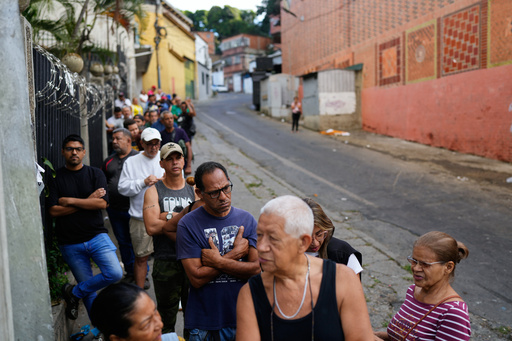
Venezuela’s capital Caracas was unusually quiet Sunday with few vehicles moving around. Convenience stores, gas stations and other businesses were mostly closed.

The presence of police and members of the military across the city was notable for its smaller size compared with an average day and even more so with the days when people protested against Maduro’s government in previous years.

Meanwhile, soldiers attempted to clear an area of an air base that had been on fire along with at least three passenger buses following Saturday’s U.S. attack.

After capture and removal, Venezuela’s Maduro is being held at notorious Brooklyn jail

The Brooklyn jail holding Nicolás Maduro is a facility so troubled that some judges have refused to send people there even as it has housed such famous inmates as music stars R. Kelly and Sean “Diddy” Combs.

Opened in the early 1990s, the Metropolitan Detention Center, or MDC Brooklyn, currently houses about 1,300 inmates.

It’s the routine landing spot for people awaiting trial in federal courts in Manhattan and Brooklyn, holding alleged gangsters and drug traffickers alongside some people accused of white collar crimes.

Maduro is not the first president of a country to be locked up there.

Juan Orlando Hernández, the former president of Honduras, was imprisoned at MDC Brooklyn while he was on trial for trafficking hundreds of tons of cocaine into the U.S. Hernández was pardoned and freed by President Donald Trump in December.

▶ Read more about MDC Brooklyn

Liverpool stunned by late Reed goal in 2-2 draw with Fulham and Cunha rescues Man United

MANCHESTER, England (AP) — Harrison Reed scored a spectacular goal in stoppage time to earn Fulham a 2-2 draw with Liverpool in the Premier League on Sunday.

The substitute let fly from around 25 meters (yards) to beat Liverpool goalkeeper Alisson in the seventh minute of time added on at Craven Cottage.

Liverpool fans were still celebrating after Cody Gakpo had scored what looked like a late winner in the 94th. But they were left stunned by Reed’s near instant response once play resumed.

Fulham led 1-0 at halftime through Harry Wilson, who burst through and fired low into the far corner. Florian Wirtz leveled in the 57th.

The result saw defending champion Liverpool drop yet more points in what has been a difficult second campaign for coach Arne Slot.

The Merseyside club is fourth in the standings – 14 points behind first-placed Arsenal.

Cunha earns point for United

Matheus Cunha rescued a point for Manchester United in a 1-1 draw at Leeds.

The Brazil forward equalized for United after U.S. international Brenden Aaronson put Leeds in front in the second half at Elland Road.

Aaronson opened the scoring in the 62nd, but Cunha leveled three minutes later. Cunha was close to firing a winner late in the match with a curling shot from outside the box that struck the outside of the post.

United has lost just two of its last 14 games in the league, but six draws during that run have seen Ruben Amorim’s team struggle to keep pace with the top three in the standings.

“This year I think we are in control of the games more often than last year,” Amorim told TNT Sports. “So it was a good game, but of course (I am) a little bit frustrated not to win.”

Leeds is unbeaten in seven games and went ahead when Aaronson raced past United defender Ayden Heaven to shoot low into the far corner.

Cunha scored his third goal in his last five games when latching onto a pass from substitute Joshua Zirkzee and sliding a shot past Leeds goalkeeper Lucas Perri.

United has had to cope without injured inspirational captain Bruno Fernandes over the festive period as well as key forwards Bryan Mbeumo and Amad Diallo, who are playing at the Africa Cup of Nations. Mason Mount and Kobbie Mainoo are also out with injuries.

But Amorim suggested Fernandes and Mount could be close to returning.

Thiago hat trick

Igor Thiago hit a hat trick in Brentford’s 4-2 win at Everton.

The Brazilian forward has scored 14 goals in the league this season, behind only Manchester City’s Erling Haaland.

Newcastle beat Crystal Palace 2-0 and Tottenham was denied victory at home to Sunderland when Brian Brobbey scored an 80th-minute equalizer for a 1-1 draw.

___

James Robson is at https://x.com/jamesalanrobson

___

AP soccer: https://apnews.com/hub/soccer

After capture and removal, Venezuela’s Maduro is being held at notorious Brooklyn jail

NEW YORK (AP) — The Brooklyn jail holding Venezuelan President Nicolás Maduro is a facility so troubled, some judges have refused to send people there even as it has housed such famous inmates as music stars R. Kelly and Sean “Diddy” Combs.

Opened in the early 1990s, the Metropolitan Detention Center, or MDC Brooklyn, currently houses about 1,300 inmates.

It’s the routine landing spot for people awaiting trial in federal courts in Manhattan and Brooklyn, holding alleged gangsters and drug traffickers alongside some people accused of white collar crimes.

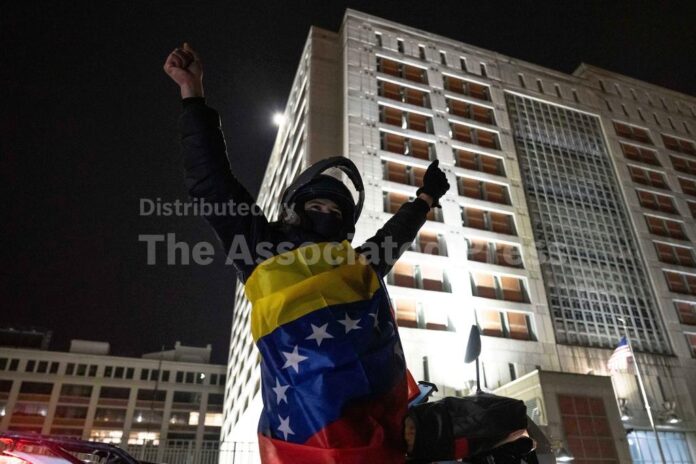
A throng of Venezuelan expatriates, many draped in flags, gathered on the sidewalks outside the jail Saturday night to celebrate Maduro’s capture. The crowd cheered as the law enforcement motorcade believed to be carrying the deposed leader and his wife arrived at the jail.

Maduro is not the first president of a country to be locked up there.

Juan Orlando Hernández, the former president of Honduras, was imprisoned at MDC Brooklyn while he was on trial for trafficking hundreds of tons of cocaine into the U.S. Convicted and sentenced to 45 years in prison, Hernández was pardoned and freed by President Donald Trump in December.

Current detainees include the co-founder of Mexico’s Sinaloa drug cartel, Ismael “El Mayo” Zambada Garcia, and Luigi Mangione, who is accused of killing the CEO of UnitedHealthcare. Past inmates have included crypto mogul Sam Bankman-Fried and longtime Jeffrey Epstein associate Ghislaine Maxwell.

Located next to a shopping mall in a waterfront industrial area and within sight of the Statue of Liberty, the jail has been described, at its worst, as a “hell on earth” and an “ongoing tragedy.”

Detainees and their lawyers have long complained about rampant violence. Two prisoners were killed by other inmates in 2024, and jail workers have been charged with accepting bribes or providing contraband.

During the winter of 2019, a power outage plunged the facility and its inmates into a cold darkness for a week.

Recently, however, the federal Bureau of Prisons says it has worked to improve conditions.

The facility added correctional and medical staff, remedying more than 700 backlogged maintenance requests and answering judges’ concerns. Improvements were also made to electrical and plumbing lines, food service and heating and air conditioning systems.

In addition to the physical upgrades, federal authorities have tried to crack down on crime inside the lockup. Last March, 23 inmates were charged with offenses ranging from smuggling weapons in a Doritos bag to the stabbing of a man convicted in the killing of hip-hop legend Jam Master Jay.

“In short, MDC Brooklyn is safe for the inmates and staff,” the Bureau of Prisons said in September. The inmate population also decreased from 1,580 as of January 2024, which, it said, led to a “substantial decrease” in crime and contraband.

While there Maduro is likely to see some familiar faces if he is allowed out of the isolated quarters where he will initially be housed.

One is co-defendant Hugo Carvajal, the former Venezuelan spy chief who broke ranks with Maduro in 2019 and has indicated that he wants to cooperate with U.S. authorities.

There is also Anderson Zambrano-Pacheco, an alleged member of Venezuela’s Tren de Aragua gang who was arrested last year in New York on firearms charges. Zambrano-Pacheco was among those caught on security video terrorizing residents at an apartment complex in a Denver suburb, an incident that Trump seized on during his presidential campaign.

The MDC has drawn more scrutiny since 2021, when the Bureau of Prisons closed its other New York City jail — the Metropolitan Correctional Center — after Jeffrey Epstein’s suicide there highlighted its lax security, crumbling infrastructure and dangerous, squalid conditions.

___

Associated Press writer Joshua Goodman in Miami contributed.

Venezuelans remain shell-shocked a day after US captured Maduro

CARACAS, Venezuela (AP) — Venezuelans on Sunday remained shell-shocked a day after President Nicolás Maduro was deposed and captured in a U.S. military operation, with an uncertain future ahead in the South American nation.

A tense calm settled over the capital, Caracas, which was unusually quiet. Many stores, gas stations and churches remained closed and people patiently lined up outside others, staring at their phones or into the distance.

“People are still shaken,” said 77-year-old David Leal, who arrived to work as a parking attendant but realized he likely would not have customers. He pointed to the deserted street.

While Maduro was in custody in New York, the officials who had surrounded him remained in power and demanded his release. Venezuela’s presidential palace was guarded by armed civilians and members of the military.

U.S. President Donald Trump on Saturday asserted that his administration would “run” Venezuela with the help of Delcy Rodríguez, Maduro’s vice president and now the interim president after a high court’s order.

But Secretary of State Marco Rubio on Sunday appeared to back off Trump’s assertion. In interviews with CBS and ABC, he insisted instead that Washington will use control of Venezuela’s oil industry to force policy changes. He said the government currently in place was illegitimate but a step toward where the U.S. wanted Venezuela to be.

“We want to see Venezuela transition to be a place completely different than what it looks like today. But obviously, we don’t have the expectation that’s going to happen in the next 15 hours,” Rubio said. “There has to be a little realism here.”

While Venezuelans in the U.S. and Latin America broke out in celebration or protest, there were no signs of celebration within the country. A number of government supporters rallied over the weekend, some burning U.S. flags and holding signs reading “gringo go home”.

In a low-income neighborhood in eastern Caracas, construction worker Daniel Medalla sat on the steps outside a Catholic church and told a few parishioners that there would be no morning Mass.

Medalla said he believed the streets remained mostly empty because people fear government repression if they dare celebrate.

“We were longing for it,” Medalla, 66, said of Maduro’s exit.

There are fresh memories of a government crackdown during 2024’s fraught elections, which Maduro was widely accused of stealing. Street protests left 28 people dead, 220 injured and at least 2,000 detained, according to official figures.

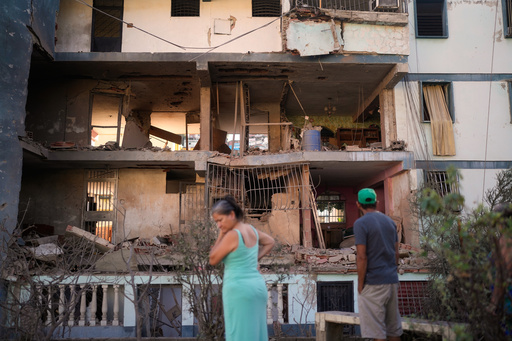
In the coastal state of La Guaira, families with houses damaged in blasts during the overnight operation that captured Maduro and his wife were cleaning up debris.

Wilman González, who was left with a black eye from a blast, picked through rubble on his floors, surrounded by broken furniture. One part of his apartment building was almost entirely blown off, leaving walls gaping.

A number of people were killed by the U.S. strikes, though Venezuelan officials did not confirm how many.

Among those killed was González’s aunt.

“This is it, what we are left with: ruins,” he said.

González spoke with anger at the wreckage but also at the compounding economic and political crises that Venezuela has endured for decades.

“We are civilians, we are not with the government or anyone else,” he said.

___

Janetsky reported from Mexico City. Arraez reported from La Guaira, Venezuela.

Last year’s odd economy in five charts, and what to watch for in 2026

WASHINGTON (AP) — The economy in 2025 was filled with contradictions, as growth was healthy while hiring slowed, inflation stayed elevated and unemployment rose.

Last year’s odd outcomes raise a host of questions for the upcoming year: Will a growing economy eventually boost the sluggish job market? Or are last year’s weak job gains a sign of a stumbling economy that could get worse?

There is another uncomfortable possibility: The economy could keep growing without much hiring, as technology — particularly artificial intelligence — enables more companies to step up their production of goods and services without adding more workers, leading to a “jobless expansion.”

Adding to the complications, the six-week government shutdown last fall disrupted the collection and publication of economic data, leaving policymakers at the Federal Reserve with a cloudier view of the economy that will only slowly clear up this year.

“2026 begins at a time when it is hard to say how 2025 ended,” Stephen Stanley, chief economist at Santander, an investment bank, said in a note to clients.

Sharp inequality has also meant that wealthier U.S. households account for a rising share of spending, so that even healthy growth figures mask underlying weaknesses among lower-income families — what many economists refer to as the “K-shaped” economy.

Still, Stanley, like many economists, is somewhat optimistic: He expects that hiring will pick up on the back of stronger growth fueled by large tax refunds early this year, a result of President Donald Trump’s tax cut legislation. Companies may also step up hiring because they face much less uncertainty this year from tariffs.

This year “could turn out to be a better year,” said Federal Reserve governor Christopher Waller last month. “Now whether that pulls the labor market along with it, I certainly hope it does.”

Here are five charts that illustrate the economy in 2025, and where it may be headed.

Growth accelerated after a weak start

Surveys suggest Americans have a gloomy outlook on the economy, but that hasn’t kept many of them from spending at a healthy clip. Solid consumer spending — likely fueled mostly by higher-income Americans — boosted growth to a 4.3% annual pace in the July-September quarter, a much better than expected showing and the biggest increase in two years.

The healthy gain followed two quarters where Trump’s tariffs distorted the economy. A surge in imports in the first three months of the year caused the economy to shrink as businesses sought to bring in products from overseas ahead of the duties.

Growth likely continued in the final three months of the year, but the government shutdown almost certainly weighed on output, reducing growth by one percentage point, economists forecast.

Hiring stayed weak and unemployment rose

Even as the economy picked up, hiring did not — in fact job gains weakened after Trump’s announcement of sweeping tariffs in early April, which he dubbed “Liberation Day.”

The economy even shed jobs in June, August, and October. The unemployment rate, meanwhile, rose from 4% in January to 4.6% in November, highest in four years. December’s figures will be released Jan. 9.

There were several reasons hiring likely slowed: The uncertainty around tariffs, which Trump imposed, then in some cases lowered or removed, or delayed, led many companies to put hiring on hold. Still, layoffs remain low, in what has been a “low-hire, low-fire” job market.

At the same time, the ongoing adoption of artificial intelligence may have led many firms to hold off on adding workers, as they sort out what the new technology can do for them.

“AI, AI, AI, AI — that is all I have heard since this summer,” Waller said last month, referring to comments he has heard from business executives explaining why they are reluctant to add jobs.

Still, there are signs of improvement: Employers cut 105,000 jobs in October, but that was mostly because of a large drop in federal government jobs stemming from the Trump administration’s purge of government workers, which didn’t formally take effect until that month.

Excluding government, businesses added an average of 75,000 jobs a month in the three months ended in November, a significant increase from just 13,000 in the three months ending in August.

However, most of the hiring this year has been heavily concentrated in just a few sectors — health care, restaurants and hotels, and government (outside of October). Most large private industries have shed jobs.

Inflation remained stubbornly high

Even though inflation fell sharply in 2023 and 2024 from a four-decade high, there was little improvement last year. Annual inflation, according to the Federal Reserve’s preferred measure, actually ticked higher to 2.8% in September — the latest data available — from 2.7% in December 2024.

Elevated costs became a potent political issue in races as diverse as governors’ contests in Virginia and New Jersey and New York City’s mayoral race. All were won by Democrats as Trump found himself grappling with issues of “affordability,” which he referred to as a “hoax.”

Inflation cooled in November, according to the more widely-followed consumer price index, though economists said the figures were distorted by the government shutdown. Prices were mostly collected in the second half of November, after the shutdown ended, when holiday discounts were more likely to be in effect.

Some economists worry inflation will worsen in early 2026, as companies implement annual price changes and pass through more tariff costs. But most expect inflation will continue to slowly cool in 2026 and move closer to the Fed’s 2% target.

Boat capsizes in Nigeria’s Yobe state, leaving 25 dead and 14 missing

YOBE, Nigeria (AP) — A passenger boat capsized in northern Nigeria’s Yobe state, leaving at least 25 people dead while 14 others remained missing, emergency services said Sunday.

The boat was carrying residents who had gone to the local market as well as some who were involved in fishing or farming when it capsized along the Yobe River in Yobe state’s Garbi town on Saturday night, the Yobe emergency management agency said.

Out of the 52 passengers on board the boat, 13 were rescued and are receiving medical assistance, the agency said in a statement.

“Search and rescue operations are ongoing, with security agencies, emergency responders, and local community volunteers working tirelessly to locate the missing passengers and recover bodies,” the agency added.

The disaster response agency said the boat overturned mid-journey without offering additional details.

Boat accidents kill hundreds annually across Nigeria, especially in remote areas where water transportation is common due to its convenience for business owners and the absence of good roads. At least 30 passengers were killed when their boat capsized in September, while 25 others died in similar circumstances in July.

Past accidents have been often caused by overloaded and poorly maintained vessels, many of them operating without carrying life jackets.

Yobe Gov. Mai Mala Buni offered condolences to families affected in Saturday’s accident and directed that all necessary medical and logistical support be provided immediately to victims receiving treatment, according to a government update.

Why home maintenance deserves a spot in the annual health and budget plans

Many people start the new year thinking about ways to improve their health, be more organized and manage their finances. Experts say there is one area that touches on each of those resolutions — home care.

Early and routine home maintenance goes beyond fixing visible damage. It helps ensure a healthy living environment, extends the life of a home and can protect its long-term value, according to real estate professionals. Planning ahead for regular upkeep and for unexpected emergencies can reduce the risk of costly repairs later and help spread expenses more evenly throughout the year.

According to research by the U.S. Department of Energy and the Environmental Protection Agency, about three-quarters of existing homes are expected to still be in use in 2050.

“Maintaining the homes that we have is really essential to protecting our health and our well-being,” said Amanda Reddy, executive director of the National Center for Healthy Housing, an organization that researches and advocates for reducing housing-related health disparities.

Despite who owns the property, Reddy says, keeping residences dry, clean, pest-free, well-ventilated and safe is the goal, which can mean different types of maintenance depending on the type of home, where someone lives and the time of year. Here’s what experts say about home care and what tasks to put on the checklist this year:

Home care includes the big projects and the everyday decisions

On average, Americans spend about 90% of their time indoors, 70% of that time inside of a residence, according to the National Human Activity Pattern Survey.

“It’s not just that we spend time indoors, but at home. If you are older, very young, have health concerns, or work from home, it is likely more than that,” Reddy said, emphasizing the reason why home care is a valuable investment.

What many people think of maintenance includes addressing water and gas leaks, pest infestations, cracks and other major repairs, but home builders say not everything needs a professional and can include actions as simple as wiping counters and sweeping floors of food debris, opening windows for better ventilation or clearing out clogged filters and drains.

Residents should also consider the needs of those living in the home, commonly used spaces such as kitchens, bathrooms and bedrooms, and typically neglected areas like attics and basements. Reddy says “anywhere we’re spending time” or often ignoring and possibly missing necessary repairs should be prioritized.

“At the end of the day, doing any preventative maintenance at all matters more than doing it perfectly or at exactly the right time,” Reddy said. “But timing can make a big difference. A lot of these tasks are seasonal or annual, and you’re not just going to do it one time. Homes are stressed differently by different times of the year, so seasonal maintenance helps us catch problems before they’re made worse by environmental stressors.”

Seasonal maintenance to plan for throughout the year

When it comes to maintenance, planning and preparing for anticipated and routine changes in the environment can help mitigate natural wear and tear on the exterior of homes and also create healthy conditions inside — where most people shelter from extreme weather events.

“What happens outside the house rarely stays outside the house. What’s outside gets inside, what’s inside builds up,” Reddy said, adding that fluctuating outdoor conditions put stress on appliances and systems at different times of the year. “For most people, the seasonal rhythm not only makes sense because of those stressors, it also just is more realistic and effective than trying to tackle a long, overwhelming checklist all at once.”

For example, experts say the best time to prepare for cold and wet climate, storms and other natural disasters is to address concerns before temperatures drop. Similarly, it is recommended that residents address systems in homes that work to reduce the effects of extreme high temperatures, dry and drought conditions and associated risks like wildfires and air quality in the offseason.

Professional guidance from home inspectors, builders and real estate agents says spring and summer tasks should focus on preparing for warmer weather. Experts recommend checking air conditioning systems, cleaning dryer vents to prevent fire hazards, testing sprinkler systems, tending to gardens and plants around homes’ exterior and inspecting appliances, electrical equipment and plumbing fixtures. Experts also say spring is a good time to clean and do any house projects that involve painting or remodeling since rain is unlikely to cause delays during that time.

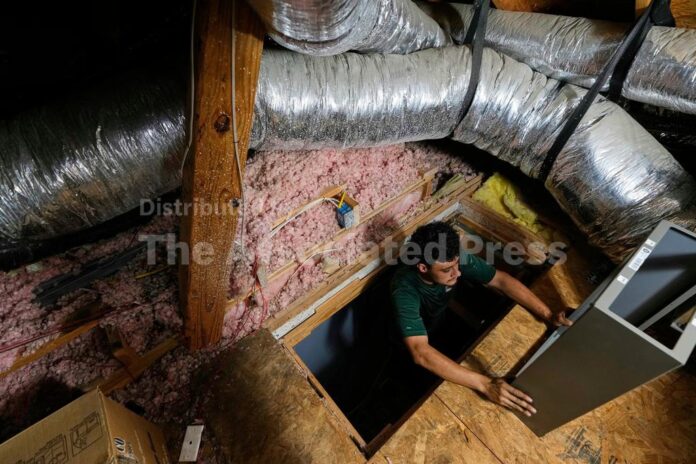
In the fall and winter months, experts suggest focusing on temperature control and air quality measures as people tend to shelter indoors during incoming colder weather. American Home Inspectors Training guidance says check heating systems, clean air filters, make sure carbon monoxide detectors are working, seal air leaks, prioritize pest control, clean and repair roofs and chimneys, and inspecting drainage options in and around homes.

Officers who defended the Capitol on Jan. 6 say their struggles linger, 5 years after the riot

WASHINGTON (AP) — As Donald Trump was inaugurated for the second time on Jan. 20, 2025, former Capitol Police Sgt. Aquilino Gonell put his phone on “do not disturb” and left it on his nightstand to take a break from the news.

That evening, after Gonell spent time with family and took his dog on a long walk, his phone started to blow up with calls. He had messages from federal prosecutors, FBI agents and the federal Bureau of Prisons — all letting him know that the new president had just pardoned about 1,500 people who had been convicted for their actions at the Capitol on Jan. 6, 2021. The pardons included rioters who had injured Gonell as he and other officers tried to protect the building.

“They told me that people I testified against were being released from prison,” Gonell said. “And to be mindful.”

Gonell was one of the officers who defended the central West Front entrance to the Capitol that day as Congress was certifying Democrat Joe Biden’s victory and hundreds of Trump’s supporters broke into the building, echoing his false claims of a stolen election. Gonell was dragged into the crowd by his shoulder straps as he tried to fight people off. He almost suffocated. In court, he testified about injuries to his shoulder and foot that still bother him to this day.

“They have tried to erase what I did” with the pardons and other attempts to play down the violent attack, Gonell said. “I lost my career, my health, and I’ve been trying to get my life back.”

Five years since the siege, Gonell and some of the other police officers who fought off the rioters are still coming to terms with what happened, especially after Trump was decisively elected to a second term last year and granted those pardons. Their struggle has been compounded by statements from the Republican president and some GOP lawmakers in Congress minimizing the violence that the officers encountered.

“It’s been a difficult year,” said Officer Daniel Hodges, a Metropolitan Police Department officer who was also injured as he fought near Gonell in a tunnel on the West Front. Hodges was attacked several times, crushed by the rioters between heavy doors and beaten in the head as he screamed for help.

“A lot of things are getting worse,” Hodges said.

An evolving narrative

More than 140 police officers were injured during the fighting on Jan. 6, which turned increasingly brutal as the hours wore on.

Former Capitol Police Chief Thomas Manger took over the department six months after the riot. He said in a recent interview that many of his officers were angry when he first arrived, not only because of injuries they suffered but also “they resented the fact that they didn’t have the equipment they needed, the training they needed ” to deal with the unexpectedly violent crowd.

Several officers who fought the rioters told The Associated Press that the hardest thing to deal with has been the effort by many to play down the violence, despite a massive trove of video and photographic evidence documenting the carnage.

Trump has called the rioters he pardoned, including those who were most violent toward the police, “patriots” and “hostages.” He called their convictions for harming the officers and breaking into the building “a grave national injustice.”

“I think that was wrong,” Adam Eveland, a former District of Columbia police officer, said of Trump’s pardons. If there were to be pardons, Eveland said, Trump’s administration should have reviewed every case.

“I’ve had a hard time processing that,” said Eveland, who fought the rioters and helped to push them off the Capitol grounds.

The pardons “erased what little justice there was,” said former Capitol Police Officer Winston Pingeon, who was part of the force’s Civil Disturbance Unit on Jan. 6. He left the force several months afterward.

Pushback from lawmakers and the public

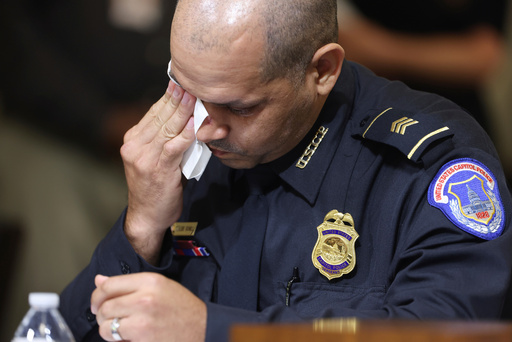
Hodges and Gonell have been speaking out about their experiences since July 2021, when they testified before the Democratic-led House committee that investigated Jan 6. Since then, they have received support but also backlash.

At a Republican-led Senate hearing in October on political violence, Hodges testified again as a witness called by Democrats. After Hodges spoke about his experience on Jan. 6, Sen. Peter Welch, D-Vt., asked the other witnesses whether they supported Trump’s pardons of the rioters, including for those who injured Hodges. Three of the witnesses, all called by Republicans, raised their hands.

“I don’t know how you would say it wasn’t violent,” says Hodges, who is still a Washington police officer.

It has not just been politicians or the rioters who have doubted the police. It also is friends and family.

“My biggest struggle through the years has been the public perception of it,” Eveland said, and navigating conversations with people close to him, including some fellow police officers, who do not think it was a big deal.

“It’s hard for me to wrap my head around that, but ideology is a pretty powerful thing,” he said.

Improvements in safety and support

As police officers struggled in the aftermath, Manger, the former Capitol Police chief, said the department had to figure out how to better support them. There were no wellness or counseling services when he arrived, he said, and they were put in to place.

“The officers who were there and were in the fight — we needed to make sure that they got the help that they needed,” Manger said.

Manger, who retired in May, also oversaw major improvements to the department’s training, equipment, operational planning and intelligence. He said the Capitol is now “a great deal safer” than it was when he arrived.

“If that exact same thing happened again, they would have never breached the building, they would have never gotten inside, they would have never disrupted the electoral count,” Manger said.

Pingeon, the former Capitol Police officer, said he believes the department is in many ways “unrecognizable” from what it was on Jan. 6 and when he left several months later.

“It was a wake-up call,” he said.

Pressing on

Pingeon, who was attacked and knocked to the ground as he tried to prevent people from entering the Capitol, said Jan. 6 was part of the reason he left the department and moved home to Massachusetts. He has dealt with his experience by painting images of the Capitol and his time there, as well as advocating for nonviolence. He said he now feels ready to forgive.

“The real trauma and heartache and everything I endured because of these events, I want to move past it,” he said.

Gonell left the Capitol Police because of his injuries. He has not returned to service, though he hopes to work again. He wrote a book about his experience, and he said he still has post-traumatic stress disorder related to the attack.

While many of the officers who were there have stayed quiet about their experiences, Eveland said he decided that it was important to talk publicly about Jan. 6 to try to reach people and “come at it from a logical standpoint.”

Still, he said, “I’ve had to come to terms with the fact that just because something happened to me and was a major part of my world doesn’t mean that everyone else has to understand that or even be sympathetic to that.”

He added: “The only thing I can do is tell my story, and hopefully the people who respect me will eventually listen.”

Leonardo DiCaprio on the importance of creating cinema over content at Palm Springs Film Festival

PALM SPRINGS, Calif. (AP) — Leonardo DiCaprio emphasized the importance of creating cinema over content at the Palm Springs Film Festival Friday night.

“Movies are still meant to be experienced, together, in a theatre. Right now, that belief matters more than ever. Original films are harder to make and harder to protect. But movies still matter, not content, but cinema. Stories made by people meant to be shared in a dark room in a communal experience,” he said.

The “One Battle After Another” actor accepted the award via a pre-recorded video. Variety reported that he was be unable to attend the film festival due to the ongoing political conflict with Venezuela, which led to the cancellation of multiple flights out of the Caribbean, where the actor was spotted vacationing over the holiday season. His co-stars, Chase Infiniti and Teyana Taylor, accepted the award on his behalf.

The 37th annual International Film Awards at the festival in Palm Springs, California, kicks off Hollywood’s whirlwind award season, honoring some of the film industry’s most anticipated award contenders.

The glamorous night was full of long, heartfelt speeches, each emphasizing the importance of unity amongst artists and the importance of keeping original storytelling and movie theaters alive.

While accepting the Icon Award, Actor Michael B. Jordan told his colleagues to continue to tell original stories that build unity.

“The films were honoring tonight inspire each other to do more, to be better, to see each other more clearly and make the world a brighter place. And maybe when the lights come up in the theater, we could step back into the sun together,” said the actor.

Cyrus accepted the Outstanding Artistic Achievement Award for her song “Dream As One” in “Avatar: Fire and Ash.” The recording artist hopes artists will pivot to becoming more community-focused instead of seeing each other as competitors.

“Numbers can make it feel like a sport, but performance runs so much deeper than a scoreboard, because each artist can bare their soul in a completely unique way and every contribution leaves its own mark on history,” she said.

Jane Fonda briefly led the audience in a breathing exercise before presenting “Hamnet’s” Chloe Zhao, Paul Mescal and Jessie Buckley with the Vanguard Award. Fonda credited the call to the action to director Chloe Zhao, who would routinely lead similar exercises before festival screenings of “Hamnet.”

Guillermo del Toro stood alongside his “Frankenstein” cast to receive the Visionary Award.

The director revealed he recently lost his older brother and reflected on the relevance of Mary Shelley’s classic novel as the world continues to grapple with emerging technology and division. For del Toro, it’s relevance means two things: “We never learn, and sometimes the only way to talk about humanity is through monsters.”

Timothèe Chalamet received the Spotlight Award, and focused his speech on his “Marty Supreme” character’s pursuit of greatness and making his dreams come true.

Mahershala Ali presented Ethan Hawke with the Career Achievement Award, reminiscing on how Hawke’s performance in “Reality Bites” was one of many films that inspired his early acting days.

Hawke’s acceptance speech gave credit to the friends and collaborators that left a mark on who he is today and remembered the influence the late River Phoenix had on his life.

“I stand here in front of you a sum accumulation of all of the individuals who helped shape me,” said the actor.

Hawke made his way to the stage a second time for a “First Reformed” reunion with former co-star Amanda Seyfried to present her with the Desert Palm Achievement Award, Actress.

Seyfried was quick to point out the unexpected full-circle moment while receiving the same award as DiCaprio.

“I want to thank Leo for inspiring me to be an actor. So, it’s weird. It’s amazing to get this award. It’s the same title of the award, so it’s like sharing it with him? Sort of? Maybe,” said the actor.

The night continued with laughter from actor and comedian Adam Sandler after Laura Dern presented him with the Chairman’s Award. Sandler accepted his award with none other than a short stand-up routine about what his life would have looked like if he had chosen a quieter life instead of working in entertainment.

“I’d probably still have a deal with Netflix. But I’d be paying them a monthly fee so I can watch ”Stranger Things” last season,” said the comedian.

The cast of “Sentimental Value” accepted the International Star Award as an ensemble. Rose Byrne took home the Breakthrough Performance Award, Actress, for her work on “If I Had Legs I’d Kick You,” poking fun at the idea of receiving a breakthrough award in her 40s. The show concluded with Kate Hudson accepting the Icon Award, Actress for her work in “Song Sung Blue.”

Award season continues with the 31st annual Critics’ Choice Awards and next Sunday with the 83rd annual Golden Globes.

Gunmen raid village in northern Nigeria, killing at least 30 people and abducting others

MINNA, Nigeria (AP) — At least 30 villagers have been killed while several others were abducted by gunmen who raided a village in northern Nigeria’s Niger state, police said Sunday, the latest in a cycle of deadly violence in the conflict-hit region.

The gunmen stormed the Kasuwan-Daji village in Niger state’s Borgu local government area on Saturday evening and opened fire on residents. They also razed down the local market and several houses, Niger state police spokesman Wasiu Abiodun said in a statement.

At least two residents put the death toll at 37 and said it could be much higher as some people remained missing as of Sunday. Residents also said security forces are yet to arrive in the area, contradicting the police’ claim that they have deployed officers to search for those kidnapped.

Rev. Fr. Stephen Kabirat, spokesman for the Catholic Church of Kontagora Diocese where the attack happened, told local media that the gunmen killed more than 40 people and that some of those abducted were children.

The gunmen had been lurking around nearby communities for about a week before the attack, according to a resident who asked not to be named for fear of his safety. Now survivors are too afraid to go recover the bodies.

“The bodies are there (in Kasuwan-Daji village). If we don’t see any security, how can we go there?” the resident said, adding that the attack lasted for up to three hours.

Such attacks are common in Nigeria, Africa’s most populous country, where dozens of rogue gangs seeking control often target remote communities with limited security and government presence.

Saturday’s attack in Kasuwan-Daji village happened near the Papiri community, where more than 300 schoolchildren and their teachers were kidnapped from a Catholic school in November.

The attackers who raided Kasuwan-Daji arrived from the National Park Forest along Kabe district, according to the police, pointing to a usual trend where abandoned expansive forest reserves act as hideouts for armed gangs.