Home Blog Page 17417

Hinckfoot-Foster engagement

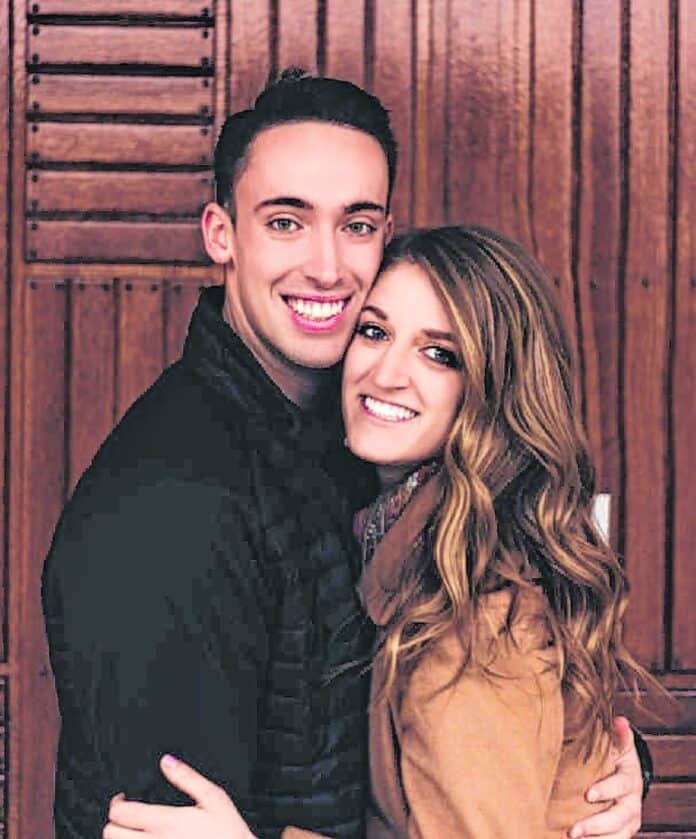
Jordan Foster and Leah Hinckfoot

Leah Hinckfoot and Jordan Foster of Columbus announce their engagement.

Miss Hinckfoot attended high school in Colorado Springs, Colorado, and graduated in May from Indiana Wesleyan University with a Bachelor of Science degree in nursing. In August, she will begin work on a master’s degree to become a family nurse practitioner. She is a registered nurse. She is the daughter of Mike and Melissa Hinckfoot of Columbus.

The future groom attended Columbus East High School and earned his undergraduate and master’s degrees at Ball State University. He is a supplier quality improvement engineer. He is the son of Mark and Wendy Foster of Columbus.

The wedding is slated for Aug. 4 at The Wilds Venue.

Annual growth in charitable giving slows as predicted

Growth in charitable giving in the United States slowed in 2018, possibly as a result of the 2017 tax reform bill, according to an annual report that tracks American giving patterns.

Individuals, estates, foundations and corporations gave a total of nearly $428 billion in 2018, according to the latest Giving USA report.

That’s up less than 1% when measured in current dollars from the updated estimate of nearly $425 billion in 2017, and it’s a decline of 1.7% when adjusted for inflation.

In 2017, total giving exceeded $400 billion for the first time and increased by 7.1% from the prior year (4.9% when adjusted for inflation).

It’s a less-than-anticipated negative impact than the philanthropic community braced for following the passage of the tax reform bill, which many believed would reduce the number of Americans who seek federal tax breaks by using a deduction for giving. Some estimates suggested giving would drop by anywhere from $4 billion to $20 billion.

But the number is still the smallest growth rate since 2013, when giving was flat from the prior year (a decrease of 1.5% when adjusted for inflation).

Experts from the Giving USA Foundation and the Indiana University Lilly Family School of Philanthropy, which researches and writes the annual report, say the shift in giving could be due to a mix of factors, including the stock market, changes in personal income and the tax reform legislation.

The tax reform bill, which Congress passed in December 2017, increased the standard deduction, meaning fewer individuals and couples would be likely itemize their tax returns. Only those who itemize their tax returns are eligible to claim the charitable deduction, which was added to the federal tax code in 1917 to provide an incentive for taxpayers to make donations.

In 2016, more than 45 million households itemized deductions, but multiple studies have suggested that number dropped to a range of 16 million to 20 million in 2018, according to the Giving USA report.

The tax law also reduced individual income tax rates, capped deductions for state and local property tax payments at $10,000, and doubled the estate-tax exemption to $22 million for couples — all factors that play into charitable giving.

“As we’ve seen in previous years, the strong economy had a positive influence on individual giving; however, these positive effects may have been tempered by policy changes and other factors to create a more mixed picture for giving in 2018,” said Una Osili, associate dean for research and international programs at the Lilly Family School of Philanthropy, in a written statement. “About half of all Americans give, and the tax policy changes may have created uncertainty for some donors, especially those who previously itemized but no longer will. We have strong historical data about the link between economic variables, the stock market and charitable giving, and we will be analyzing data for the next few years to better understand how broad giving patterns may have changed.”

The biggest areas of growth were among foundations and corporations. Giving by foundations increased 7.3% (4.7% when adjusted for inflation), contributing a total of nearly $76 billion. Corporate donations increased 5.4% (2.9% when adjusted for inflation), contributing $20 billion.

Giving by individuals declined by 1.1% in 2018 (a decrease of 3.4% when adjusted for inflation), contributing a total of $292.1 billion. The last time individual giving decreased was in 2013.

Estate giving remained flat, contributing close to $40 billion to the total.

Organizations that benefited the most in 2018 were in international affairs and environmental and animal groups, which saw increases of 9.6% and 3.6%, respectively.

Sectors including religion, education and public-society benefit experienced decreases in giving.

Donations made to human services, health and arts and culture groups stayed flat from 2017 to 2018.

Patrick Rooney, executive associate dean for academic programs at the Lilly Family School of Philanthropy, said the decline in giving to religious organizations could be attributed to the drop in individual giving, because most religious donations come from individuals, plus a growing percentage of Americans aren’t associated with a religious group.

Meanwhile, the increase in giving to environmental and animal groups is an ongoing trend — that sector has seen growth for five consecutive years, reaching an all-time high in 2018 of $12.7 billion.

“The complexity of the charitable giving climate in 2018 contributed to uneven growth among different segments of the philanthropic sector,” Amir Pasic, dean of the Lilly Family School of Philanthropy, said in a written statement. “Charitable giving is multi-dimensional, however, and it is challenging to disentangle the degree to which each factor may have had an impact. With many donors experiencing new circumstances for their giving, it may be some time before the philanthropic sector can more fully understand how donor behavior changed in response to these forces and timing.”

Chamber says poor health and lack of new business hurting Hoosier economy

Kevin Brinegar, CEO and president of the Indiana Chamber of Commerce, speaks at a press conference over Indiana’a 2019 Report Card.

INDIANAPOLIS — Indiana’s healthy economy could be undermined by a low growth of new businesses and high smoking and obesity rates, the Indiana Chamber of Commerce said in a new report.

“Our unemployment levels have been below the national average and our surrounding states for a long time,” said Kevin Brinegar, Chamber president and CEO. “But if we’re not generating new business at a fast-enough rate, we’ll have challenges down the road.”

The chamber’s Indiana Vision 2025 Report Card was developed by a statewide task force of community, business and education leaders and was released in 2012. Brinegar, in a press conference to discuss the report, focused on the business and health factors.

The report assesses the state’s overall health and includes 33 goals in four critical areas — outstanding talent, attractive business climate, superior infrastructure, and dynamic and creative culture.

The chamber’s report found that Indiana continues to struggle in the Kauffman Foundation Index, which measures new entrepreneurs, and total employment at firms less than five years old. The state ranked 47th out of the 50 states in both categories.

In 2017, 0.199% of Hoosier adults started a new business compared to the U.S. average of .331%. The total employment for firms that were zero to five years old was 8.1% while the U.S. average was 11.2%.

Conversely, Indiana ranks fifth in job creation for existing businesses that are six years and older.

The Vision 2025 report found there is a $6.2 billion annual business impact in health care costs and lost productivity from smoking in Indiana.

“That’s real money that’s not going into wages, salaries, benefits, health insurance, training and planned equipment modernization,” Brinegar said. “It’s just going out the window.”

Indiana’s adult smoking rate increased to 21.8% in 2018 from 20.6 percent in 2016, which is now 44th worst among the 50 states. The Indiana Chamber would like to see smoking levels in Indiana reduced to less than 15% of the population.

Adult obesity levels also increased from 31% in 2015 to 33.6% in 2017, which is 39th worst among the 50 states.

In the 2019 session, Indiana legislators took no action on measures aimed at reducing rates of tobacco use and vaping, including higher taxes and raising the smoking age from 18 to 21.

How to tax and regulate vaping products will be studied by lawmakers in a summer study committee.

Brinegar said the Indiana Chamber still supports higher tobacco taxes and raising the age to purchase tobacco products.

“The best way to deal with it is to not get them to ever start,” he said. “When you consider that 95% of all individuals who’ve smoked throughout their lives started before age 21, it’s really key to focus on raising the age as well as raising the tax.”

Gov. Eric Holcomb said during the legislative session that there isn’t much support for a tax increase among legislators, which is why he didn’t pursue a higher tax on tobacco products.

Brinegar said addressing the obesity increase is much tougher than the smoking.

He said the state used to have a wellness tax credit that would help offset the cost for employers that set up wellness programs, and the chamber has been trying to get that re-established.

Brinegar said support for trails, the cultural opportunities, the outdoor opportunities that are being done with things like the Regional Cities Initiative and the focus on quality of place will help as well.

Upcoming forums will be in Hammond, Evansville and Fort Wayne. The forum allows the chamber and others to discuss results, share best practices and receive feedback.

Former mayor wins lawsuit against CPD

A judge has ruled in favor of former Columbus Mayor Kristen Brown in her lawsuit against the Columbus Police Department regarding a public records dispute.

In a ruling handed down on June 17 in Bartholomew County Superior Court 2, Special Judge Richard W. Poynter found that CPD’s response to a public records request by Brown regarding an incident involving a correction officer and his wife in a domestic dispute violated Indiana’s open records law.

More specifically, Poynter found that CPD’s response to the public records request failed to provide Brown with a copy of all information regarding the incident that was required to be made public, including “the factual circumstances surrounding the incident” and “a general description of any injuries, property or weapons involved.”

Poynter awarded Brown attorney’s fees, court costs and expenses incurred during litigation, but stopped short of finding that CPD intentionally violated open records laws or acted in bad faith. Brown said her attorney’s fees currently are about $45,000.

[sc:text-divider text-divider-title=”Story continues below gallery” ]

The city is “still evaluating” if it will appeal the decision, city attorney Alan Whitted said. The city has until July 17 to appeal.

“I’m glad the judge finally ruled,” Brown said. “I never thought the city would fight so hard. I never expected it to reach the level of expense that it did.”

The dispute

The dispute between Brown and CPD started in September 2016, when Brown submitted a public records request about a domestic dispute that occurred on Aug. 23, 2016, according to the lawsuit. Brown said she filed the public information request on behalf of someone else whose request for the information allegedly was denied. Brown said it was easier for her to file the request because of her understanding of public-access laws and CPD’s operating procedures.

The Aug. 23 incident involved former jail commander Gary Myers and his then-wife Sabrina S. Myers, according to the public incident report. The report also lists that two vehicles were involved in the incident, one of which was owned by the sheriff’s department. No charges were filed related to the incident, according to court records.

On Sept. 26, 2016, Columbus Police Chief John Rohde responded to Brown’s request, providing an incident report that classified the incident as criminal mischief/vandalism and domestic disturbance and listed the weapon or tools involved in the incident as “other weapon.” No other factual circumstances or description of any injuries, property or weapons involved in the incident were disclosed at that time, the lawsuit states.

Four days later, Brown filed a formal complaint with Indiana’s public access counselor, alleging that the incident report provided to her did not meet the standards of two provisions of the Indiana Access to Public Records Act — Indiana Code 5-14-3-5(c)(3) — because it didn’t include “the factual circumstances surrounding the incident” and “a general description of any injuries, property or weapons involved.”

In response to the public access counselor, the city asserted, among other things, that it was not required to generate documentation about the Aug. 23 incident because nobody was arrested, summoned to court or jailed. Additionally, the city argued that the documentation the city provided was in compliance with the statute.

However, on Nov. 3, 2016, Luke Britt, Indiana’s public access counselor, issued an opinion in Brown’s favor.

“It is my opinion CPD’s attorney has misapplied the statute,” Britt wrote in his opinion, which is not legally binding. “Any alleged crime or infraction requires documentation of the factual circumstances surrounding the incident; and a general description of any injuries, property or weapons involved. …Factual circumstances must be more than just a list of suspected crimes.”

Brown informed Rohde on Dec. 7, 2016, that more than a month had passed since Britt had issued his opinion, according to the lawsuit, and she still had not received additional information. Brown filed suit in February 2017.

The documents were given to Brown in January 2018, Whitted said, after Poynter, the special judge appointed to the case, issued an order Dec. 11, 2017, for the city to provide them to her.

Poynter issued his decision 12 days ago, ruling in Brown’s favor.

“The court finds that the information CPD initially provided to Brown pursuant to her public records request in the Public Incident Report contained insufficient ‘information’ to meet the requirements of (the Indiana Access to Public Records Act),” Poynter wrote in the decision. “… Merely listing ‘Criminal Mischief/Vandalism’ and ‘Domestic Disturbance’ does not provide any factual evidence. There was no general description of any injuries, property or weapons involved. The only reference to any injuries, property or weapons involved was ‘other weapon,’ which is an insufficient description; nor was there any description of the property damage involved in the incident.”

Differing opinions

The city, for its part, has argued that CPD was following the same set of procedures that were in place during Brown’s administration and the information provided to Brown in 2016 “was sufficient to comply with the statute,” Whitted said.

“These were the procedures that had been put together during Mayor Brown’s administration in terms of how these incident reports would be prepared and completed,” Whitted said. “The police department was just continuing with the policies and procedures that Mayor Brown had put in place during that administration.”

When asked if there was any document that outlined any specific set of policies, procedures or guidelines established during Brown’s administration, Lt. Matt Harris, CPD spokesman, said he was unaware of any.

Whitted later clarified that he meant that the process used to handle Brown’s public information request was the same process in place during Brown’s administration, not that she personally instituted such a policy.

“That’s how (the police) had been doing it during the Brown administration,” Whitted said.

Brown, for her part, said the assertions that she had instituted any such policies or procedures during her tenure as mayor are false.

“My assumption when I was in office was that the police department was following the law,” Brown said. “We never implemented formally or informally any procedures for public access because the assumption was that they were following the law down there. I never received a complaint about public access, formally or informally, while I was mayor.”

Additionally, Whitted said the city attempted to settle with Brown on two separate occasions.

In May 2017, the city offered to pay $2,500 for Brown’s attorney fees and costs in exchange for a judgment that said, among other things, that CPD’s response to her public information request “was not adequate” under the Indiana Access to Public Records Act. The offer included what the city said were some factual circumstances and a general description of any injuries, property or weapons regarding the Aug. 23 incident, according to a copy of the offer.

On June 9, the city offered Brown $5,000 in attorney fees and costs, along with the same terms laid out in the previous offer.

Brown said she rejected the 2017 offers and then continued with the litigation after receiving in 2018 the information she had initially requested because “a judge still needed to rule on whether or not (CPD) had violated the (Indiana public records) law” and because she sought to recover attorney fees, which she said were, at that time, “substantially less than half than they are today.”

The parties have 60 days from June 17 to work out an agreement on attorney’s fees, court costs and expenses incurred during litigation, according to Poynter’s decision.

[sc:pullout-title pullout-title=”Pull Quote” ][sc:pullout-text-begin]

"I’m glad the judge finally ruled. I never thought the city would fight so hard. I never expected it to reach the level of expense that it did."

— Former Columbus Mayor Kristen Brown

[sc:pullout-text-end]

Fresh reward: Mill Race Marathon medals feature new design

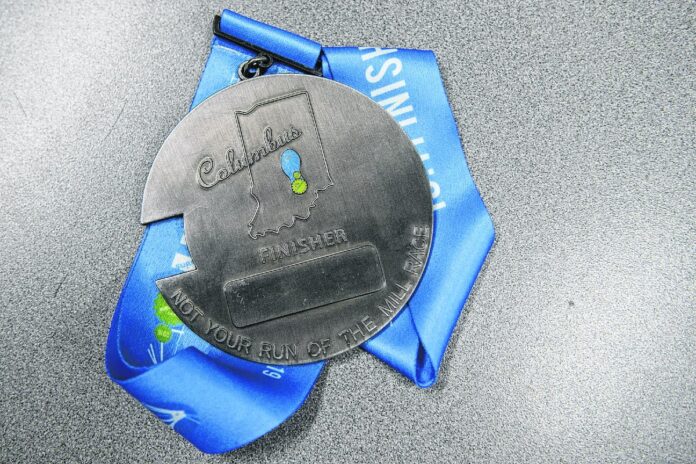
A view of the back side of the new Mill Race Marathon medal as pictured at The Republic in Columbus, Ind., Thursday, June 27, 2019. Mike Wolanin | The Republic

One of the rewards awaiting participants as they cross the finish line of this year’s Mill Race Marathon, half-marathon and 5K competitions is ready.

Mill Race Marathon, the not-for-profit organization that oversees the event, which will be Sept. 28, has released new-look medals that will be given to every participant who finishes one of this year’s races.

The medals for each event feature an engraving of the Robert N. Stewart Bridge, formerly the Second Street Bridge, with the Bartholomew County Courthouse and First Christian Church tower in the background.

The medals are round in the middle, and are adorned with a blue letter “C” around the outside, which was inspired by the multi-colored “Dancing C’s” that appear on signage and other objects around the city, said Dave Venable, a member of the Mill Race Marathon Planning Committee.

[sc:text-divider text-divider-title=”Story continues below gallery” ]Click here to purchase photos from this gallery

Each medal is made from a die-cast mix of materials, including zinc and aluminum, Venable said. The size of the medals vary depending on the event. The medals for the full and half-marathon are about 4 inches in diameter, while the 5K medal is around 3 inches in diameter.

Mill Race Marathon is working with Brainstorm Print to source the medals and other items for the event, Venable said.

“One of the things we like to do with the marathon medals is make the scene of the medal something that is recognizable to the runners so it either incorporates the logo or the architecture in the city,” Venable said. “We chose the bridge because it is very notable for the runners.”

The medals are the result of a process that Venable said took about four months, which involved about two months of dialogue and brainstorming ideas with other members of the planning committee.

Venable said he and some of his fellow committee members considered several local landmarks for the medals’ design before he and fellow committee member Rachel Foster came up with the idea of the Robert N. Stewart Bridge. Some of the ideas for the design that didn’t make the cut include the covered bridge in Mill Race Park and the Bartholomew County Courthouse. The covered bridge was not chosen because the race no longer goes through Mill Race Park, Venable said.

This year’s medal is the fourth new medal design issued since the inaugural Mill Race Marathon in 2013. Since the event’s inception, new medal designs were issued every two years, but from now on, participants can expect a new design every year, Foster said.

“We have realized how important the medal design is for runners, especially runners who are coming back repeatedly, because they want a new medal to hang on their wall instead of a repeat one,” Foster said. “Because we have realized how big of a deal that is to runners, we’re going to start refreshing medals every year.”

Venable and Foster said they hope the new design will be memorable for participants.

“You’re always apprehensive as to what the final product will look like until you see it because you want the runners to be satisfied with what they get at the completion of the event,” Venable said. “I think it’s nice to have something that the runners will appreciate, and hopefully, this design is something they will remember the race by.”

[sc:pullout-title pullout-title=”How to register” ][sc:pullout-text-begin]

As of Wednesday, 117 people had registered for the full marathon, 580 for the half-marathon and 267 for the 5K, according to figures supplied by Mill Race Marathon.

A total of 964 have registered for one of the three races, a 31.5% increase compared to the number of registrations at the same point last year.

Visit millracemarathon.com for more information or to register to participate in the marathon, half-marathon or 5K competitions.

[sc:pullout-text-end][sc:pullout-title pullout-title=”About the medals” ][sc:pullout-text-begin]

The medals for each event feature an engraving of the Robert N. Stewart Bridge, formerly the Second Street Bridge, with the Bartholomew County Courthouse and First Christian Church tower in the background.

The medals are round in the middle, and are adorned with a blue letter "C" around the outside, which was inspired by the multi-colored "Dancing C’s" that appear on signage and other objects around the city.

[sc:pullout-text-end]

Public takes peek at CRH’s substance abuse clinic

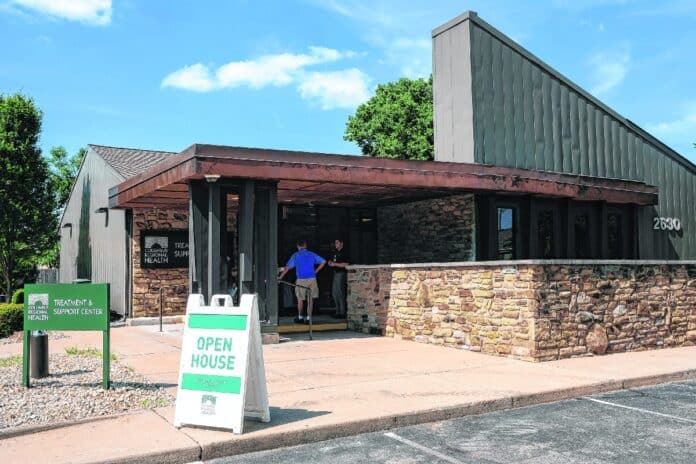
A view of a the exterior of the new Columbus Regional Health Treatment and Support Center on 22nd Street in Columbus, Ind., Thursday, June 27, 2019. Mike Wolanin | The Republic

More than 60 people turned out within the first hour of a public open house at Columbus Regional Health’s new outpatient behavioral health clinic aimed at treating substance abuse disorders in Columbus.

The new 5,208-square-foot facility, called the Columbus Regional Health Treatment and Support Center, or TASC, will open Monday and offer medicated-assisted treatment, behavioral therapy and other services for people who are struggling with substance abuse disorders, including the abuse of alcohol, opioids, methamphetamine, cocaine and other substances.

The facility is located at 2630 22nd St. in the former Southern Indiana Gastroenterology building.

“My goal with TASC is to help treat people who have substance use problems, as well as provide help and resources for their family members,” said Dr. Kevin Terrell, medical director of TASC. “There’s an enormous need for this in our community. Our goal is to help as many people as we can.”

[sc:text-divider text-divider-title=”Story continues below gallery” ]Click here to purchase photos from this gallery

Several members of the public showed up Thursday to take a look at the facility.

Glenda Aikins, 60, said she lives down the street from TASC and came to the open house because she initially had some concerns about living near the facility, and wanted to know more about what kinds of services the facility would offer.

“We wanted to make sure that something this close to our home is really going to be beneficial to the community,” she said.

But after seeing the facility for herself, she said. “I think it’s going to be a good program.”

Designed to help

The facility has three group rooms, each with a capacity of about 12 to 15 people, and four individual treatment rooms and an outdoor garden for mindfulness exercises and other activities. The facility contains light blue and beige colored walls, and most rooms have several photographs of natural landscapes on the walls, such as mountains and forests, among others, which CRH officials said were designed to help promote a calm and serene environment for patients.

TASC will provide medication-assisted treatment for people with opioid or alcohol abuse disorders, Terrell said. The idea behind medication-assisted treatment is to reduce withdrawal symptoms and cravings so therapists and other medical professionals can help patients find the root causes that may have prompted them to start abusing drugs or alcohol, Terrell said. All patients, however, “will meet with a therapist and get group therapy and or individual therapy,” Terrell said.

Initially, the facility will have 12 staff members, including a physician, licensed addiction therapist, case manager, intake coordinator, medical assistant and two peer recovery coaches, among other staff members, said Katrina Applegate, manager of TASC.

CRH officials estimate that the facility will serve about 126 unique patients during the first year and increase to nearly 600 unique patients by the fifth year of operations, said Cheryl Buffo, community programs lead for the Alliance for Substance Abuse Progress, or ASAP.

Last month, the Columbus Regional Health Foundation announced that it would provide $2.1 million in funding for the facility. Columbus Regional Health Physicians LLC purchased the property in March from Ottawa Holdings LLC for $600,000, according to property transfer records.

Response to problem

Bartholomew County and the surrounding area, like much of the country, have seen a surge in opioid overdoses, emergency room visits and opioid-related deaths.

In 2017, 21 Bartholomew County residents died from opioid overdoses, compared to a total of 13 from 2011 to 2016, according to data from the Indiana State Department of Health, which tracks causes of death by county of residence, not necessarily the county in which the person died.

A total of 4,000 Indiana residents — including 84 people who resided in Bartholomew, Brown, Jackson and Jennings counties — died from opioid overdoses between 2011 and 2017.

Additionally, Bartholomew County residents have visited hospital emergency departments a combined 468 times for non-fatal opioid overdoses from 2011 to 2017. Across the state, opioid overdoses resulted in 26,884 emergency department visits over the same period — or about one visit every 2 hours and 17 minutes every day for seven years.

“The most troubling part is the reality that (substance abuse disorder) is a chronic relapsing disease,” Terrell said. “One of the heartbreaking realities is that sometimes when people have been stable and been doing well for a period of time — for months or even years — they can have a lapse and end up going back to the emergency department for an overdose.

“The goal (of TASC) is tell people up front that they are at risk of having a relapse. We want them to come back and see us. We don’t want them to be ashamed or embarrassed. We want them to come see us so it is just a brief stumble on the road to recovery.”

TASC will only provide outpatient services and will be available to people in CRH’s service area, which includes Bartholomew, Brown, Decatur, Jackson, Jefferson, Jennings, Johnson, Ripley, Scott and Shelby counties.

“This is desperately needed in our community,” Terrell said.

[sc:pullout-title pullout-title=”About TASC” ][sc:pullout-text-begin]

The Columbus Regional Health Treatment and Support Center, or TASC, will open Monday and offer medicated-assisted treatment, behavioral therapy and other services for people who are struggling with substance abuse disorders, including the abuse of alcohol, opioids, methamphetamine, cocaine and other substances.

The facility is located at 2630 22nd St. in the former Southern Indiana Gastroenterology building.

Call 812-375-3784 for more information.

[sc:pullout-text-end]

Quarterback Conundrum / Senior has experience, but may be needed at other positions

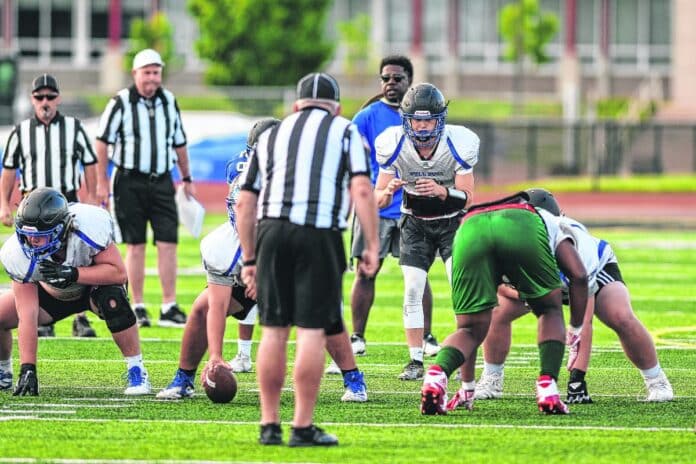
Columbus North quarterback Hunter Huser prepares to take a snap during a preseason scrimmage against Lawrence North at Columbus North High School in Columbus, Ind., Tuesday, June 25, 2019. Mike Wolanin | The Republic

Summer football workouts were about to begin, and Columbus North found itself in need of a quarterback.

Bull Dogs coach Tim Bless didn’t have to think long before coming up with a guy who could fill the position. Incoming senior Hunter Huser played quarterback in middle school and as a freshman, and split time there on the JV team as a sophomore before playing wide receiver and defensive back for the varsity last season.

“He has the most tools, but that’s what we lament as a staff,” Bless said. “He’s one of our best wide receivers, he’s one of our best defensive backs, and he’s our best return man. When he’s playing quarterback, he can’t do all of the above. If we started a game tonight, yes, he’s certainly our No. 1 quarterback, but we continue to evaluate what the big picture looks like beyond just the quarterback position.”

In Tuesday night’s informal scrimmage against Lawrence North, Huser took about half the snaps. The rest were divided between incoming senior Tanner Hadley, a move-in from Florida, and incoming sophomore Luke Hammons.

[sc:text-divider text-divider-title=”Story continues below gallery” ]Click here to purchase photos from this gallery

Another move-in, incoming sophomore Elijah Foster, who came from Colorado, played with the JV in the scrimmage.

“They all show some bright spots,” Bless said. “Tanner has the strongest arm, but he’s probably the least fundamental, and that’s no fault of his own. It’s just lack of experience. Luke Hammons is going to be a really good quarterback. He just needs time. He has the gutsiness and instinctiveness. And Elijah is coming into the fold, and he’s doing everything we’re asking him to do.”

Huser caught 12 passes for 139 yards and two touchdowns as North’s third wide receiver last season. Only running back Blake Huffman had more catches, receiving yards and TDs among returning Bull Dogs.

North is looking to replace two-year starter Trenton Kelley, last year’s The Republic Football Player of the Year and overall Male Athlete of the Year, who now is playing at Morehead State.

“I liked receiver,” Huser said. “I liked Trenton as our quarterback. He took great control of this team, and he was able to make himself and the wideouts better as a group. It was an honor just to play for Trenton.”

Huser, however, is a vastly different quarterback than Kelley. While Kelley threw for more than 4,000 yards and 42 touchdowns the past two seasons, the 5-foot-10, 160-pound Huser is a runner first and foremost.

“I would say I feel more comfortable running outside of the pocket,” Huser said. “Most quarterbacks wouldn’t say that, but I feel like I’m more of a runner. I can’t wait until we finally get full pads on, and I can hopefully extend plays. Same thing with the wideouts and running backs — hopefully we can bust off the first hit and extend plays for touchdowns.”

Huser first realized he may be pressed into the quarterback role when last year’s JV quarterback, incoming junior Cody Ruble, transferred to Seymour. Ruble was expected to be the Bull Dogs’ starter the next two years.

“Then it came to me that I’m going to have to step up into this role, which is fine with me because I’ve always ended up adapting to quarterback since seventh grade,” Huser said. “It really wasn’t anything new to me. I knew I had to step up, and I’m trying to do that for my team. Really, it’s just shaking off the dust. I’m trying to get back in the swing of things, get my arm loosened up and get my arm strength back up. It’s mostly the fundamental stuff that I need to work on to improve.”

Huser, the youngest of four brothers, is the third to play football for North, and the first quarterback. Older brothers Justin and Harley played defensive back for the Bull Dogs, and Harley also played a little receiver.

“It was a big dream of mine ever since watching my brother Justin play varsity,” Hunter said. “Just standing out on the field watching him play under the lights, there was just no better explanation for it.”

In addition to being the third wide receiver last season, Hunter Huser started some games at cornerback and was in nickel package defensively. On Tuesday, he played a few snaps at safety and broke up a pass in the end zone.

Last year, Huser also returned a kickoff for a touchdown in a win at Bloomington South.

“You can’t do all of that when you’re the quarterback,” Bless said. “So it’s a tough call. But you also have to be as good as you can be at quarterback because that’s where it all starts.”

[sc:pullout-title pullout-title=”The Huser file” ][sc:pullout-text-begin]

Name: Hunter Huser

School: Columbus North

Year: Will be a senior

Height: 5-foot-10

Weight: 160

Position: Quarterback

Key stats: Caught 12 passes for 139 yards and two touchdowns as a junior

[sc:pullout-text-end]

Duncan misses cut after second-round 71

Duncan misses cut after second-round score of 71

Tyler Duncan carded a 1-under-par 71 in Friday’s second round of the Rocket Mortgage Classic.

Duncan, a 2008 Columbus North graduate, shot 72 in Thursday’s opening round at Detroit Golf Club. He finished at 1-under 143 for 36 holes and missed the cut by four shots.

Nate Lashley leads the tournament at the midway point at 14-under 130. Cameron Champ is one shot back at 13-under 131, followed by Charles Howell III at 12-under 132.

Upcoming Sports – June 29

Cincinnati Reds baseball

Today vs. Cubs, 4:10 p.m. (Fox Sports Indiana)

Sunday vs. Cubs, 1:10 p.m. (Fox Sports Indiana)

Monday vs. Brewers, 7:10 p.m. (Fox Sports Indiana)

Indianapolis Indians baseball

Today at Gwinnett, 6:05 p.m.

Sunday at Gwinnett, 1:05 p.m.

Monday at Louisville, 7 p.m.

Indy Eleven soccer

Today vs. Louisville FC, 7 p.m. (WISH-8)

July 13 vs. Hartford Atlantic, 5 p.m.

July 20 vs. Loudoun United FC, 7 p.m. (WISH-8)

NASCAR Monster Energy Series

Sunday at Chicagoland, 3 p.m. (NBCSN)

July 6 at Daytona, 7:30 p.m. (NBC)

July 13 at Kentucky, 7:30 p.m. (NBCSN)

NTT IndyCar Series

July 14 at Toronto, 3:30 p.m. (NBCSN)

July 20 at Newton, Iowa, 7 p.m. (NBCSN)

July 28 at Mid-Ohio, 4 p.m. (NBC)

TV Sports Today – June 29

Group of friends having fun at home,watching game and enjoying together.

Auto Racing

Formula One: Austrian Grand Prix, 5:55 and 8:55 a.m. (ESPN2)

NASCAR Monster Energy Cup Series: practice, 11 a.m. and 2 p.m., and qualifying, 6:30 p.m. (NBCSN)

NASCAR Xfinity Series: The Overton’s 300, 3:30 p.m. (NBCSN)

BIG3 basketball

3’s Company vs. Killer 3’s, 2 p.m. (CBSSN)

Boxing

Showtime Championship: Charlo vs. Adams, 9 p.m. (Showtime)

College baseball

College Home Run Derby: 8 p.m. (ESPN2)

Golf

European Tour Golf: Andalucia Masters, 8 a.m. (Golf Channel)

PGA Tour: The Rocket Mortgage Classic, 1 p.m. (Golf Channel) and 3 p.m. (CBS)

PGA Tour Champions: U.S. Senior Open, 3 p.m. (FS1) and 4 p.m. (FOX)

LPGA Tour: Walmart NW Arkansas Championship, 3 p.m. (Golf Channel)

Web.com Tour: Utah Championship, 6 p.m. (Golf Channel)

Mixed Martial Arts

UFC Fight Night Prelims: undercard bouts, 6 p.m. (ESPN)

UFC Fight Night Main Card: Ngannou vs. Dos Santos, 9 p.m. (ESPN)

MLB

Yankees vs. Red Sox in London, 1 p.m. (FOX)

Cubs at Reds, 4 p.m. (Fox Sports Indiana)

Nationals at Tigers, 4 p.m. (FS1)

Regional Coverage, 8 p.m. (FOX)

Men’s soccer

MLS: FC Cincinnati at Minnesota United, 4 p.m. (ESPN)

CONCACAF Gold Cup: Haiti vs. Canada, quarterfinal, 7 p.m. (FS1)

CONCACAF Gold Cup: Mexico vs. Costa Rica, quarterfinal, 9:30 p.m. (FS1)

Women’s soccer

FIFA World Cup: Italy vs. Netherlands, quarterfinal, 9 a.m. (FS1)

FIFA World Cup: Germany vs. Sweden, quarterfinal, 12:30 p.m. (FS1)

WNBA

Sun at Mystics, 2 p.m. (ESPN)

Fever at Aces, 10:30 p.m. (CBSSN)