Home Blog Page 997

New Haven police chief abruptly retires after theft allegations, mayor says

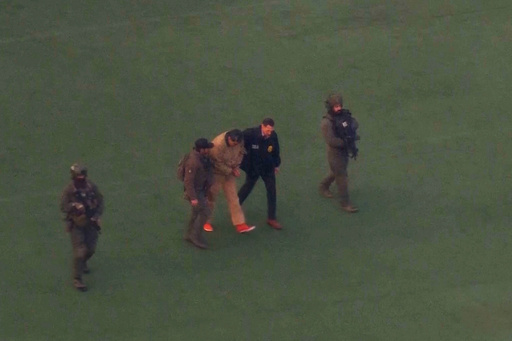
NEW HAVEN, Conn. (AP) — New Haven’s police chief abruptly retired following allegations he stole money from a department account, Mayor Justin Elicker announced Monday.

The Democrat said Chief Karl Jacobson admitted he took money from a city fund that compensates confidential informants for helping police solve crimes.

He said the chief acknowledged taking the funds for personal use when three of his deputies confronted him Monday morning over the financial irregularities.

Elicker called the allegations “shocking” and a “betrayal of public trust.”

“No one is above the law,” he said in an evening press conference at the police station. “We put our trust in law enforcement to uphold the law, not to violate the law themselves.”

Jacobson didn’t immediately return an email seeking comment Monday. He had served as police chief in one of Connecticut’s largest cities and home to Yale University for more than three years.

The mayor said he was set to meet with Jacobson and place him on administrative leave when the chief instead submitted his paperwork to retire, effective Monday.

Elicker said it’s unclear how much and for how long Jacobson had been taking money from the informants’ account and that it doesn’t appear others were involved. He said city officials are cooperating with state investigators looking into the matter.

Elicker said he has tapped Assistant Police Chief David Zannelli, who was among the officers to confront Jacobson over the funds, to serve as interim chief.

Jacobson took office in July 2022, just weeks after a Black man was paralyzed in the back of a police van in an incident that roiled the police department and the city.

Five officers were arrested in connection with the mistreatment of Richard “Randy” Cox, who suffered a neck injury and was left paralyzed from the chest down when the police van with no seat belts he was in braked hard to avoid an accident and sent him flying into a metal partition.

Jacobson recommended firing four of the officers, and the city’s police commissioners terminated them. The fifth officer retired before he could be disciplined. One of the fired officers won his job back after an appeal.

Jacobson had been with the department for 15 years before being named chief. He previously served in the East Providence Police Department in Rhode Island for nine years.

After Maduro capture, Trump’s tough talk evokes a return to the days of American imperialism

WASHINGTON (AP) — President Donald Trump hasn’t minced words about the larger message he’s trying to send the world with the U.S. military raid to capture Nicolás Maduro and spirit the deposed Venezuelan leader and his wife to the United States to face federal drug trafficking charges.

“American dominance in the Western Hemisphere,” Trump declared following Maduro’s capture, “will never be questioned again.”

In the days since the audacious raid, Trump and his team have doubled down on the notion that the new focus on American preeminence in the hemisphere is here to stay. He also held up Maduro’s capture to make the case to neighbors to get in line or potentially face consequences.

Trump’s rhetoric harkens back to the muscular talk of the late 19th and early 20th centuries when American presidents deployed the military for territorial and resource conquests, including to Cuba, Puerto Rico, Hawaii, Honduras, Panama, Nicaragua, Mexico, Haiti and the Dominican Republic.

“There’s been periods, Vietnam and Iraq, which have evoked questions about a return to American imperialism, but the U.S. leaders’ messages in those periods were cloaked in talk of democracy. The way Trump is talking about it is something we haven’t seen in a very long time.” said Edward Frantz, a historian at the University of Indianapolis.

In the aftermath of the operation, Trump’s tough talk has been been directed at titular allies in Greenland — where he renewed calls for the U.S. to take over the Danish territory for national security reasons — and Mexico. Trump says America’s southern neighbor needs to “get their act together” fighting drug cartels.

Trump has also warned that longtime adversary Cuba is “going down” now that Maduro, who has provided deeply discounted oil to the economically isolated government in Havana, has been deposed. And the president has heightened anxiety with Venezuela’s neighbor, telling reporters that a military operation in Colombia — the epicenter of global cocaine production — “sounds good to me.”

The Republican president has also said his administration will “run” Venezuela policy and threatened the country’s new leader, interim President Delcy Rodríguez, with an outcome worse than Maduro’s if she does not “do what’s right.” He’s made plain that he expects Caracas to open its vast oil reserves to U.S. energy companies, further igniting speculation about American overreach.

“We’re going to have our very large United States oil companies, the biggest anywhere in the world, go in, spend billions of dollars, fix the badly broken infrastructure — the oil infrastructure — and start making money for the country,” Trump said over the weekend.

The Venezuela incursion has split Latin America, with Trump‑aligned leaders mostly from the right applauding the ouster, and non‑aligned leaders condemning it on sovereignty grounds. It’s sharpened concerns that Trump might actually be serious about his desire to annex Greenland as well.

Leaning on Monroe Doctrine, Trump puts neighbors on edge

Danish Prime Minister Mette Frederiksen warned Monday that Trump would mark the undoing of the transatlantic military alliance, NATO, if he attempts to follow through on his assertion that the U.S. “absolutely” needs to take over Greenland for national security reasons. The alliance, which includes the U.S. and Denmark, has been a linchpin of post-World War II security.

“If the United States chooses to attack another NATO country militarily, then everything stops,” Frederiksen told Danish broadcaster TV2.

In the early part of the 20th century, American leaders repeatedly turned to the Monroe Doctrine, a foundational U.S. foreign policy document authored by the nation’s fifth president, which had been aimed at opposing European meddling in the Western Hemisphere.

Now, Trump too is leaning on the doctrine to justify U.S. intervention in Venezuela and threaten action around the hemisphere in the name of protecting the safety and welfare of Americans.

“Trump’s rhetoric conjures up images of Teddy Roosevelt and gunboat diplomacy. The rhetoric is a return to a pre-Great War era,” Frantz said, referring to the 26th president’s intercessions in unstable Caribbean and Central American economies as well as his backing of Panama’s secession from Colombia in the name of the U.S. national interest.

Just weeks before the ouster of Maduro, Trump rolled out a long-awaited National Security Strategy that had some disparate elements that seemed to be at odds with each other.

On one hand, Trump, who has long eschewed America’s role in foreign wars, asserted that the administration would have a “predisposition to non-interventionism.” But the strategy document also made clear that the administration would push “to restore American preeminence in the Western Hemisphere.”

With the ouster of Maduro, the administration has clearly doubled down on the latter.

“This is the Western Hemisphere,” Secretary of State Marco Rubio said in an appearance on NBC’s “Meet the Press” on Sunday. “This is where we live — and we’re not going to allow the Western Hemisphere to be a base of operation for adversaries, competitors and rivals of the United States.”

Anger at U.N. Security Council

The capture of Maduro and Trump’s rhetoric could certainly be a level-setting moment for global leaders as they consider what may lay ahead in the final three years of Trump’s second term.

At an emergency U.N. Security Council meeting Monday, Colombian Ambassador Leonor Zalabata Torres said the raid in Venezuela was reminiscent of “the worst interference in our area in the past.”

“Democracy cannot be defended or promoted through violence and coercion, and it cannot be superseded, either, by economic interests,” said Zalabata Torres, whose country requested the meeting.

At the same time, Democrats are questioning whether Trump’s actions have created a permission structure for Russian President Vladimir Putin, who has designs of capturing further territory from neighboring Ukraine, and Chinese President Xi Jinping, who has vowed to annex the self-ruled island of Taiwan.

“What the president’s done in this case has essentially given Putin and Xi Jinping a hall pass,” said Sen. Angus King, I-Maine, in an appearance on CNN.

The Russians, for their part, have condemned Trump’s action in Venezuela. Ambassador Vassily Nebenzia, the country’s U.N. envoy, said the world body “cannot allow the United States to proclaim itself as some kind of a supreme judge” to the world.

___

AP writers Jennifer Peltz and Farnoush Amiri at the United Nations contributed to this report.

Rangers goaltender Igor Shesterkin leaves game against the Mammoth because of injury

NEW YORK (AP) — New York Rangers goaltender Igor Shesterkin left his team’s game Monday night against Utah midway through the first period with an apparent left leg injury.

The team announced Shesterkin would not return because of what it called only a lower-body injury.

Shesterkin’s leg bent awkwardly with his skate on the ice as he attempted to avoid contact with Mammoth forward JJ Peterka, who was on the edge of the crease. Peterka made only slight contact, if any, with Shesterkin, who lay down in the net in pain while he was attended to by a trainer.

The 30-year-old face of the franchise was helped off the ice by the trainer and defenseman Vladislav Gavrikov and did not put any weight on his left leg. Veteran backup Jonathan Quick replaced Shesterkin.

Shesterkin won the Vezina Trophy as the NHL’s top goalie in 2022 and is in the first season of an eight-year, $92 million contract that made him the highest-paid player at the position in league history. The Russia native from Moscow is 17-12-4 with a 2.47 goals-against average and .912 save percentage this season, his seventh with the Rangers.

___

AP NHL: https://apnews.com/hub/NHL

Key moments in the US arrest of and case against Venezuelan leader Nicolás Maduro

After apparent months of planning, the U.S. strike that resulted in the arrest of Venezuelan leader Nicolás Maduro unfolded swiftly over the weekend, with American forces converging on Caracas to arrest Maduro and his wife.

In subsequent days, Maduro would be spirited from a U.S. warship to a plane and ultimately a downtown Manhattan courthouse, where he would enter a not guilty plea on narco-terrorism charges.

Trump and U.S. military leaders gave details of the operation, and Venezuelan officials spoke out against it. Global leaders considered the situation in venues including the United Nations, and Venezuelans living in the U.S. celebrated the news of Maduro’s capture.

This is how the operation unfolded:

Jan. 2, 2026

10:46 p.m. EST: Trump gives go-ahead for U.S. strikes in Venezuela.

Jan. 3, 2026

1:01 a.m. EST: U.S. forces arrive at Maduro compound in Caracas, the capital of Venezuela.

3:29 a.m. EST: U.S. forces are “over the water” — meaning beyond the coastline — on their way from Venezuela back to American ships stationed in the Caribbean Sea.

4:21 a.m. EST: Trump announces on Truth Social that the U.S. has carried out a “large scale strike” against Venezuela and captured Maduro. The U.S. president says he will hold a news conference at 11 a.m. EST.

————————-

Venezuela’s Vice President Delcy Rodríguez said, “We do not know the whereabouts of President Nicolás Maduro and First Lady Cilia Flores.”

She added, “We demand proof of life.” ————————- U.S. Attorney General Pam Bondi said Maduro and his wife will face criminal charges after an indictment in New York, vowing in a social media post that the couple will “soon face the full wrath of American justice on American soil in American courts.” —————————— In South Florida, Venezuelans celebrated the news of Maduro’s capture at a rally held outside a South American eatery. —————— Trump told Fox News that the couple were aboard the U.S. warship Iwo Jima and headed to New York, where they would face prosecution. ————————— The Justice Department released a new indictment accusing Maduro and his wife for their alleged roles in a narco-terrorism conspiracy. ———————— Trump posted a photo on social media showing Maduro wearing a sweatsuit and a blindfold with the caption “Nicolas Maduro on board the USS Iwo Jima.” —————————- Accompanying Trump at a press conference — which got underway nearly 40 minutes after its scheduled 11 a.m. EST start time — were Defense Secretary Pete Hegseth, Secretary of State Marco Rubio, CIA Director John Ratcliffe and Stephen Miller, a top White House aide overseeing homeland security matters. ——————— Trump said the U.S. was “ going to run” Venezuela until a “judicious” transition of power. At that moment, there were no visible signs the U.S. was controlling the country. ———————— In a televised address to the nation lasting less than 15 minutes, Rodríguez left open the door for dialogue with the U.S. while also seeking to calm ruling party supporters.

“Here, we have a government with clarity, and I repeat and repeat again … we are willing to have respectful relations,” she said, referring to the Trump administration. “It is the only thing we will accept for a type of relationship after having attacked (Venezuela).”

Venezuela’s high court ordered Rodriguez to assume the role of interim president, and the leader was backed by Venezuela’s military. ——————- A plane carrying Maduro arrived in New York following his capture by the U.S., an AP source said.

Jan. 4, 2026

In a statement read on Cuban state TV, the Cuban government announced that the American military strikes in Venezuela had killed 32 Cuban military and police officers who had been on a mission at the request of Venezuela’s government.

——————-

In comments aboard Air Force One flying from Florida to Washington, Trump said Venezuela was sick and needed U.S. support, adding: “Colombia’s very sick, too. Run by a sick man who likes making cocaine and selling it to the United States. And he’s not going to be doing it very long.”

Asked if that might mean a U.S. operation that could target Colombia President Gustavo Petro, Trump responded, “Sounds good to me.”

Saying he had repeatedly offered U.S. troops to Mexico, which he said “has to get their act together” on drug trafficking, Trump said President Claudia Sheinbaum is “concerned, she’s a little afraid.”

Questioned about U.S. military force in Cuba, however, Trump said: “I think it’s just going to fall. … I don’t think we need any action.”

_______

Jan. 5, 2026

Maduro arrives at the federal courthouse in New York City. ————— The U.N. Security Council held an emergency meeting, where both allies and adversaries of the United States voiced opposition to the U.S. raid.

______

Maduro’s son appeared in Venezuela’s National Assembly, where the country’s lawmakers elected in parliamentary elections last May were set to be sworn in. Maduro Guerra, also known as “Nicolásito,” demanded that his parents be returned by American authorities and called on international support.

———————— Maduro made his first appearance in a U.S. courtroom following his capture. —————————- Maduro pleaded not guilty in a U.S. court, telling a judge, “I am a decent man, the president of my country.”

Maduro’s next court date is set for March 17.

At least 35 people have been killed and 1,200 detained in Iran’s economic protests

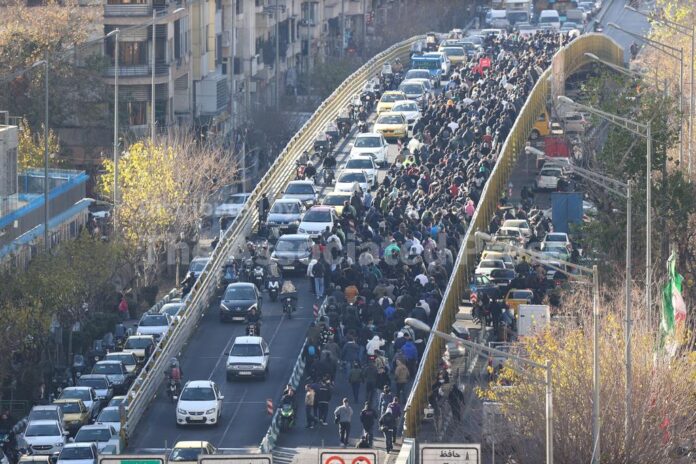
DUBAI, United Arab Emirates (AP) — The death toll in violence surrounding protests in Iran has risen to at least 35 people, activists said Tuesday, as the demonstrations showed no signs of stopping.

The figure came from the U.S.-based Human Rights Activists News Agency, which said more than 1,200 people have been detained in the protests, which have been ongoing for more than a week.

It said 29 protesters, four children and two members of Iran’s security forces have been killed. Demonstrations have reached over 250 locations in 27 of Iran’s 31 provinces,

The group, which relies on an activist network inside of Iran for its reporting, has been accurate in past unrest.

The semiofficial Fars news agency, believed close to Iran’s paramilitary Revolutionary Guard, reported late Monday that some 250 police officers and 45 members of the Guard’s all-volunteer Basij force have been hurt in the demonstrations.

The growing death toll carries with it the chance of American intervention. U.S. President Donald Trump warning Iran on Friday that if Tehran “violently kills peaceful protesters,” the United States “will come to their rescue.”

While it remains unclear how and if Trump will intervene, his comments sparked an immediate, angry response, with officials within the theocracy threatening to target American troops in the Mideast. The comments took on new importance after the U.S. military on Saturday captured Venezuelan President Nicolás Maduro, a longtime ally of Tehran.

The protests have become the biggest in Iran since 2022, when the death of 22-year-old Mahsa Amini in police custody triggered nationwide demonstrations. However, the protests have yet to be as widespread and intense as those surrounding the death of Amini, who was detained over not wearing her hijab, or headscarf, to the liking of authorities.

Iran has faced rounds of nationwide protests in recent years. As sanctions tightened and Iran struggled after a 12-day war with Israel, its rial currency collapsed in December, reaching 1.4 million to $1. Protests began soon after.

Understanding the scale of this latest round of protests has been difficult. Iranian state media has provided little information about the demonstrations. Online videos offer only brief, shaky glimpses of people in the streets or the sound of gunfire. Journalists in Iran also face limits on reporting in general such as requiring permission to travel around the country, as well as the threat of harassment or arrest by authorities.

But the protests do not appear to be stopping, even after Supreme Leader Ayatollah Ali Khamenei on Saturday said “rioters must be put in their place.”

Sweden beats Czechia 4-2 for its 3rd world junior hockey title

ST. PAUL, Minn. (AP) — Casper Juustovaara and Viktor Eklund scored first-period goals and Sweden won its third world junior hockey title, beating Czechia 4-2 on Monday night in the first all-European final since 2016.

Sweden also won in 1981 and 2012. Czechia won its lone titles in 2000 and 2001.

Sascha Boumedienne gave Sweden a 3-0 lead at 3:47 of the third.

Adam Jiricek and Matej Kubiesa scored for Czechia, with Kubiesa striking with 24 seconds left. Ivar Stenberg capped the scoring with an empty-netter with eight seconds left.

In the third-place game, Sam O’Reilly scored twice, Gavin McKenna and Michael Hage each had four points to help Canada beat Finland 6-3.

McKenna had a goal and three assists, and Hage had four assists. Zayne Parekh had a goal and an assist to break the Canadian record for points by a defenseman with 13 on six goals and seven assists. Alex Pietrangelo had 12 in 2010.

___

AP sports: https://apnews.com/sports

Military action in Venezuela emerges as an issue in a closely watched GOP primary in Kentucky

President Donald Trump’s military intervention in Venezuela has emerged as a flash point in the closely watched Republican primary campaign between Kentucky U.S. Rep. Thomas Massie, a long-running Trump antagonist, and retired Navy SEAL officer Ed Gallrein, who has the president’s backing.

Massie, showing his non-interventionist leanings, fired off a series of social media posts criticizing the military operation that captured Nicolás Maduro and removed him from the South American country.

“Wake up MAGA,” Massie wrote. “VENEZUELA is not about drugs; it’s about OIL and REGIME CHANGE. This is not what we voted for.”

The congressman claimed that Trump wrongly circumvented Congress when ordering the attack.

“In the Constitution, the Founders vested war making power in Congress, not the Executive branch,” he wrote.

Gallrein responded that Massie had “shown his true colors” by criticizing the military operation.

“This operation sends a clear message: the United States will not allow rogue regimes to enable criminal networks or use oil and other resources to fuel our global adversaries,” Gallrein said on social media. “Holding bad actors accountable is how we restore law and order, deter aggression, and protect American families.”

Gallrein added that American intervention “opens the door to a new chapter for the people of Venezuela — one defined not by decades of oppression, but by the possibility of peace and prosperity.”

He is Trump’s choice to challenge Massie, a maverick who has had an up-and-down relationship with Trump. The primary election in May will test Trump’s hold over Republican politics. The sudden emergence of Venezuela as an issue will test the president’s ability to hold together his coalition during a challenging election year for Republicans that could be defined by domestic concerns like health care and affordability.

The libertarian-leaning Massie has won reelection by lopsided margins since entering Congress in 2012 — even when he incurred Trump’s wrath.

The military action in Venezuela is the latest example of Massie standing up to Trump.

The congressman opposed the massive tax breaks and spending cuts package last year that Trump calls “beautiful” but Massie says will grow the national debt and hurt the economy. Massie said the president lacked authority to attack Iran’s nuclear sites without congressional approval. And Massie was at the forefront of efforts to force the public release of case files on the sex trafficking probe into the late Jeffrey Epstein.

In his bid to unseat the congressman, Gallrein has the president’s vaunted political operation on his side, and a super PAC launched by Trump aides has run ads attacking Massie. But he will confront an entrenched, well-funded incumbent in Massie.

Trump on Monday reiterated his support for Gallrein on his social media platform and urged other Republicans to stay out of the May primary.

“I have heard that there are other Candidates exploring a run for this seat, but I am asking all MAGA Warriors to rally behind Captain Ed Gallrein, the Candidate who is, far and away, best positioned to DEFEAT Third Rate Congressman Thomas Massie, a Weak and Pathetic RINO from the beautiful Commonwealth of Kentucky,” Trump said.

So far, at least two Democrats have filed to run for the congressional seat stretching across northern Kentucky, along with a third Republican besides Massie and Gallrein. The eventual Republican nominee will be heavily favored in a district last represented by a Democrat two decades ago.

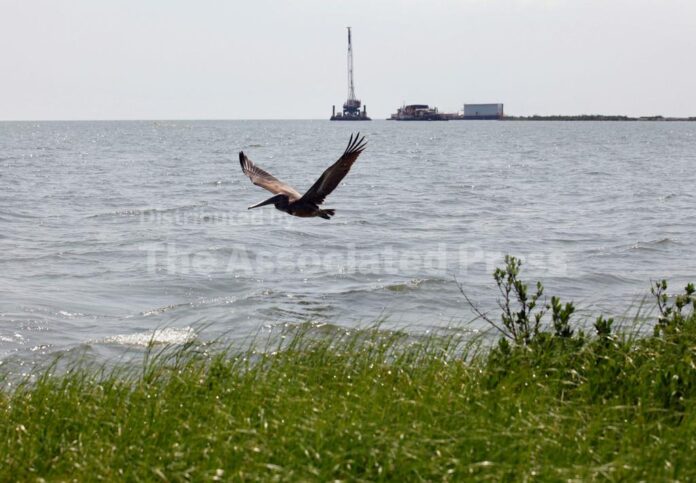
Record $9.6 million fine for Third Coast after substantial oil spill in the Gulf of Mexico

Pipeline safety regulators on Monday assessed their largest fine ever against the company responsible for leaking 1.1 million gallons of oil into the Gulf off the coast of Louisiana in 2023. But the $9.6 million fine isn’t likely to be a major burden for Third Coast to pay.

This single fine is close to the normal total of $8 million to $10 million in all fines that the Pipeline and Hazardous Materials Safety Administration hands out each year. But Third Coast has a stake in some 1,900 miles of pipelines, and in September, the Houston-based company announced that it had secured a nearly $1 billion loan.

Pipeline Safety Trust Executive Director Bill Caram said this spill “resulted from a company-wide systemic failure, indicating the operator’s fundamental inability to implement pipeline safety regulations,” so the record fine is appropriate and welcome.

“However, even record fines often fail to be financially meaningful to pipeline operators. The proposed fine represents less than 3% of Third Coast Midstream’s estimated annual earnings,” Caram said. “True deterrence requires penalties that make noncompliance more expensive than compliance.”

The agency said Third Coast didn’t establish proper emergency procedures, which is part of why the National Transportation Safety Board found that operators failed to shut down the pipeline for nearly 13 hours after their gauges first hinted at a problem. PHMSA also said the company didn’t adequately assess the risks or properly maintain the 18-inch Main Pass Oil Gathering pipeline.

The agency said the company “failed to perform new integrity analyses or evaluations following changes in circumstances that identified new and elevated risk factors” for the pipeline.

That echoed what the NTSB said in its final report in June, that “Third Coast missed several opportunities to evaluate how geohazards may threaten the integrity of their pipeline. Information widely available within the industry suggested that land movement related to hurricane activity was a threat to pipelines.”

The NTSB said the leak off the coast of Louisiana was the result of underwater landslides, caused by hazards such as hurricanes, that Third Coast, the pipeline owner, failed to address despite the threats being well known in the industry.

A Third Coast spokesperson said the allegations were a shock because the company “consistently meets or exceeds regulatory requirements across our operations.”

“After constructive engagement with PHMSA over the last two years, we were surprised to see aspects of the recent allegations that we believe are inaccurate and exceed established precedent. We will address these concerns with the agency moving forward,” the company spokesperson said.

The amount of oil spilled in this incident was far less than the 2010 BP oil disaster, when 134 million gallons were released in the weeks following an oil rig explosion, but it could have been much smaller if workers in the Third Coast control room had acted more quickly, the NTSB said.

Record $9.6 million fine for Third Coast after substantial oil spill in the Gulf of Mexico

Pipeline safety regulators on Monday assessed their largest fine ever against the company responsible for leaking 1.1 million gallons of oil into the Gulf off the coast of Louisiana in 2023. But the $9.6 million fine isn’t likely to be a major burden for Third Coast to pay.

This single fine is close to the normal total of $8 million to $10 million in all fines that the Pipeline and Hazardous Materials Safety Administration hands out each year. But Third Coast has a stake in some 1,900 miles of pipelines, and in September, the Houston-based company announced that it had secured a nearly $1 billion loan.

Pipeline Safety Trust Executive Director Bill Caram said this spill “resulted from a company-wide systemic failure, indicating the operator’s fundamental inability to implement pipeline safety regulations,” so the record fine is appropriate and welcome.

“However, even record fines often fail to be financially meaningful to pipeline operators. The proposed fine represents less than 3% of Third Coast Midstream’s estimated annual earnings,” Caram said. “True deterrence requires penalties that make noncompliance more expensive than compliance.”

The agency said Third Coast didn’t establish proper emergency procedures, which is part of why the National Transportation Safety Board found that operators failed to shut down the pipeline for nearly 13 hours after their gauges first hinted at a problem. PHMSA also said the company didn’t adequately assess the risks or properly maintain the 18-inch Main Pass Oil Gathering pipeline.

The agency said the company “failed to perform new integrity analyses or evaluations following changes in circumstances that identified new and elevated risk factors” for the pipeline.

That echoed what the NTSB said in its final report in June, that “Third Coast missed several opportunities to evaluate how geohazards may threaten the integrity of their pipeline. Information widely available within the industry suggested that land movement related to hurricane activity was a threat to pipelines.”

The NTSB said the leak off the coast of Louisiana was the result of underwater landslides, caused by hazards such as hurricanes, that Third Coast, the pipeline owner, failed to address despite the threats being well known in the industry.

A Third Coast spokesperson said the allegations were a shock because the company “consistently meets or exceeds regulatory requirements across our operations.”

“After constructive engagement with PHMSA over the last two years, we were surprised to see aspects of the recent allegations that we believe are inaccurate and exceed established precedent. We will address these concerns with the agency moving forward,” the company spokesperson said.

The amount of oil spilled in this incident was far less than the 2010 BP oil disaster, when 134 million gallons were released in the weeks following an oil rig explosion, but it could have been much smaller if workers in the Third Coast control room had acted more quickly, the NTSB said.

Search ends for mountain lions after solo hiker fatally attacked on Colorado trail

The search for mountain lions along a remote trail in Colorado where a solo hiker was fatally attacked ended Monday after authorities killed two of the predators — including one with human DNA on its paws — but could not find a third.

The victim of the New Year’s Day attack was identified as a 46-year-old woman from Fort Collins, about an hour’s drive from the attack site on the Crosier Mountain trail, east of Rocky Mountain National Park. It was the first fatal mountain lion attack in Colorado since the late 1990s, and the fourth killing in North America over the past decade.

Victim Kristen Marie Kovatch died of asphyxia due to having her neck compressed, the Larimer County Coroner’s Office said in a statement Monday. The injuries were “consistent with a mountain lion attack” and Kovatch’s death was ruled an accident, the coroner’s office said.

Two hikers found Kovatch’s body on a trail southeast of the community of Glen Haven, Colorado, at around noon on Jan. 1, state officials said. A mountain lion was nearby and they threw rocks to scare it away. One of the hikers, a physician, attended to the victim but did not find a pulse.

Later that day, two mountain lions located in the area were shot and killed by wildlife officers.

A necropsy revealed that one of those animals, a male, had human DNA on its four paws, Colorado Parks and Wildlife spokesperson Kara Van Hoose said Monday. The other lion killed did not have signs of human DNA, she said.

The search for a third mountain lion spotted in the area stretched over four days with no further sign of the animal, officials said. Hiking tails in the area were closed while the search was ongoing.

Mountain lions — also known as cougars, pumas or catamounts — can weigh up to 130 pounds (60 kilograms) and grow to more than 6 feet (1.8 meters) long. They primarily eat deer.

Colorado has an estimated 3,800 to 4,400 mountain lions, which are classified as a big game species in the state and can be hunted.

A Glen Haven man running on the same trail where Kovatch was killed encountered a mountain lion in November. He said it rushed him aggressively but he fought it off with a stick.

It was one of several mountain lion encounters east of Rocky Mountain National Park in recent months, according to Van Hoose. In two of those cases, the predators killed dogs being walked by their owners, she said.