Home Blog Page 998

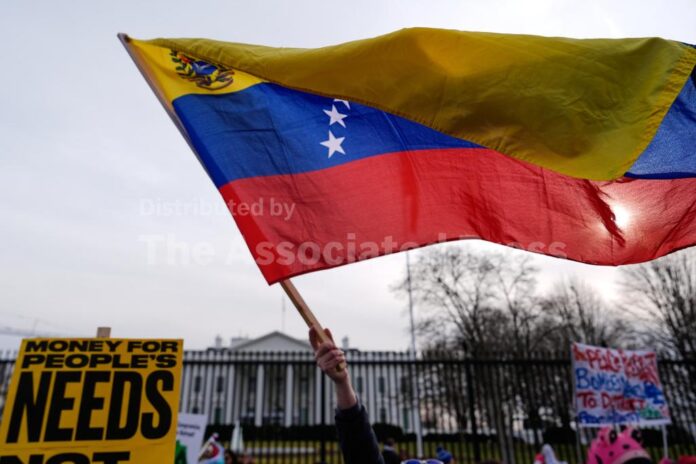
FACT FOCUS: Fabricated and misrepresented images shared widely online after US removal of Maduro

As deposed Venezuelan leader Nicolás Maduro pleaded not guilty to federal drug trafficking charges in a U.S. courtroom Monday, an array of misrepresented and fabricated images that began circulating soon after his capture over the weekend continued to multiply on social media.

President Donald Trump contributed to the deluge, sharing multiple videos he falsely claimed showed Venezuelans celebrating the operation. Meanwhile, fabricated images of Maduro being apprehended were shared widely across multiple platforms.

Here’s a closer look at the facts.

___

CLAIM: A video of a large crowd that starts running on a dark street shows Venezuelans celebrating after Maduro was captured.

THE FACTS: This is false. The video, shot from above, shows students at the University of California, Los Angeles, participating this past December in the “Undie Run,” a quarterly tradition during which students run in their underwear Wednesday night of finals week.

Trump was among those misrepresenting the video. In the version he shared on Truth Social, the crowd is heard cheering loudly as ominous music plays in the background. A caption reads, “Venezuela celebrates, Democrats cry.”

But UCLA landmarks are clearly visible, including the Wasserman Football Center and the Meyer and Renee Luskin Conference Center. The crowd is gathered at the intersection of Strathmore Place and Charles E. Young Drive West, right before the tunnel where the run begins.

The original video was posted to TikTok on Dec. 11 with the caption “ants #uclarundierun,” which also appears in the version being misrepresented online. There is no background music.

___

CLAIM: A video, shot during the day from above, of a street packed with people shows Venezuelans celebrating the end of the Maduro administration.

THE FACTS: This is false. The video shows a massive July 2024 demonstration in Caracas protesting the country’s disputed election, which election authorities called for Maduro.

Trump also misrepresented this video on Truth Social. He shared a version that included a screenshot of an X post that reads: “INCREDIBLE! Millions of Venezuelans are celebrating the news of the collapse of the Maduro regime.”

The video is filled with a cacophony of sounds coming from the crowd as the camera pans to show people packing the street. Two cars make their way slowly through the crowd, followed soon after by a float carrying Venezuelan opposition leaders María Corina Machado and Edmundo González.

The original version was posted to Instagram on July 30, 2024. The same float that appears in the video can be seen in imagespublished by major media outlets at the time of the demonstration.

___

CLAIM: Images show Maduro detained by the U.S. military and Drug Enforcement Administration agents.

THE FACTS: These images were fabricated. Many include a watermark crediting an Instagram user who describes himself as a “professional in artificial intelligence.” The images no longer appear on the user’s profile, but some can be seen in an archived version.

In the images, a man who is allegedly Maduro is surrounded by men wearing military-style uniforms, some with an American flag patch on the front and others with a patch reading “DEA.” The supposed Maduro is wearing a white shirt and a dark-colored jacket. There is a small plane in the background.

Trump shared an image Saturday morning on Truth Social captioned, “Nicolas Maduro on board the USS Iwo Jima.” The man in the image is wearing a gray sweatsuit. Both his ears and his eyes are covered.

___

Find AP Fact Checks here: https://apnews.com/APFactCheck.
Danish prime minister says a US takeover of Greenland would mark the end of NATO

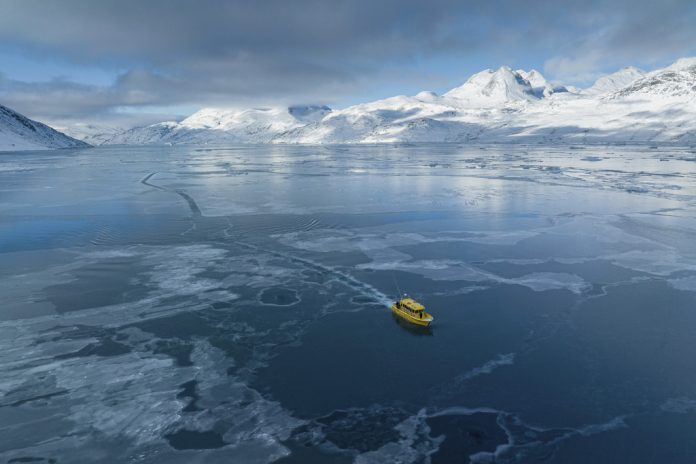
COPENHAGEN, Denmark (AP) — Danish Prime Minister Mette Frederiksen said Monday an American takeover of Greenland would amount to the end of the NATO military alliance. Her comments came in response to U.S. President Donald Trump’s renewed call for the strategic, mineral-rich Arctic island to come under U.S. control in the aftermath of the weekend military operation in Venezuela.

The dead-of-night operation by U.S. forces in Caracas to capture leader Nicolás Maduro and his wife early Saturday left the world stunned, and heightened concerns in Denmark and Greenland, which is a semiautonomous territory of the Danish kingdom and thus part of NATO.

Frederiksen and her Greenlandic counterpart, Jens Frederik Nielsen, blasted the president’s comments and warned of catastrophic consequences. Numerous European leaders expressed solidarity with them.

“If the United States chooses to attack another NATO country militarily, then everything stops,” Frederiksen told Danish broadcaster TV2 on Monday. “That is, including our NATO and thus the security that has been provided since the end of the Second World War.”

20-day timeline deepens fears

Trump called repeatedly during his presidential transition and the early months of his second term for U.S. jurisdiction over Greenland, and has not ruled out military force to take control of the island. His comments Sunday, including telling reporters “let’s talk about Greenland in 20 days,” further deepened fears that the U.S. was planning an intervention in Greenland in the near future.

Frederiksen also said Trump “should be taken seriously” when he says he wants Greenland. “We will not accept a situation where we and Greenland are threatened in this way,” she added.

Nielsen, in a news conference Monday, said Greenland cannot be compared to Venezuela. He urged his constituents to stay calm and united.

“We are not in a situation where we think that there might be a takeover of the country overnight and that is why we are insisting that we want good cooperation,” he said.

Nielsen added: “The situation is not such that the United States can simply conquer Greenland.”

Ask Rostrup, a TV2 political journalist, wrote on the station’s live blog Monday that Mette previously would have flatly rejected the idea of an American takeover of Greenland. But now, Rostrup wrote, the rhetoric has escalated so much that she has to acknowledge the possibility.

Trump slams Denmark’s security efforts in Greenland

Trump on Sunday also mocked Denmark’s efforts at boosting Greenland’s national security posture, saying the Danes have added “one more dog sled” to the Arctic territory’s arsenal.

“It’s so strategic right now,” Trump had told reporters Sunday as he flew back to Washington from his home in Florida. “Greenland is covered with Russian and Chinese ships all over the place.”

He added: “We need Greenland from the standpoint of national security, and Denmark is not going to be able to do it.”

But Ulrik Pram Gad, a global security expert from the Danish Institute for International Studies, wrote in a report last year that “there are indeed Russian and Chinese ships in the Arctic, but these vessels are too far away to see from Greenland with or without binoculars.”

U.S. space base in northwestern Greenland

Greenlanders and Danes were further rankled this weekend by a social media post following the raid by a former Trump administration official turned podcaster, Katie Miller. The post shows an illustrated map of Greenland in the colors of the Stars and Stripes accompanied by the caption: “SOON.”

“And yes, we expect full respect for the territorial integrity of the Kingdom of Denmark,” Ambassador Jesper Møller Sørensen, Denmark’s chief envoy to Washington, said in a post responding to Miller, who is married to Trump’s influential deputy chief of staff Stephen Miller.

The U.S. Department of Defense operates the remote Pituffik Space Base in northwestern Greenland. It was built following a 1951 defense agreement between Denmark and the United States. It supports missile warning, missile defense and space surveillance operations for the U.S. and NATO.

On Denmark’s mainland, the partnership between the U.S. and Denmark has been long-lasting. The Danes buy American F-35 fighter jets and just last year, Denmark’s parliament approved a bill to allow U.S. military bases on Danish soil.

Critics say the vote ceded Danish sovereignty to the U.S. The legislation widens a previous military agreement, made in 2023 with the Biden administration, where U.S. troops had broad access to Danish air bases in the Scandinavian country.

___

Ciobanu reported from Warsaw, Poland, and Dazio from Berlin.

Hockey Hall of Fame player and longtime Blackhawks executive Bob Pulford dies at 89

Bob Pulford, a Hockey Hall of Fame player who went on to a lengthy career in the NHL as a coach and general manager, has died. He was 89.

A spokesperson for the NHL Alumni Association said Monday the organization learned of Pulford’s death from his family. No other details were provided.

A tough, dependable forward, Pulford helped the Toronto Maple Leafs win the Stanley Cup four times during his 14-year stretch with them from 1956-70. The Newton Robinson, Ontario, native was part of the 1967 team that remains the organization’s last to win a championship.

He was picked for five All-Star games and led the league in short-handed goals three times. After recording 694 points in 1,168 regular-season and playoff games, Pulford was inducted into the Hall of Fame in 1991.

Off the ice, Pulford was the first president of the players union, taking part in early collective bargaining and laying the foundation for the modern NHLPA.

Pulford spent his final two playing seasons with the Los Angeles Kings in the early ‘70s before coaching them for the following five years. He then ran the Chicago Blackhawks’ front office as general manager or senior vice president of hockey operations for three decades from 1977-2007, going behind the bench to coach four times during that span.

The NHL Alumni Association in a post memorializing Pulford called him “one of the most respected figures in the history of hockey.”

“Rest in peace, Bob,” the NHLAA said. “Your impact on hockey and on all who had the privilege of knowing you will never be forgotten.”

___

AP NHL: https://apnews.com/hub/NHL

FAA picks 2 firms to replace 612 outdated radar systems that air traffic controllers rely on

The federal government has picked two companies to replace 612 radar systems nationwide that date back to the 1980s as part of a multibillion-dollar overhaul of the nation’s air traffic control system.

Transportation Secretary Sean Duffy and the Federal Aviation Administration said Monday that contractors RTX and Spanish firm Indra will replace the radar systems by the summer of 2028. The administration set an ambitious goal of completing the overhaul by the end of 2028 near the conclusion of President Donald Trump’s current term in office.

“Our radar network is outdated and long overdue for replacement. Many of the units have exceeded their intended service life, making them increasingly expensive to maintain and difficult to support,” FAA Administrator Bryan Bedford said.

The FAA has been spending most of its $3 billion equipment budget just maintaining the fragile old system that still relies on floppy discs in places. Some of the equipment is old and isn’t manufactured anymore, so the FAA sometimes has to search for spare parts on eBay.

Technical failures twice knocked out the radar for air traffic controllers managing planes around Newark Liberty International Airport last spring, and those problems led to thousands of cancellations and delays at the major hub airport.

Redundancy in the system helps keep flights safe, but there have been a number of occasions when both the primary and backup systems failed, as happened in the Philadelphia facility directing planes into and out of the Newark airport.

The FAA didn’t immediately provide an estimate of the cost of the new radar systems that will replace 14 different existing radar systems in use across the country and will simplify maintenance and repairs.

The FAA has already committed more than $6 billion of the $12.5 billion that Congress approved to pay for the overhaul, but Duffy has said that another $20 billion will be needed to complete the project. The agency has already replaced more than one-third of the outdated copper wires the system was relying on with modern connections like fiber optic lines, and it hired a national security contractor named Peraton to oversee the work.

Novak Djokovic withdraws from the Australian Open tuneup tournament in Adelaide

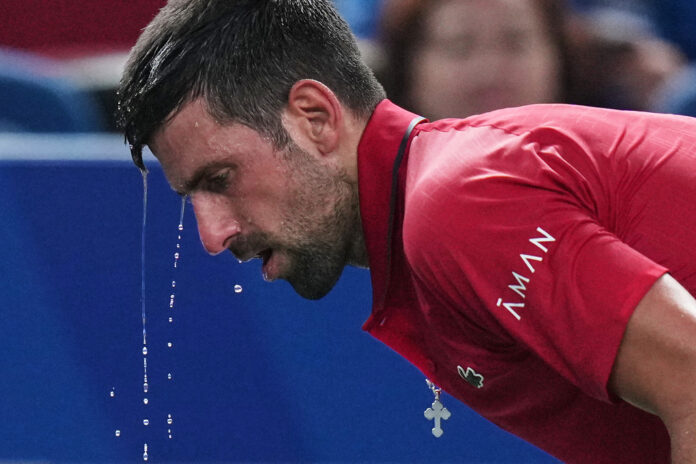
Novak Djokovic withdrew from the Australian Open tuneup tournament in Adelaide, saying Monday that he isn’t prepared to return to competition ahead of the year’s first Grand Slam event.

“To all my fans in Adelaide, unfortunately I’m not quite physically ready to compete in the Adelaide International next week,” Djokovic posted on social media. “It’s personally very disappointing to me, as I have such great memories of winning the title there two years ago. I was really excited about returning as it truly felt like playing at home.”

Djokovic, a 38-year-old with a men’s-record 24 major singles championships, has not played an official match in nearly two full months. He defeated Lorenzo Musetti in the final of the Hellenic Championship in Athens on Nov. 8, then announced he would be pulling out of the ATP Finals for the second year in a row, citing a shoulder injury.

“My focus is now on my preparation for the Australian Open,” Djokovic wrote Monday, “and I look forward to arriving in Melbourne soon and seeing all the tennis fans in Australia.”

Main-draw play at Melbourne Park begins on Jan. 18.

Djokovic has won the hard-court major that opens the Grand Slam season a record 10 times in all, including most recently in 2023.

He exited in the semifinals each of the past two years, including being forced to stop playing after one set against Alexander Zverev in that round in 2025 because of a torn hamstring muscle.

Djokovic reached the semifinals at all four majors last season.

He begins this season ranked No. 4, trailing only Carlos Alcaraz, Jannik Sinner and Zverev.

The Adelaide withdrawal comes a day after Djokovic announced he would be cutting ties with the Professional Tennis Players Association, a group he co-founded that sued the sport’s governing bodies last year in a bid to gain more money and influence for the sport’s athletes.

___

Howard Fendrich has been the AP’s tennis writer since 2002. Find his stories here: https://apnews.com/author/howard-fendrich. More AP tennis: https://apnews.com/hub/tennis

Novak Djokovic withdraws from the Australian Open tuneup tournament in Adelaide

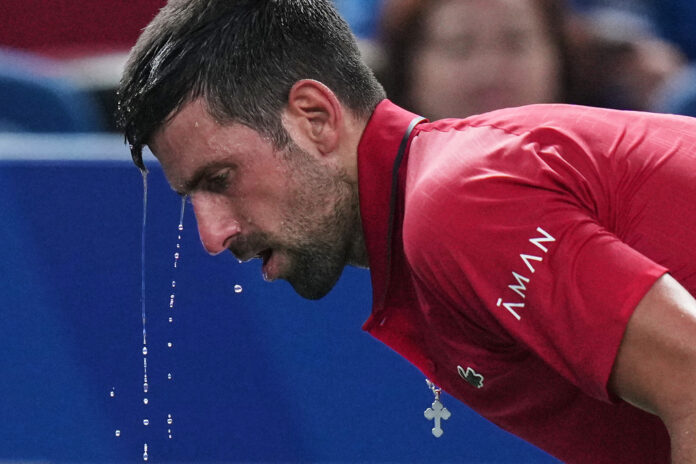
Novak Djokovic withdrew from the Australian Open tuneup tournament in Adelaide, saying Monday that he isn’t prepared to return to competition ahead of the year’s first Grand Slam event.

“To all my fans in Adelaide, unfortunately I’m not quite physically ready to compete in the Adelaide International next week,” Djokovic posted on social media. “It’s personally very disappointing to me, as I have such great memories of winning the title there two years ago. I was really excited about returning as it truly felt like playing at home.”

Djokovic, a 38-year-old with a men’s-record 24 major singles championships, has not played an official match in nearly two full months. He defeated Lorenzo Musetti in the final of the Hellenic Championship in Athens on Nov. 8, then announced he would be pulling out of the ATP Finals for the second year in a row, citing a shoulder injury.

“My focus is now on my preparation for the Australian Open,” Djokovic wrote Monday, “and I look forward to arriving in Melbourne soon and seeing all the tennis fans in Australia.”

Main-draw play at Melbourne Park begins on Jan. 18.

Djokovic has won the hard-court major that opens the Grand Slam season a record 10 times in all, including most recently in 2023.

He exited in the semifinals each of the past two years, including being forced to stop playing after one set against Alexander Zverev in that round in 2025 because of a torn hamstring muscle.

Djokovic reached the semifinals at all four majors last season.

He begins this season ranked No. 4, trailing only Carlos Alcaraz, Jannik Sinner and Zverev.

The Adelaide withdrawal comes a day after Djokovic announced he would be cutting ties with the Professional Tennis Players Association, a group he co-founded that sued the sport’s governing bodies last year in a bid to gain more money and influence for the sport’s athletes.

___

Howard Fendrich has been the AP’s tennis writer since 2002. Find his stories here: https://apnews.com/author/howard-fendrich. More AP tennis: https://apnews.com/hub/tennis

A new Grammy category honors album covers, and the artists that make them

NEW YORK (AP) — When it came time to decide the cover image for Wet Leg’s sophomore album, the British indie rock band packed items that might provide inspiration — velvet worms sewn by guitarist Hester Chambers, an oversized head of hair from a music video shoot, lizard-like gloves — and headed to an Airbnb.

“I wanted it to be something that was both super girly and feminine, but then at the same time, just totally repulsive,” said lead singer Rhian Teasdale, who art-directed the “Moisturizer” cover with Iris Luz and Lava La Rue. “That juxtaposition, I don’t know, it just creates something that’s evocative.”

The final image, inspired by a photo from that weekend, earned Teasdale, Luz and La Rue a Grammy nomination for best album cover — a category that will be awarded this year for the first time in over 50 years.

The other evocative covers nominated are Bad Bunny’s “Debí Tirar Más Fotos,”Tyler, the Creator’s “Chromakopia,” Perfume Genius’ “Glory” and Djo’s “The Crux.” The award goes to the project’s art directors: This year, the recording artists are included as nominees in all cases except for “Glory.”

In recent years, covers had been assessed as part of the best recording package category, which considers all physical materials and images. The package for “Brat,” with its pop culture-infiltrating green, earned Charli XCX, Brent David Freaney and Imogene Strauss a Grammy last year.

Recording Academy CEO Harvey Mason jr. told Grammy.com the split is an effort to recognize the impact of cover art in the digital age. It also aligns with the academy’s goal to recognize more of the artists that shape music, Mason said.

For the creative teams, the revived award amplifies what goes into building the visual worlds of music. “When a cover in a campaign hits right,” said photographer Neil Krug, nominated for “The Crux,” “it’s part of the language and the fabric of what makes a great record a great record.”

Capturing an energy

The defining portrait of “Chromakopia” — a monochrome close-up of Tyler, face concealed by a mask — was the last shot captured. Luis “Panch” Perez, the director of photography, said the expression in Tyler’s eyes stood out.

Getting there, he said, required tapping into a shared “unspoken language,” built by pulling references for the project’s surrealist, old Hollywood aesthetic — and by years of collaboration. “Tyler knows exactly how to move his body, he’s so well in control of that. I just have to be ready for whatever he’s going to do in front of the lens,” Perez said.

Perfume Genius worked with art directors Cody Critcheloe and Andrew J.S. on the cover for “Glory.” He splays on a patchwork carpet inside a dark, homey interior, his stiletto boots extending toward a bright window. Colorful cords snake across the floor like microphone cords onstage.

He said the image reflects the push and pull he found himself exploring while writing the album: the comfort and avoidance of an introverted, private life, versus the confidence required of his “maximal” public-facing persona: “How do I have each of those things season my life?”

The goal wasn’t to capture a specific scene, or choreography. “It was mostly about an energy,” said Critcheloe, who photographed the cover.

“People have said to both of us that they can’t figure out what the aesthetic of the album cover is,” he added. “That’s the best thing to hear.”

The creature-like version of Teasdale that appears on Wet Leg’s “Moisturizer” cover — squatting, hands outstretched, eerie grin trained toward the camera — is also meant to evoke friction. “The album explores themes of love and longing. But also, there are a couple moments on the album that are so, you know, just feral,” she said.

Crafting, casting and styling a world

The pivotal setting of “The Crux” — the third album by Djo, the musical moniker for actor Joe Keery — was a fictional hotel on the Brooklyn-inspired section of the Paramount Studios backlot.

Krug, Djo and collaborator Jake Hirshland looked at dense scenes, like Alfred Hitchcock’s 1954 film “Rear Window” (also shot on a Paramount Studios lot), for inspiration. They considered locations in (the real) New York and Atlanta, where the artist was filming “Stranger Things,” before locking the lot in.

Next came casting the characters that make up the scene. “Anything that we could come up with, we were just like throwing it at the canvas,” Krug said. A couple kiss in a window. A man fights a parking ticket in the foreground. Djo is seen only from the back, dangling from a window in a white suit.

Art director William Wesley II oversaw production details, including designing the neon sign that bears the album’s name — an homage to iconic hotels like the Chateau Marmont. “Everything is intentional,” he said. “It’s really a sum of its parts and it’s the sum of many people’s contributions.”

A pair of white plastic chairs are the only props on the cover of “Debí Tirar Más Fotos,” which translates to “I should have taken more photos.” Art directed by Bad Bunny himself, the image by Puerto Rican photographer Eric Rojas also features plantain trees — a symbol of the island, but also of the Caribbean and Latin America overall. There is a nostalgia to the simple combination — conjuring a day at the beach, or a backyard gathering — that also mirrors the album’s diasporic, history-making, storytelling.

“Debí Tirar Más Fotos” and “Chromakopia” are also nominated for album of the year.

What makes a cover Grammy-eligible?

Official Grammy rules say albums do not need to exist physically to be considered in this category — a key point in differentiating the award from its package counterpart.

This year’s nominees, however, are all available on vinyl or CD. Krug, who has worked on covers for Lana Del Rey and Tame Impala, said the vinyl presentation is often the first point discussed.

“When you have the physical vinyls in your home or your apartment, that stuff lives with you. It’s out in your space, whether you’re having a good day or a bad day, you’re getting married or breaking up with whomever,” Krug said. “There’s this rediscovery of the art form.”

Voters must consider the cover’s creativity and design, alongside the illustration, photography or graphic elements. Trophies go to the winning art directors, and certificates to designers, illustrators or photographers, if applicable.

In a sign of the growing pains of a new category, this year’s list of nominees saw edits ahead of the voting window’s opening — a process not uncommon in other categories with multiple nominees. Djo, Krug, Hirshland and Taylor Vandergrift were added alongside Wesley for “The Crux”; Perez and photographer Shaun Llewellyn were removed for “Chromakopia,” replaced by just Tyler. Luz and La Rue joined Teasdale for “Moisturizer,” while several others — including the rest of the band — were removed.

“I was super surprised and really excited because I wasn’t aware that it was a category,” Critcheloe said of his nomination. “I love the idea of making things that are strange and subversive and irreverent, and having an audience that is bigger than it’s supposed to be.”

___

The 68th Grammy Awards will be held Feb. 1, 2026, at Crypto.com Arena in Los Angeles. The show will air on CBS and stream on Paramount+. For more coverage, visit https://apnews.com/hub/grammy-awards.

Corporation for Public Broadcasting votes itself out of existence

Leaders of the Corporation for Public Broadcasting, a private agency that has steered federal funding to PBS, NPR and hundreds of public television and radio stations across the country, voted Monday to dissolve the organization that was created in 1967.

CPB had been winding down since Congress acted last summer to defund its operations at the encouragement of President Donald Trump. Its board of directors chose Monday to shutter CPB completely instead of keeping it in existence as a shell.

“CPB’s final act would be to protect the integrity of the public media system and the democratic values by dissolving, rather than allowing the organization to remain defunded and vulnerable to additional attacks,” said Patricia Harrison, the organization’s president and CEO.

Many Republicans have long accused public broadcasting, particularly its news programming, of being biased toward liberals but it wasn’t until the second Trump administration —- with full GOP control of Congress — that those criticisms were turned into action.

Ruby Calvert, head of CPB’s board of directors, said the federal defunding of public media has been devastating.

“Even at this moment, I am convinced that public media will survive, and that a new Congress will address public media’s role in our country because it is critical to our children’s education, our history, culture and democracy to do so,” Calvert said.

CPB said it was financially supporting the American Archive of Public Broadcasting in its effort to preserve historic content, and is working with the University of Maryland to maintain its own records.

Maduro says ‘I was captured’ as he pleads not guilty to drug trafficking charges

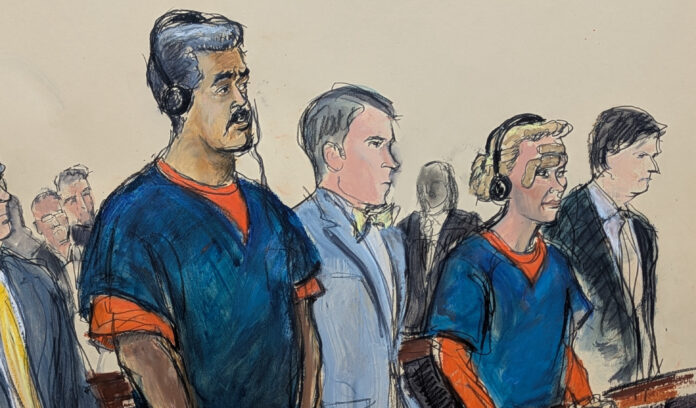
Venezuelan President Nicolas Maduro, left, and his wife, Cilia Flores, second from right, appear in Manhattan federal court with their defense attorneys Mark Donnelly, second from left, and Andres Sanchez, Monday, Jan. 5, 2026, in New York. (Elizabeth Williams via AP)

NEW YORK (AP) — A defiant Nicolás Maduro declared himself “the president of my country” as he protested his capture and pleaded not guilty on Monday to the federal drug trafficking charges that the Trump administration used to justify removing him from power in Venezuela.

“I was captured,” Maduro said in Spanish as translated by a courtroom reporter before being cut off by the judge. Asked later for his plea to the charges, he stated: “I’m innocent. I am not guilty. I am a decent man, the president of my country.”

The courtroom appearance, Maduro’s first since he and his wife were seized from their home in a stunning middle-of-the-night military operation, kicks off the U.S. government’s most consequential prosecution in decades of a foreign head of state. The criminal case in Manhattan is unfolding against a broader diplomatic backdrop of an audacious U.S.-engineered regime change that President Donald Trump has said will enable his administration to “run” the South American country.

Maduro was led into court along with his co-defendant wife just before noon for the brief legal proceeding. Both put on headsets to hear the English-language proceeding as it was translated into Spanish.

The couple was transported to the Manhattan courthouse under armed guard early Monday from the Brooklyn jail where they’ve been detained since arriving in the U.S. on Saturday.

A legal fight begins

As a criminal defendant in the U.S. legal system, Maduro will have the same rights as any other person accused of a crime — including the right to a trial by a jury of regular New Yorkers. But he’ll also be nearly — but not quite — unique.

The stakes were made clear from the outset as Maduro, who took copious notes throughout the proceedings and wished a Happy New Year to reporters in court, repeatedly pressed his case that he had been unlawfully abducted.

“I am here kidnapped,” Maduro said. “I was captured at my home in Caracas.”

U.S. District Judge Alvin Hellerstein, a 92-year-old Clinton appointee, interrupted him, saying: “There will be time and place to go through all of this.” Hellerstein added that Maduro’s attorney could do so later.

“At this time, I just want to know if you are Nicolás Maduro Moros,” which Maduro confirmed that he was.

Maduro’s lawyers are expected to contest the legality of his arrest, arguing that he is immune from prosecution as head of state. Barry Pollack, a prominent Washington lawyer whose clients have included WikiLeaks founder Julian Assange, said Maduro is “head of a sovereign state and entitled to the privilege” that the status ensures. He also said the defense would raise “questions about the legality of his military abduction.”

Panamanian strongman Manuel Noriega unsuccessfully tried the same immunity defense after the U.S. captured him in a similar military invasion in 1990. But the U.S. doesn’t recognize Maduro as Venezuela’s legitimate head of state — particularly after a much-disputed 2024 reelection.

Maduro’s wife, Cilia Flores, also pleaded not guilty on Monday. She had bandages on her forehead and right temple, and her lawyer said had she suffered “significant injuries” during her capture.

A 25-page indictment accuses Maduro and others of working with drug cartels to facilitate the shipment of thousands of tons of cocaine into the U.S. They could face life in prison if convicted.

Among other things, the indictment accuses Maduro and his wife of ordering kidnappings, beatings and murders of those who owed them drug money or undermined their drug trafficking operation. That included a local drug boss’ killing in Caracas, the indictment said.

Outside the courthouse, police separated protesters of the U.S. military action from pro-intervention demonstrators. Inside the courtroom, as Maduro stood to leave with federal officers, a man in the audience stood and began speaking forcefully at him in Spanish, calling him an “illegitimate” president.

The man, 33-year-old Pedro Rojas, said later that he had been imprisoned by the Venezuelan regime. As deputy U.S. marshals led Maduro from the courtroom, the deposed leader looked directly at the man and shot back in Spanish: “I am a kidnapped president. I am a prisoner of war.”

Demands for Maduro’s return

The U.S. seized Maduro and his wife in a military operation early Saturday, capturing them in their home on a military base. Trump said Saturday the U.S. would “run” Venezuela temporarily and reiterated Sunday night that “we’re in charge” and told reporters on Air Force One that “we’re going to run it, fix it.”

Secretary of State Marco Rubio had tried to strike a more cautious tone on Sunday morning talk shows, saying the U.S. would not govern the country day-to-day other than enforcing an existing ” oil quarantine.”

Before his capture, Maduro and his allies claimed U.S. hostility was motivated by lust for Venezuela’s rich oil and mineral resources.

Trump has suggested that removing Maduro would enable more oil to flow out of Venezuela, but oil prices rose a bit more than 1% in Monday morning trading to roughly $58 a barrel. There are uncertainties about how fast oil production can be ramped up in Venezuela after years of neglect, as well as questions about governance and oversight of the sector.

Venezuela’s new interim leader, Delcy Rodríguez, has demanded that the U.S. return Maduro, who long denied any involvement in drug trafficking — although late Sunday she also struck a more conciliatory tone in a social media post, inviting collaboration with Trump and “respectful relations” with the U.S.

Rodríguez was sworn in on Monday by her brother, National Assembly leader Jorge Rodríguez.

“I come with sorrow for the suffering inflicted upon the Venezuelan people following an illegitimate military aggression against our homeland,” she said with her right hand up. “I come with sorrow for the kidnapping of two heroes.”

Maduro’s son and Venezuelan congressman Nicolás Maduro Guerra warned on Monday that his father’s capture could set a dangerous precedent globally and demanded that his parents be returned.

“If we normalize the kidnapping of a head of state, no country is safe. Today it’s Venezuela. Tomorrow it could be any nation that refuses to submit. This is not a regional problem. It is a direct threat to global political stability,” Maduro Guerra said

Also Monday, the United Nations Security Council held an emergency meeting, with the top U.N. official warning that America may have violated international law with its unilateral action.

___

Tucker reported from Washington. Associated Press writers Regina Garcia Cano in Caracas, John Hanna in Topeka, Kansas, Megan Janetsky in Mexico City, Farnoush Amiri at the United Nations, Josh Boak in Baltimore, Maryland, Darlene Superville aboard Air Force One and Joshua Goodman in Miami contributed to this report.

Cuba faces uncertain future after US topples Venezuelan leader Maduro

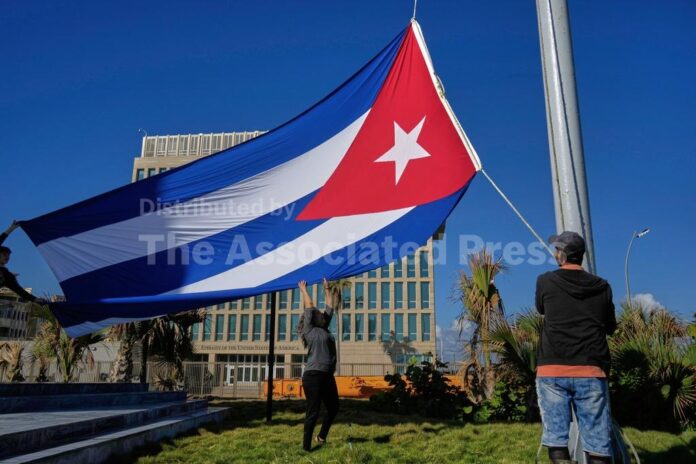
HAVANA (AP) — Cuban officials on Monday lowered flags before dawn to mourn 32 security officers they say were killed in the U.S. weekend strike in Venezuela, the island nation’s closest ally, as residents here wonder what the capture of President Nicolás Maduro means for their future.

The two governments are so close that Cuban soldiers and security agents were often the Venezuelan president’s bodyguards, and Venezuela’s petroleum has kept the economically ailing island limping along for years. Cuban authorities over the weekend said the 32 had been killed in the surprise attack but have given no further details.

The Trump administration has warned outright that toppling Maduro will help advance another decades-long goal: Dealing a blow to the Cuban government. Severing Cuba from Venezuela could have disastrous consequences for its leaders, who on Saturday called for the international community to stand up to “state terrorism.”

On Saturday, Trump said the ailing Cuban economy will be further battered by Maduro’s ouster.

“It’s going down,” Trump said of Cuba. “It’s going down for the count.”

Many observers say Cuba, an island of about 10 million people, exerted a remarkable degree of influence over Venezuela, an oil-rich nation with three times as many people. At the same time, Cubans have long been tormented by constant blackouts and shortages of basic foods. And after the attack, they woke to the once-unimaginable possibility of an even grimmer future.

“I can’t talk. I have no words,” 75-year-old Berta Luz Sierra Molina said as she sobbed and placed a hand over her face.

Even though 63-year-old Regina Mendez is too old to join the Cuban military, she said that “we have to stand strong. ”

“Give me a rifle, and I’ll go fight,” Mendez said.

Maduro’s government was shipping an average of 35,000 barrels of oil daily over the last three months, about a quarter of total demand, said Jorge Piñón, a Cuban energy expert at the University of Texas at Austin Energy Institute.

“The question to which we don’t have an answer, which is critical: Is the U.S. going to allow Venezuela to continue supplying Cuba with oil?” he said.

Piñón noted that Mexico once supplied Cuba with 22,000 barrels of oil a day before it dropped to 7,000 barrels after U.S. Secretary of State Marco Rubio visited Mexico City in August.

“I don’t see Mexico jumping in right now,” Piñón said. “The U.S. government would go bonkers.”

Ricardo Torres, a Cuban economist at American University in Washington, said that “blackouts have been significant, and that is with Venezuela still sending some oil.”

“Imagine a future now in the short term losing that,” he said. “It’s a catastrophe.”

___

Coto reported from San Juan, Puerto Rico. Associated Press reporters Milexsy Durán in Havana and Isabel DeBre in Buenos Aires contributed.

___

Follow AP’s coverage of Latin America and the Caribbean at https://apnews.com/hub/latin-america